

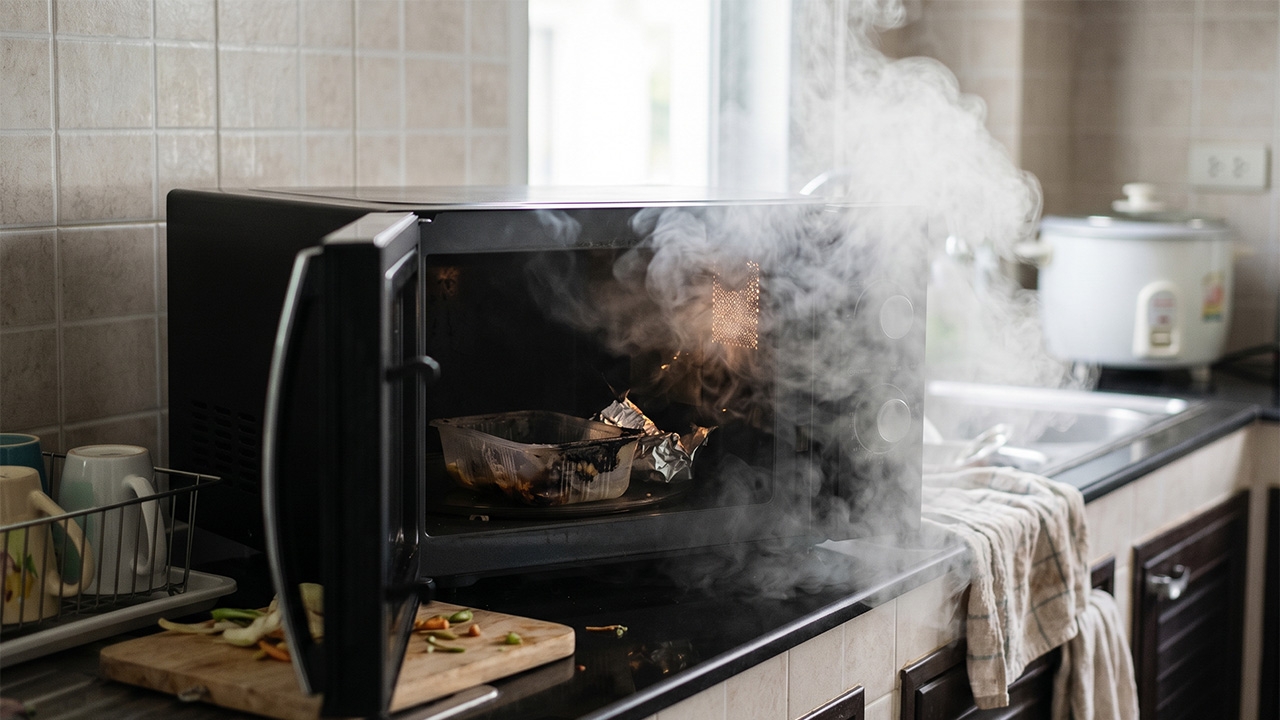
Microwaves are essential kitchen appliances that offer convenience, but did you know there are "items strictly forbidden in the microwave" that can cause danger, leave toxic residues, or pose fire risks? Let's explore what these are.
Microwaves work by emitting electromagnetic waves that cause water molecules in food to vibrate, generating heat. Because of this mechanism, not everything is safe to heat inside. Safety agencies and scientific principles point out several types of containers and foods that are forbidden in microwaves, as they can cause sparks, chemical contamination, or explosions.
Choosing the right container is crucial for safety. Here are groups of containers absolutely forbidden in microwave ovens:
1. Metal and stainless steel containers
Microwaves cannot penetrate metal; instead, they reflect back and forth, causing sparks that may lead to fires or damage the magnetron (the microwave's wave generator).
2. Aluminum foil
Although good for wrapping food to retain heat, aluminum foil is extremely thin. When exposed to microwaves, it heats rapidly and can ignite sparks or flames immediately.
3. Plastics not labeled "Microwave-Safe"
Regular plastic bags or wraps without safety certification can melt under high heat and release harmful chemicals like BPA or Phthalates into food—substances linked to cancer risk.
4. Foam food containers
Made from polystyrene plastic, foam cannot withstand high heat. Microwaving foam containers causes them to melt, deform, and release styrene, a carcinogenic chemical, into your food.
5. Containers with gold or silver patterns
Some ceramic dishes decorated with gold, silver, or reflective metals should not be microwaved, as their metallic elements can generate sparks.

Besides containers, certain food items are also forbidden in microwaves:
For maximum safety, always check the bottom of containers before microwaving. Look for the microwave wave symbol or labels stating "Microwave-Safe" or "Microwavable" These are usually heat-resistant glass, clear-coated ceramics, or polypropylene (PP) plastics designed to endure microwave heat.
Using your microwave correctly not only extends its lifespan but also prevents fires and protects your health from chemical contamination. Therefore, always verify that no forbidden items are mixed in before heating to ensure your family’s safety.