

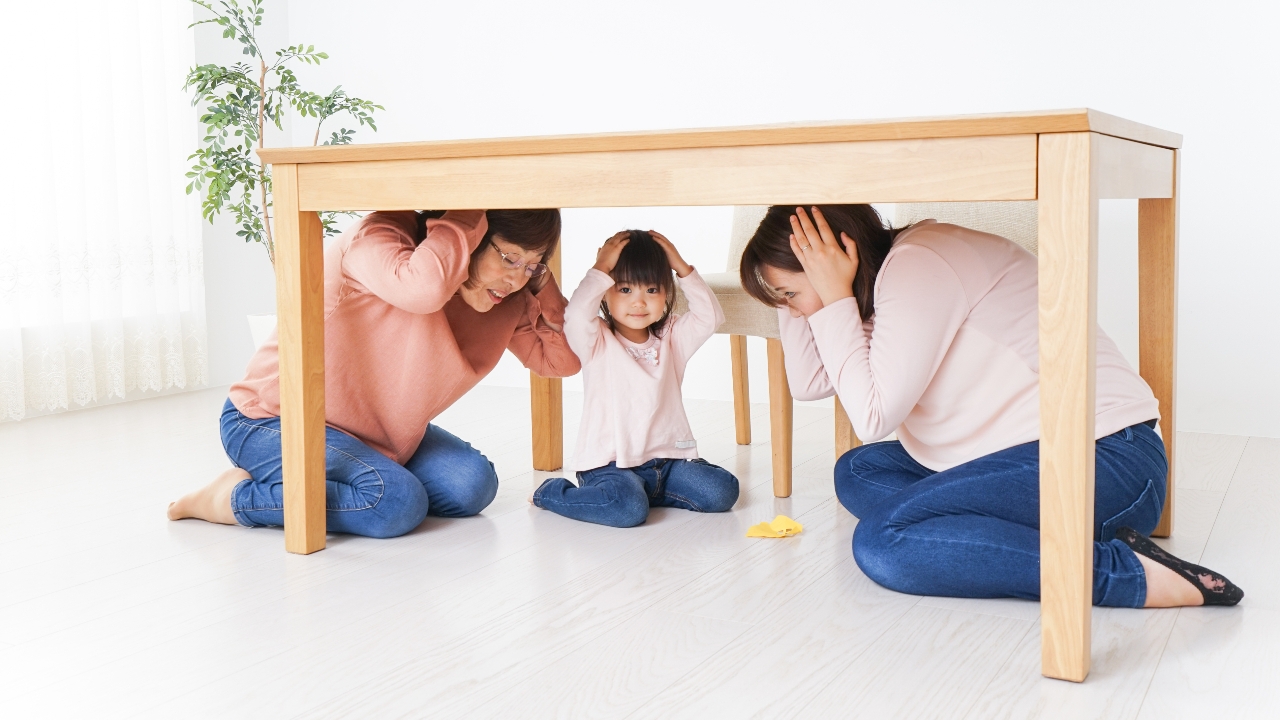
Following the latest Myanmar earthquake this morning (18 May 2026), residents and workers in some high-rise buildings in Bangkok felt the tremors. Let's review survival lessons from previous Bangkok earthquakes to determine whether Thai people should "shelter under a table" or "run out of the building" for maximum safety.
The recent earthquake centered in Myanmar again sent tremors to Bangkok, especially affecting residents and workers in certain high-rises who clearly felt swaying. This phenomenon is not new; looking back at Bangkok earthquake statistics from 2025 shows that high-rise tremors often result from Bangkok's "soft soil basin," which can amplify distant seismic vibrations by 3 to 4 times.
The recurring question and debate is, "During a Bangkok earthquake, is it safer to shelter under a table or to run out of the building?" This arises because Thai building structures differ fundamentally from those in earthquake-prone countries like Japan.
In Japan, most buildings are constructed with advanced seismic isolation technology, and people are trained to "shelter under tables" to avoid falling objects. However, for surviving earthquakes in Bangkok, structural engineering experts advise different approaches depending on the actual situation:
"Do not run down the stairs or use elevators under any circumstances." Attempting to flee a high-rise during shaking carries a high risk of falling on stairs or getting trapped in elevators. Instead, "drop down, cover your head, and hold on tight" (Drop, Cover, Hold On). Take cover under a sturdy table or crouch next to a main structural column, gripping table legs firmly to protect against falling ceiling debris or light fixtures.
If you assess that you can safely reach an "open outdoor area" within 5-10 seconds without obstacles, evacuating outside is safer. However, ensure the outdoor space is free of power lines, billboards, or glass panels that might fall.
According to the Council of Engineers, Thailand only began seriously enforcing earthquake-resistant building codes for high-rises recently. Older buildings constructed before 2007 or many small commercial buildings in Bangkok may not be designed to withstand earthquake forces directly.
Moreover, Bangkok's subsoil is soft clay, similar to "gelatin." When distant seismic waves (e.g., from Myanmar or northern Thailand) arrive, this soil layer amplifies the seismic signals, causing high-rises with heights matching the wave frequencies to sway more intensely. Therefore, rushing around inside a swaying high-rise is extremely dangerous.
For safety and loss reduction, if an earthquake occurs today or in the future, follow these international guidelines: