

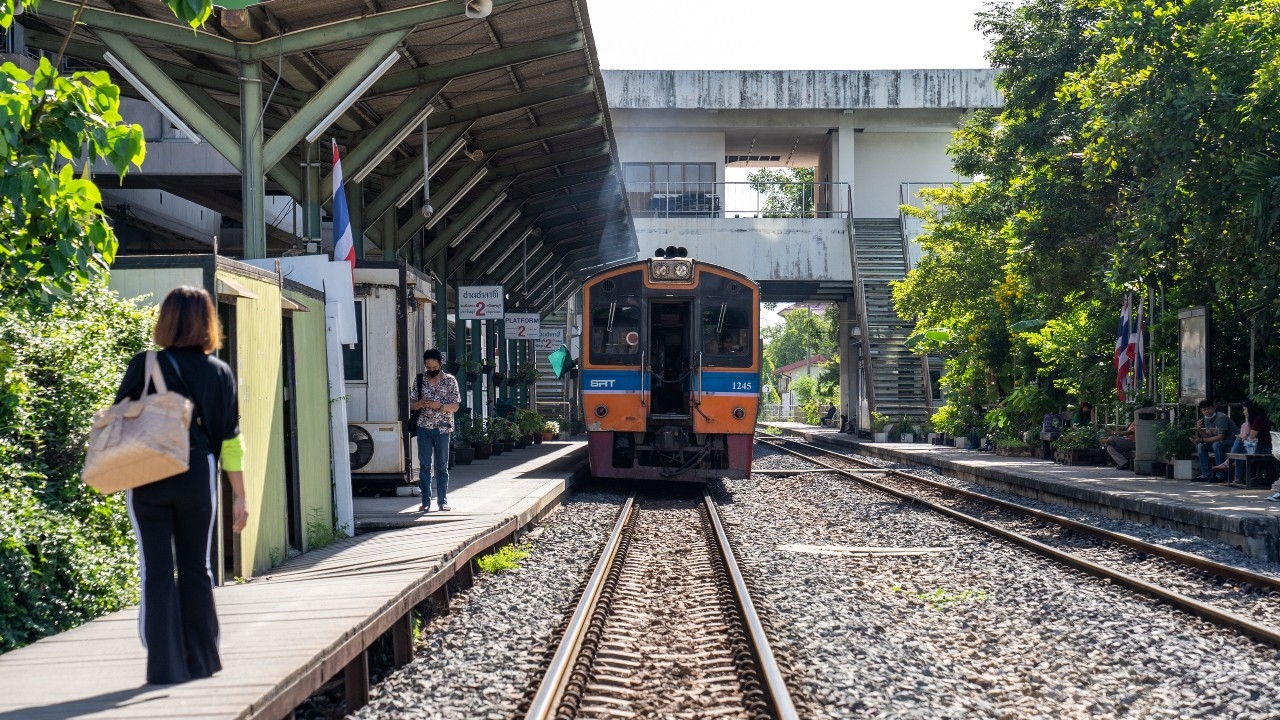
Tips for noticing train signals for city dwellers when sometimes sensors can't beat instinct.
In an era where everything is controlled by automation, we often rely on technology and various sensors, forgetting that electrical systems can fail, barriers can get stuck, and signal lights can malfunction. This is especially true at Bangkok's railway crossings, which face highly complex traffic conditions, and even communication errors from railway staff signaling can occur.
When technology may lag or err, relying on your "survival instincts" and keen observation like a city dweller is the best protection. Here are tips for sensing warning signs ahead of time, sometimes more reliable than the railway barriers themselves.
1. Lower music volume and open the window to focus on outside sounds.
When driving near a railway crossing, the first tip is to reduce your car's music volume or slightly open a window. Sometimes the barrier sensor hasn't activated yet, but the distant piercing train whistle or the metallic screech of wheels on rails is a reliable warning. Your ears are an excellent radar.
2. Observe the "reactions of locals," especially motorcycle taxi drivers.
If you are unfamiliar with the area, apply the principle of "watching those around you," especially motorcycle taxi drivers and local vendors. These locals are experts who know train schedules better than timetables. If you see groups of motorcyclists who usually weave through traffic suddenly stopping completely at the crossing, or vendors quickly packing up their umbrellas, it means a train is approaching. Do not try to squeeze through.
3. Look for "railway officials" holding red flags.
At many crossings, railway guards are stationed. If you see an official standing by the road, blowing a whistle, or waving a red flag, brake immediately—even if barriers are still up or traffic lights are green. The on-site human decision is the most accurate indication of the situation.
4. Don't trust the "green light" if you see abnormalities on the tracks.
A serious error by urban drivers is trusting traffic lights 100% without assessing the real situation. Sometimes the light indicates you can go, but traffic on the opposite side is jammed, or flashing warnings show the train system is activating. If the traffic light sensors and train system are out of sync, your instincts must tell you to "stop and wait" behind the white line immediately. Never get stuck on the tracks just because the light is green.
5. Feel vibrations from the road surface.
A train is extremely heavy. When one approaches nearby, even if you cannot see it due to buildings or trees blocking view, the road surface at the crossing will produce subtle vibrations felt through the steering wheel and car seat. If parked near the tracks and you notice increasing vibrations, prepare yourself and do not move the car forward.
Sensors and automatic barriers are convenience tools, but "alertness and observation" are what will save your life. Driving in Bangkok requires sharp hearing, sharp eyes, and constant assessment of the situation because on busy intersections, raw instinct often works faster than technology.