

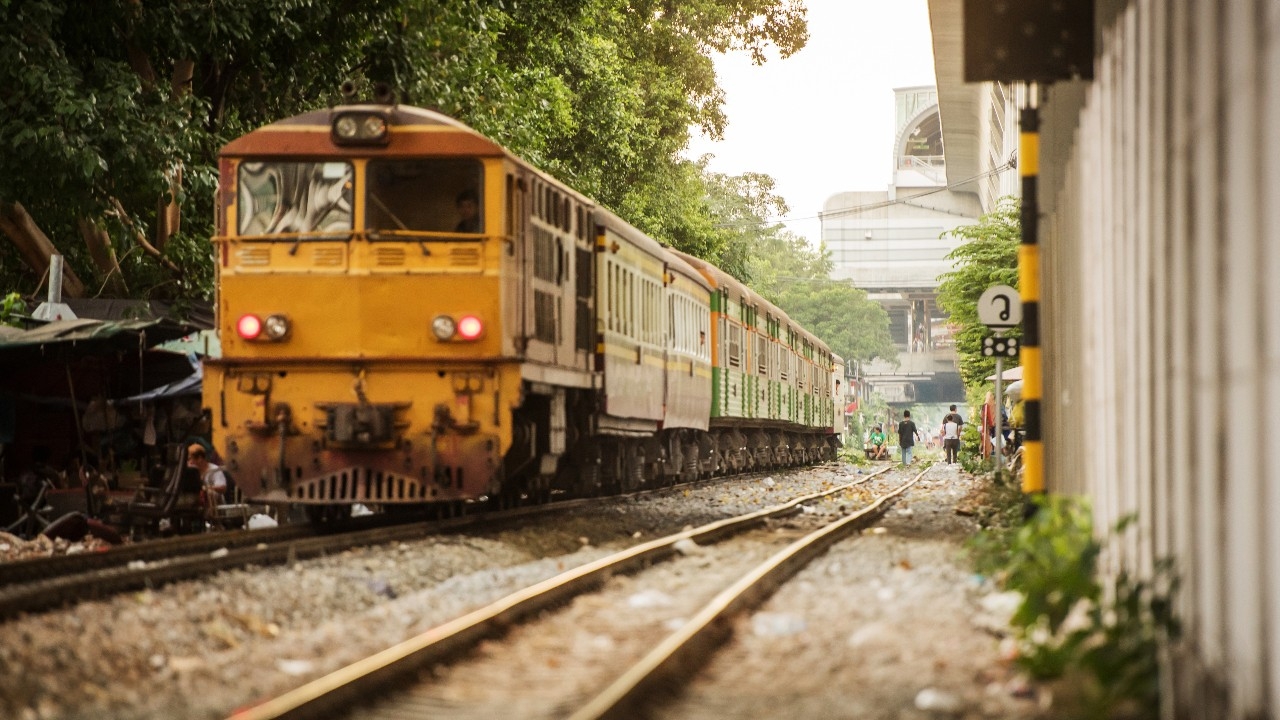
Driving in Bangkok is already challenging, but crossing a railway intersection on a main road during rush hour is a true survival mini-game.
A classic inner-city problem is the overwhelming traffic volume exceeding road capacity, creating widespread bottlenecks. When the railway barrier starts lowering, it triggers an immobile "tailback" ahead.
Often we make a critical mistake. Stopping a vehicle stuck on the railway tracks. Traffic pressure or impatience to catch the green light can cause this. From various frightening incidents, we've learned that warning sounds, barriers, or flashing lights alone aren’t enough—without "premium-level alertness," you’re at risk./More content available here/
Thairath Online takes a detailed look at five treacherous railway crossing points that regular commuters must approach with the highest situational awareness.
1. Asoke-Din Daeng Crossing
This notorious five-star danger spot is at the intersection of Rama 9 and Asoke-Phetchaburi. Its hazard lies in the wide, multiple overlapping tracks that take longer to cross. Coupled with unpredictable tailbacks, sometimes the green light lets you pass smoothly, but the car ahead suddenly brakes hard, leaving your vehicle stranded on the tracks just as the barrier comes down—trapped with no way forward or back.
Survival tip: Even if the light is green, if there isn’t enough space ahead for your entire vehicle to clear the tracks, never follow the car in front. It’s better to endure honks from behind than become a stationary target for an oncoming train.
2. Phayathai Crossing
This chaotic spot lies along the railway beneath BTS Phayathai and the Airport Link, where pedestrian traffic is constant. The risk is high as you must watch out for pedestrians, vans, and buses stopped at the curb. Most dangerously, train warning sounds are often lost amid the noise from road traffic below and the overhead skytrain.
Approaching this area, lower your music volume, crack open your window to listen for warnings, and reduce speed significantly. Always be prepared for slow barrier response or sudden pedestrian crossings that may force you to brake on the railway.
3. Ratchaprarop Crossing
This eastern railway crossing is infamous for dense, lengthy traffic jams during rush hour due to a key bottleneck. Drivers often become impatient, tailgating to save time, unaware that following too closely here risks life when traffic halts just as a train passes.
Stay calm and keep a longer distance than usual. If the car ahead has just cleared the tracks but there isn’t enough room for your vehicle, stop behind the barrier line. Don’t let impatience lead you to risk death on this deadly spot.
4. Rama 6 Crossing
Though this road looks wide, rush hour mornings and evenings are brutal. The area is full of intersections, hospital entrances, and government offices, causing stop-and-go traffic. The greatest danger is following the car ahead too closely, distracted by its rear, forgetting you’re actually driving over railway tracks.
Survival tip: Stay alert and observant. Never drive distracted or just go with the flow. Instead, look beyond the immediate car ahead to assess if traffic is genuinely moving or inching forward slowly.
5. Yommarat Intersection
One of Bangkok’s most complex and confusing junctions, this spot converges expressway exits, main roads, and railway tracks cutting through the intersection. Confusing traffic signals combined with aggressive drivers rushing to escape jams cause many vehicles to crowd near or stop suddenly on the tracks when lights change.
Pay close attention to signs and signals. Don’t tailgate out of fear of being cut off. Always leave ample space near the tracks. If unsure whether there is enough room to fully clear the rails, brake and wait behind the barrier line.
No matter how rushed you are or how much pressure comes from honking vehicles behind, the ironclad rule for crossing railway intersections is: Always ensure the space ahead is clear before crossing, and never stop on the tracks. Don’t risk your life or property on a "maybe"—no matter how big or safe your vehicle is, the train always wins in every collision.