

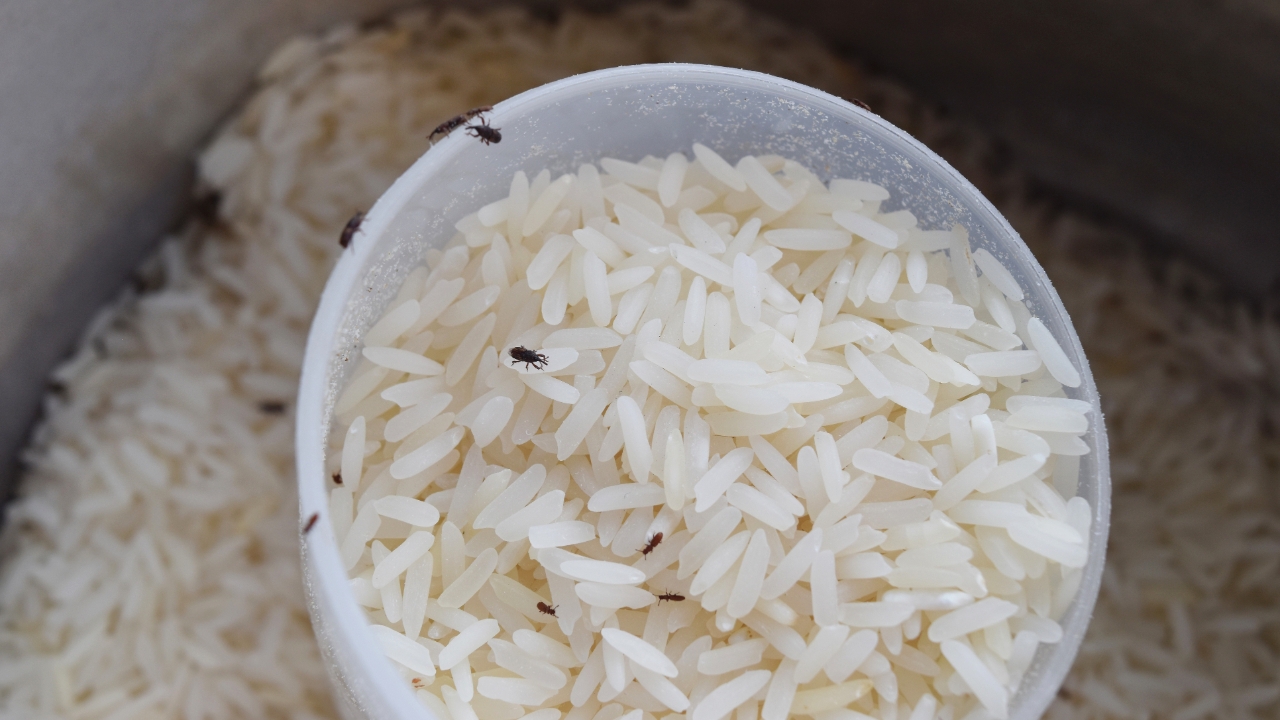
Many households have encountered the problem of rice weevils infesting stored rice. Whenever opening the rice container, small insects crawl everywhere. While rice weevils are not seriously harmful, if left unchecked they can degrade the rice quality, cause musty odors, and increase contamination. Thairath Online has compiled 5 simple natural methods to eliminate rice weevils, helping reduce this nuisance along with tips for storing rice longer.
Rice weevils are small dark brown or black insects that often inhabit rice grains, cereals, and dry foods. Female weevils can lay eggs inside rice grains, which quickly hatch and infest the entire container. The main causes of rice weevil infestation include

1. Sun-dry the rice
A basic yet effective method is to spread rice on a tray or winnowing basket and sun-dry it for about 2-3 hours. The heat helps drive away weevils and reduces moisture in the rice, making it inhospitable for them.
2. Refrigerate the rice
If only a few weevils are found, place the rice in a sealed bag or container and freeze it for 2-3 days. The cold temperature kills both weevil eggs and adults.
3. Add pandan leaves or dried chili to the rice container
The scent of pandan leaves, garlic, or dried chili naturally repels weevils. Simply placing 2-3 pieces inside the rice container can reduce insect disturbance.
4. Use dried kaffir lime leaves or cloves
Certain strong-smelling herbs also help prevent weevils. Dried kaffir lime leaves and cloves are commonly placed in rice storage containers to repel insects.
5. Sift the rice to separate weevils
If weevils are not widespread, use a sieve to remove them from the rice. Then sun-dry or refrigerate the rice further to eliminate any remaining eggs.

If there are only a few weevils and no musty odor, you can sift them out, wash, and cook the rice as usual. However, if the rice has changed color, has an unusual smell, or is heavily infested, it should be discarded for safety and hygiene.
Proper care and storage of rice help extend its shelf life, reduce weevil problems, maintain rice quality longer, and save money by preventing food waste.