

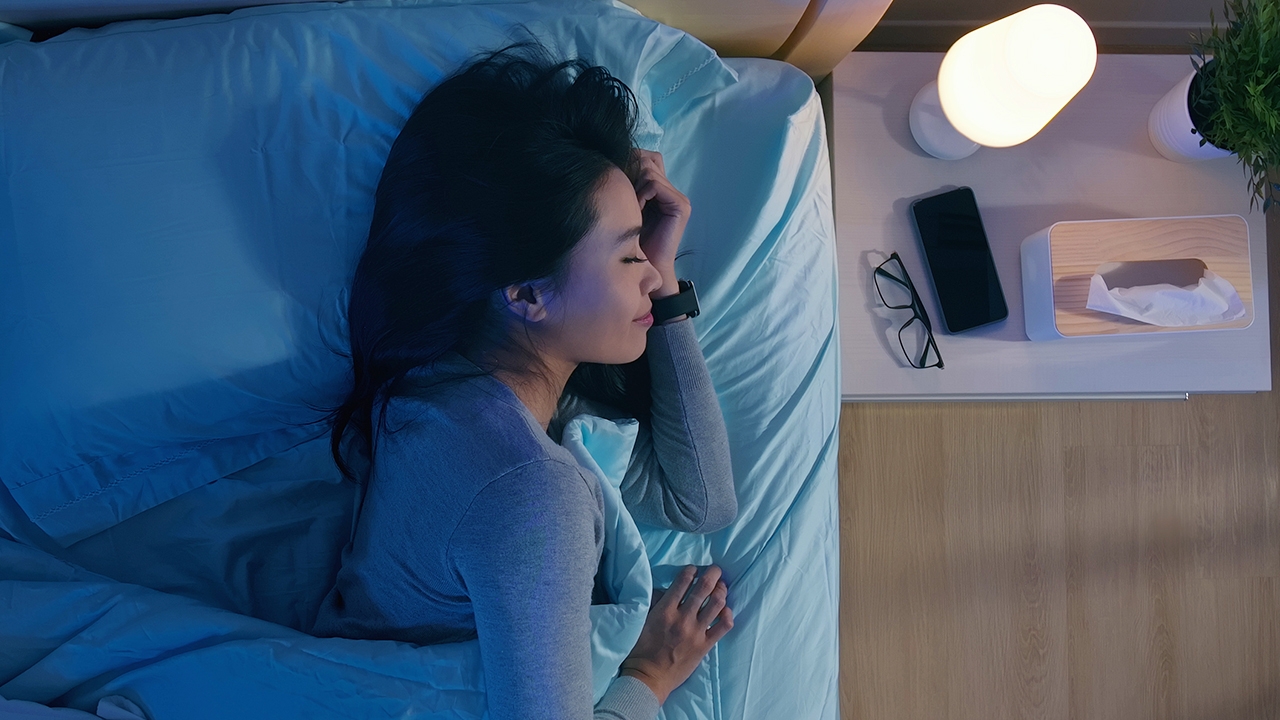
Many people have probably heard the warning that "sleeping with the light on causes weight gain." This raises the question: how can simply leaving a light on while sleeping—without waking up to eat late at night—lead to weight gain?
Thairath Online reveals the answer here: "It is indeed partially true." Sleeping with the light on—whether it's a ceiling light, dim lamp, bedside lamp, or even light from a TV or mobile phone screen—indirectly disrupts the body's internal systems, causing your weight to increase without you realizing it. This is supported by scientific explanations as follows.
1. Light suppresses "melatonin" and reduces "growth hormone."
When the light is on during sleep, the brightness passes through the eyelids to stimulate the brain, tricking the body into thinking it is still daytime. This reduces secretion of melatonin, the hormone that aids sleep. Poor quality sleep then interferes with growth hormone function, which is vital for body repair and fat metabolism. Simply put, your metabolism works less efficiently while you sleep.
2. Increased hunger hormone and disrupted satiety hormone function.
Sleeping amid light causes unconscious stress, triggering cortisol hormone release. This leads to elevated ghrelin, the hunger hormone, while leptin, the satiety hormone, decreases. Consequently, the next day, people who sleep with lights on tend to crave sweets and carbohydrates and feel hungrier than those who sleep in complete darkness.
To clearly see how light affects body shape and health, here is a comparison.
Internal bodily factors | Sleeping in complete darkness | Sleeping with light or light disturbance |
| Melatonin levels | Fully secreted, deep sleep | Suppressed, light and interrupted sleep |
| Fat metabolism system | Functions at full capacity | Reduced function, fat accumulates easily |
| Next-day appetite | Normal, hunger well controlled | Increased, craving sweets and carbs |
| Obesity risk | Low | Significantly higher |
If you fear darkness or have the habit of sleeping with the light on, gradually adjust your habits with these tips to protect your figure and health.
Behavioral impact Sleeping with the light on causing weight gain is not a rumor. It is a matter of hormone mechanisms and metabolic disruption caused by light. Therefore, if you aim to lose weight through exercise and diet, remember to turn off the lights for complete darkness before sleeping, allowing your body to block weight gain and fully repair itself.