

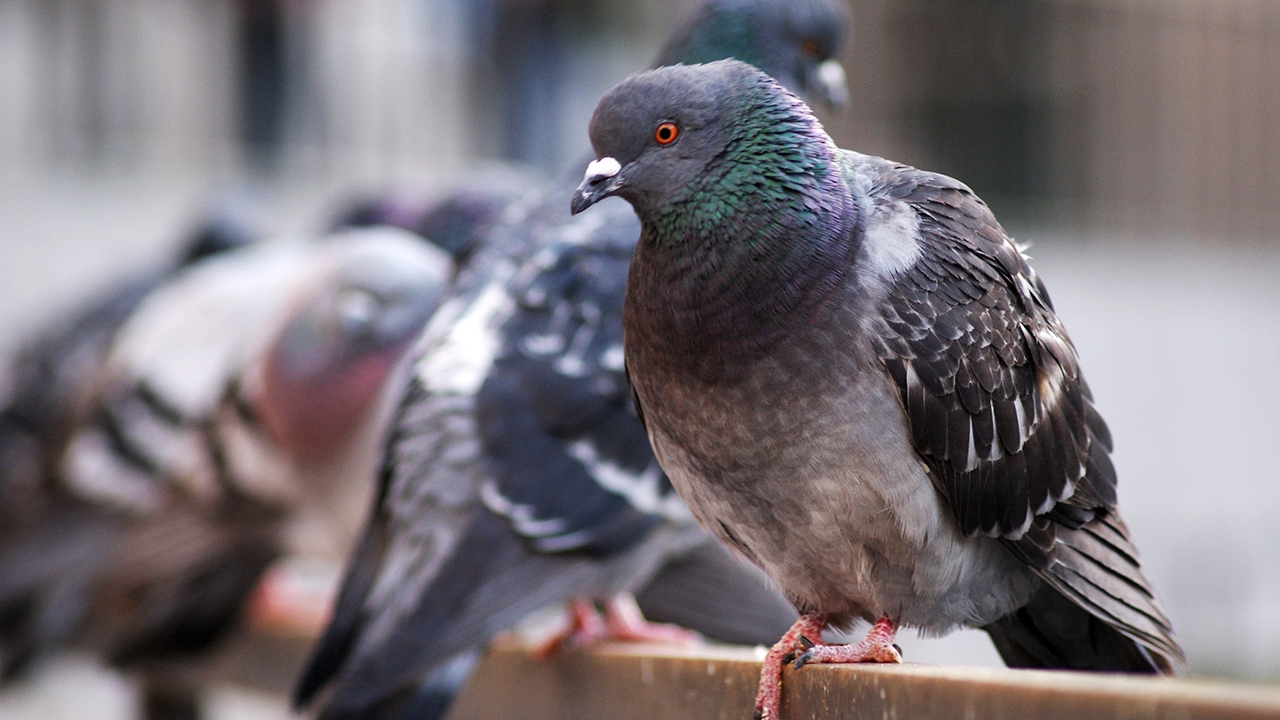
Clearing up the question "What Are Pigeons Most Afraid Of" Along with an update on permanent pigeon repellent methods that are humane, addressing the problem of dirty droppings and disturbing pathogens using everyday items and popular devices for clean and safe homes and condos.
Pigeons that often perch on condo balconies or house roofs bring not only the issue of droppings that dirty surfaces and cause bad odors but also dangerous disease vectors.
The Department of Health states that pigeon droppings contain the fungus Cryptococcus neoformans, which when dried can become airborne. Inhaling it may cause respiratory diseases or severe infections like meningitis, especially in children, the elderly, and those with weakened immune systems.
/ Properly repelling pigeons is not just a matter of cleanliness but also crucial for family hygiene.
To permanently repel pigeons, one must first understand their natural instincts about what they fear, then apply these methods:
1. Fear of flashing reflections
Pigeons' eyes are highly sensitive to changing light. Reflections confuse and alarm them.
2. Fear of unstable surfaces
Pigeons prefer smooth, stable surfaces for resting and nesting. If they sense slipperiness or obstacles, they will avoid those spots immediately.
3. Fear of strong, pungent odors
Unnatural or strong smells irritate pigeons' respiratory systems.
4. Fear of natural predators
Prey instincts make pigeons afraid of natural enemies like owls, hawks, or snakes.
5. Fear of high-frequency sounds
Unusual or high-frequency noises disturb pigeons' auditory system and cause discomfort.

Clean droppings immediately Pigeon droppings contain pheromones that attract the same birds and their flocks back to the spot. Washing with disinfectants can remove these scent trails.
Stop feeding them completely Feeding pigeons changes their wild behavior, making them accustomed to humans and encouraging them to settle permanently.
Install bird netting If balconies have large gaps, bird netting is a 100% effective solution, preventing pigeons from squeezing in to nest again.
Effective pigeon repellent methods combine understanding "what pigeons fear" with appropriate protective devices, whether reflective surfaces, strong odors, bird spikes, or netting. Most importantly, maintain cleanliness and avoid feeding them. This approach is safe, non-cruel to animals, and preserves good hygiene for everyone at home.