

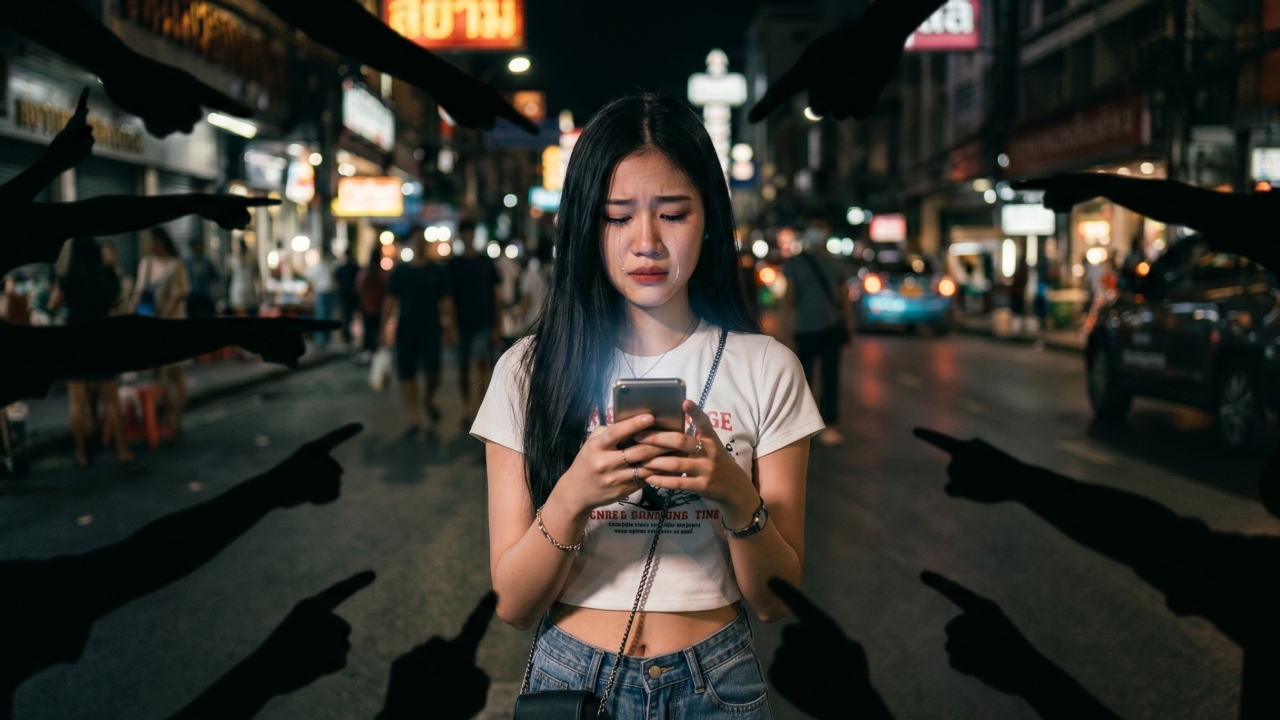
A deep dive into the online social phenomenon explaining why some people hold extreme views of "either love or hate" and decoding the psychological reasons why celebrities face intense backlash simply for displeasing others, along with mindful ways to cope.
It is common on social media to witness intense "backlash" against celebrities, artists, or influencers—even when their actions are neither illegal nor seriously immoral, but merely behaviors or attitudes that certain groups disapprove of. This leads to a clear division between fiercely supportive fans and vehement critics, leaving no middle ground for listening.
Such extreme opinion phenomena are not new, but why have they intensified in the digital age? Psychological and behavioral studies provide answers.
Psychologists and behavioral experts have identified three main factors behind people who hold extreme opinions:

In clinical psychology, polarized thinking (Cognitive Distortion) is a mental defense mechanism humans use to simplify processing complex information. When a celebrity acts against one’s values, the brain categorizes that person as "bad" immediately, ignoring the reality that everyone has mixed strengths and weaknesses.
Media and psychology studies show that fans often form one-sided bonds with celebrities, treating them like friends or family. When a celebrity acts outside the "idealized image" or disappoints fans, some feel betrayed. This overwhelming love can quickly turn into intense hatred.
Dr. John Suler, an American psychologist, explains that typing messages behind screens creates feelings of anonymity and a lack of responsibility for physical consequences. This leads users to express aggression, extreme opinions, and join in attacking others in ways they wouldn’t in real life.

Data from the Department of Mental Health, Ministry of Public Health, shows that cyberbullying and violent online expressions often stem from a desire to gain peer acceptance. People tend to follow the majority’s direction to avoid exclusion or to vent accumulated stress onto celebrities.
In the past, criticism of celebrities was mostly limited to real-life conversations or gossip columns. Today’s social media algorithms accelerate this by promoting content that triggers negative emotions to keep users engaged longer. This diminishes moderate views and elevates extreme opinions to mainstream trends.
For celebrities facing backlash or anyone holding dissenting views who are mentally affected, mental health experts offer the following advice:
Ultimately, accepting human diversity and differing opinions without labeling those who think differently as enemies is fundamental to cooling societal tensions and keeping extreme opinions at levels safe for everyone’s mental health.