

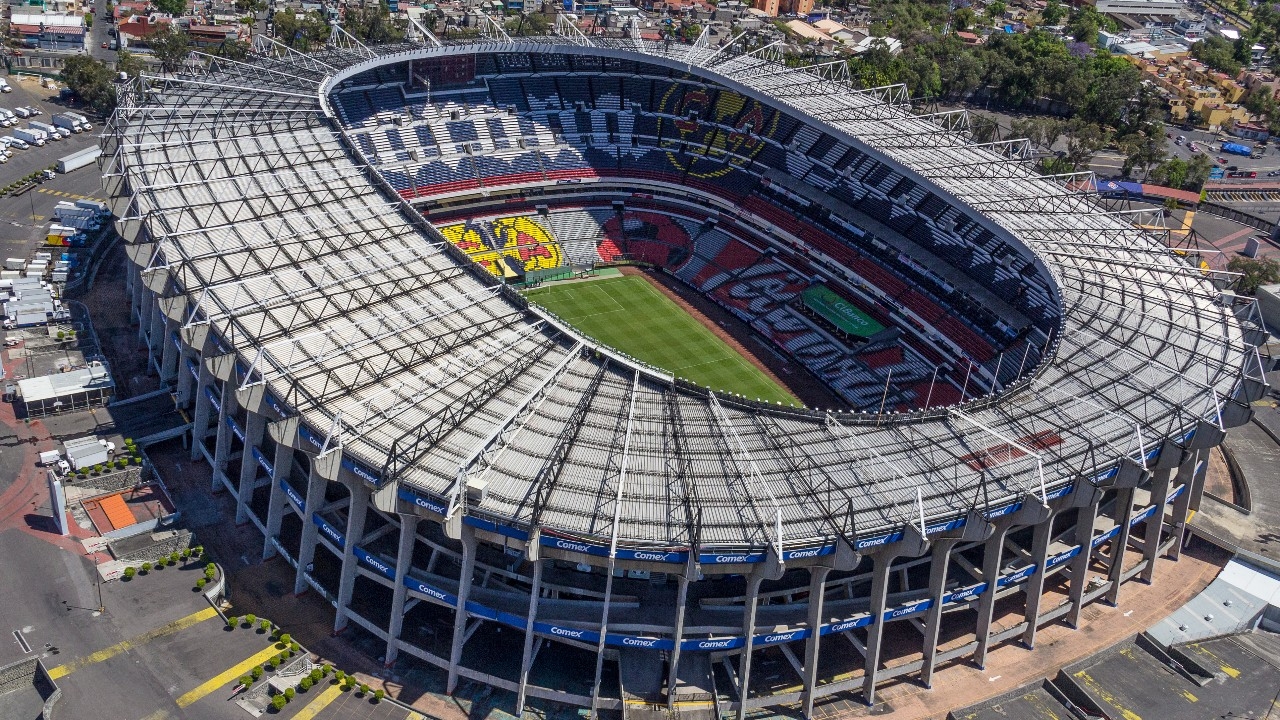
The countdown is now just moments away for the 2026 FIFA World Cup, which will officially kick off at the legendary Estadio Azteca in Mexico, with the opening match between Mexico and South Africa at 2:00 a.m. on Friday, 11 June 2026 GMT+7.
While fans worldwide focus on the spectacle of the opening ceremony and the first match, behind the stadium's revered status lies an "invisible enemy" waiting to challenge every team’s players. It is not cunning tactical play or the loud cheers of the home crowd, but rather the "altitude and weather conditions" that can drain the energy of world-class players within just one half.
Estadio Azteca is not just an ordinary football stadium; it stands as a fortress at 2,240 meters above sea level, even higher than Thailand’s Doi Inthanon peak. Playing outdoors at this altitude directly affects both the athletes' bodies and the football itself.
At this elevation, the air is thinner, with less oxygen in the atmosphere, making breathing difficult and causing the body to fatigue 20-30% faster. Players arriving from Europe or sea-level regions will tire more quickly as their lungs work harder to supply oxygen to muscles. Without proper acclimatization, exhaustion in the second half is almost certain.
Scientifically, the thin air reduces air resistance, causing the football to travel faster through the air than usual. Additionally, the ball’s trajectorycurvesless, making timing for receiving the ball more difficult. Goalkeepers unfamiliar with these conditions should prepare for challenges, as this could become a nightmare scenario for their position.
Furthermore, the logistical challenge of training camps and crossing four time zones is significant. Since the World Cup is hosted across vast North America, spanning four major time zones (Pacific, Mountain, Central, Eastern), managing training camps has become as critical as on-field tactics.
Thus, the acclimatization strategy is crucial. Teams that choose to hold camps at sea-level coastal cities but must then fly up to Mexico City or Guadalajara face concerns for their medical and sports science staff. Establishing camps in cities with altitude and climate similar to the match venues weeks in advance to stimulate red blood cell production isanother key factorthat cannot be overlooked.
Additionally, jet lag from flying across 3-4 hour time zone differences between group stage cities heavily impacts players’ muscles and recovery. Teams that effectively manage flight schedules, planning, and camp locations will gain an advantage in maintaining players' freshness.
A defining feature and limitation of Estadio Azteca is its open-air design, with a roof covering only the spectator stands, leaving the pitch exposed. This exposes players directly to environmental challenges.
In June, Mexico experiences intense heat, and combined with accumulated stadium heat and dry high-altitude air, players—especially from Europe and other unfamiliar continents—face accelerated sweating and rapid dehydration.
Moreover, the World Cup’s weather extremes push human limits, as players may compete in cold Canadian climates, then fly to face rainstorms or scorching sun in Mexico and the United States. Player rotation is not optional but a mandatory strategy coaches must employ to keep their teams competitive throughout the tournament.
Understandably, Central and South American host nations may hold an advantage over European teams. Considering all physical factors, CONCACAF and South American teams such as Mexico, Ecuador, and Bolivia can quietly smile knowing they are accustomed to playing in these altitude and weather conditions regularly during qualifiers.
In contrast, European powerhouses whose players endure nearly 60 demanding club matches each season arrive with already fatigued bodies. Facing the 2,240-meter altitude, unpredictable weather, and cross-time zone travel, this World Cup may see favored European teams upset early, succumbing to the "invisible enemy" right from the opening match—an entirely plausible scenario.