

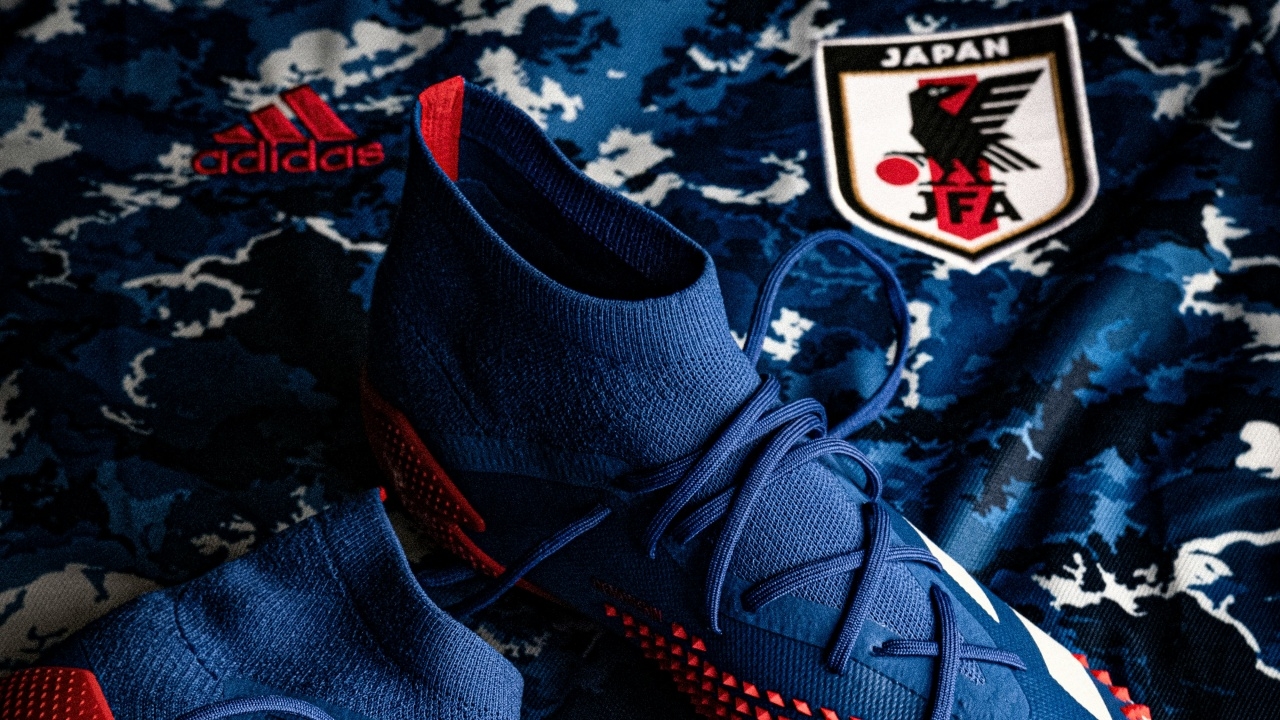
The Japan national football team has become a regular participant in the World Cup. Although they do not have superstar players around whom everything revolves, many of their key players are active in European leagues. The defining trait of this team is the word "unity."
For those who are manga fans, "Captain Tsubasa" and have read it since the era when Oozora Tsubasa was still a youth player, you might recall that at that time Japan's national team had never qualified for the World Cup. Standing on that stage was the ultimate dream for Captain Tsubasa.
Then at the 1998 World Cup in France, the dream of the legendary manga captain became reality. Although Japan lost all three matches in their first tournament—0-1 to Argentina, 0-1 to Croatia, and 1-2 to Jamaica—none of these defeats were by more than one goal.
Moreover, France 98 marked the beginning of a phenomenon in the world of "football jerseys." The home blue kit, later called the "flame pattern kit," was later regarded as one of the most beautiful jerseys ever. It was worn by Serie A champion and Roma player Hidetoshi Nakata alongside the black flame-patterned goalkeeper kit of the reliable keeper Yoshikazu Kawaguchi.
Since 1998, Japan has qualified for every World Cup finals but has never reached the quarterfinals. The most heartbreaking was the 2018 World Cup in Russia, where they led Belgium 2-0 but were equalized and then conceded three goals, ultimately exiting in the round of 16.
At the 2022 World Cup in Qatar, Japan exceeded expectations by defeating both Germany and Spain 2-1 in the group stage, then outplaying Croatia in the round of 16 before ultimately losing on penalties.
What makes Japan's team more memorable than their results is the image of fans cleaning up trash from the stands after matches and players’ rooms being tidied meticulously. This is unsurprising as Japan is renowned for its people's discipline, ingrained over time and widely recognized.
Interestingly, Japan's national football team remains closely tied to manga culture. Captain Tsubasa has inspired many Japanese and global footballers. Like several characters who play in Europe, Japan’s 2026 World Cup squad’s players are spread across leagues such as Serie A, Bundesliga, Eredivisie, La Liga, and the Premier League.
Returning to the key trait of unity, Japan's attacking players readily drop back to support defense, while defenders also back up the attack. The team does not rely on a single superstar to start crucial plays; instead, everyone dedicates themselves to the collective goal above individual success. In one way, lacking a world-class star around whom everything revolves has become a mechanism that strengthens the team, making Japan in the 2026 World Cup a team to watch alongside Europe's and South America's top sides.
Certainly, the disciplined image of Japanese fans, who clean up after themselves rather than leaving a mess for others, along with their charming fan culture, adds a "colorful image" that makes this World Cup even more memorable.