

Today, we all know that Spain's national team holds one World Cup title from the 2010 tournament in South Africa. But before that day, Spain was often criticized as "real-game losers, training-field kings." No matter how many top players from Real Madrid or Barcelona they had, when it came to major tournaments, they often failed early, leading to a big question of why Spain never reached the highest heights.
Interestingly, the answer lies within the question itself. The football philosophies of Real Madrid and Barcelona are completely opposite: one focuses on ball possession and attacking with many players, while the other defends and counters with few. Trying to combine these two approaches in one team without a coach who could harmonize them, plus players’ egos sometimes ignoring the coach’s plan, led to repeated failures, such as the embarrassing first-round exit in the 1998 World Cup.

The turning point began in 2008 when Barcelona, under Pep Guardiola, emerged as the world's best team with a system featuring Lionel Messi as a False 9 and ball possession of 60-80 percent per game. If we remove Messi from this equation, the remaining players were almost all from Spain’s national team, including Xavi Hernandez, Andres Iniesta, Sergio Busquets, Carles Puyol, Gerard Pique, Pedro, and David Villa. With the core of the world’s best team being Spanish, the national coach’s decision became easier: to adopt Barcelona’s system almost entirely.
But what Luis Aragonés gave was more than just a system. It was "belief." He took over in 2004 and spent four years instilling confidence in the players that they could truly win a major championship, something they had never done before. He built a sense of playing for the same team, united under the name "La Roja." He boldly made tough decisions like dropping Raúl González from the squad and convinced Sergio Ramos that he was the best defender in the world. The culmination of those four years was the Euro 2008 championship, which then passed the torch to Vicente del Bosque to win the 2010 World Cup.

This is especially interesting because del Bosque was a lifelong Real Madrid man, having been with the club both as a player and coach. Yet for the national team, he set aside his Madrid identity and chose Barcelona’s system for Spain’s success. Equally important, he united a dressing room full of differences. Simply getting the two defensive lions, Ramos and Pique, to coexist was a credit he rightfully deserves. Without Messi, del Bosque solved the puzzle by promoting Iniesta into a full attacking role alongside Pedro and Villa, who already understood each other well from Barcelona.
The style of play, involving receiving the ball, passing it, then running to receive it again with short repeated passes that left opponents chasing shadows, later became known as "tiki-taka." Xavi acted like a metronome controlling the rhythm and signaling when to attack. Tracing its roots further, this style started with Dutch legend Rinus Michels, passed to Johan Cruyff who laid Barcelona’s foundation, and was elevated by Pep Guardiola, Cruyff’s disciple. In short, Spain’s greatness owes a significant debt to the Dutch.
Spain’s legacy isn’t just the trophies; it erased old beliefs that the best players must be tall and strong. Xavi and Iniesta (and Messi in a different jersey) proved that football intelligence, game reading, and versatility in attack and defense can reach the highest level without relying on physical stature.
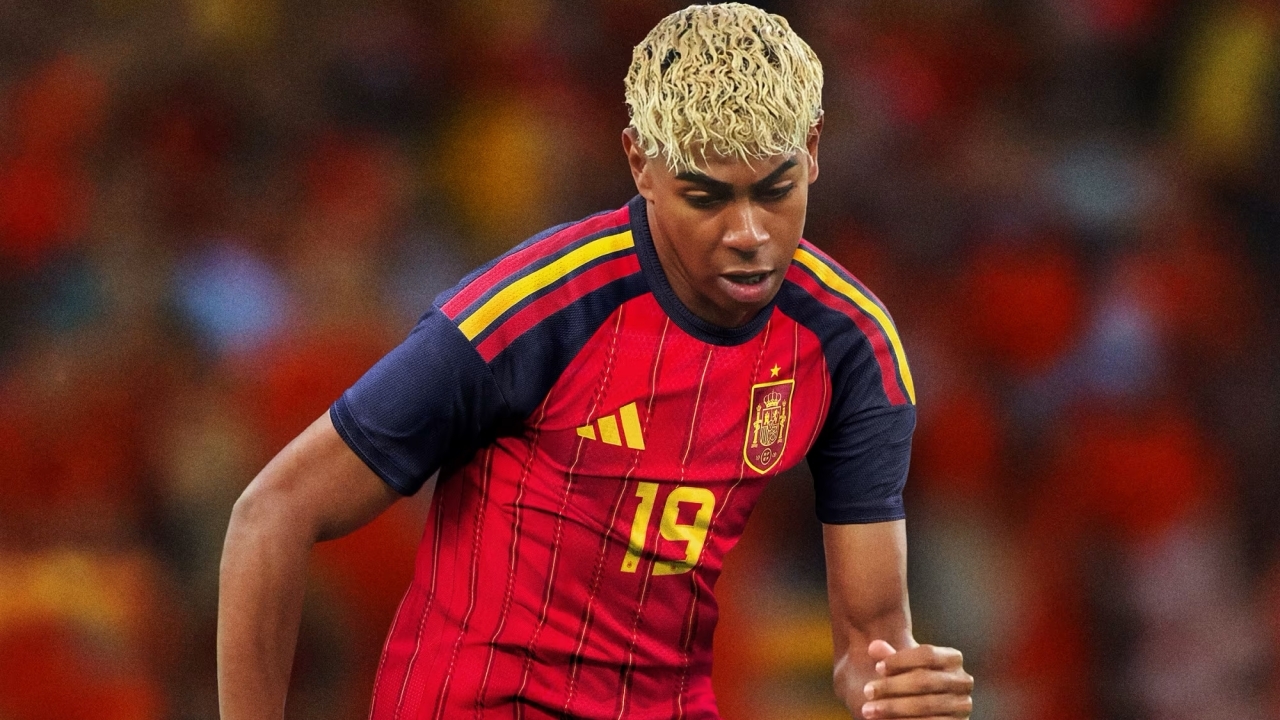
That identity didn’t stop in the past. Spain’s current national team, under coach Luis de la Fuente, who led them to UEFA Nations League 2023 and Euro 2024 titles with seven straight wins, including a narrow 2-1 victory over England to reclaim the top world ranking, still preserves this DNA.Technically,and in ball possession, it remains, but now faster and more forward-looking—not just possession for its own sake but modern possession football that knows when to accelerate in big games, led by speedy wingers Lamine Yamal and Nico Williams.
Meanwhile, the midfield core continues the legacy, with Rodri, the 2024 Ballon d'Or winner, playing a deep defensive role inherited from Busquets, and Pedri, the midfield mind reminiscent of Xavi and Iniesta.

Arriving at the 2026 World Cup, Spain’s story gains more meaning. Once almost paralyzed by the rift between Madrid and Barcelona, they now travel as European champions with a final 26-man squad containing no Real Madrid players for the first time in their 17 World Cup appearances. The identity "La Roja," which transcends club colors and was shaped by Aragonés and del Bosque, achieves full victory. Whatever this tournament’s outcome, a nation rich in linguistic and regional diversity remains united as one when La Roja takes the field.