

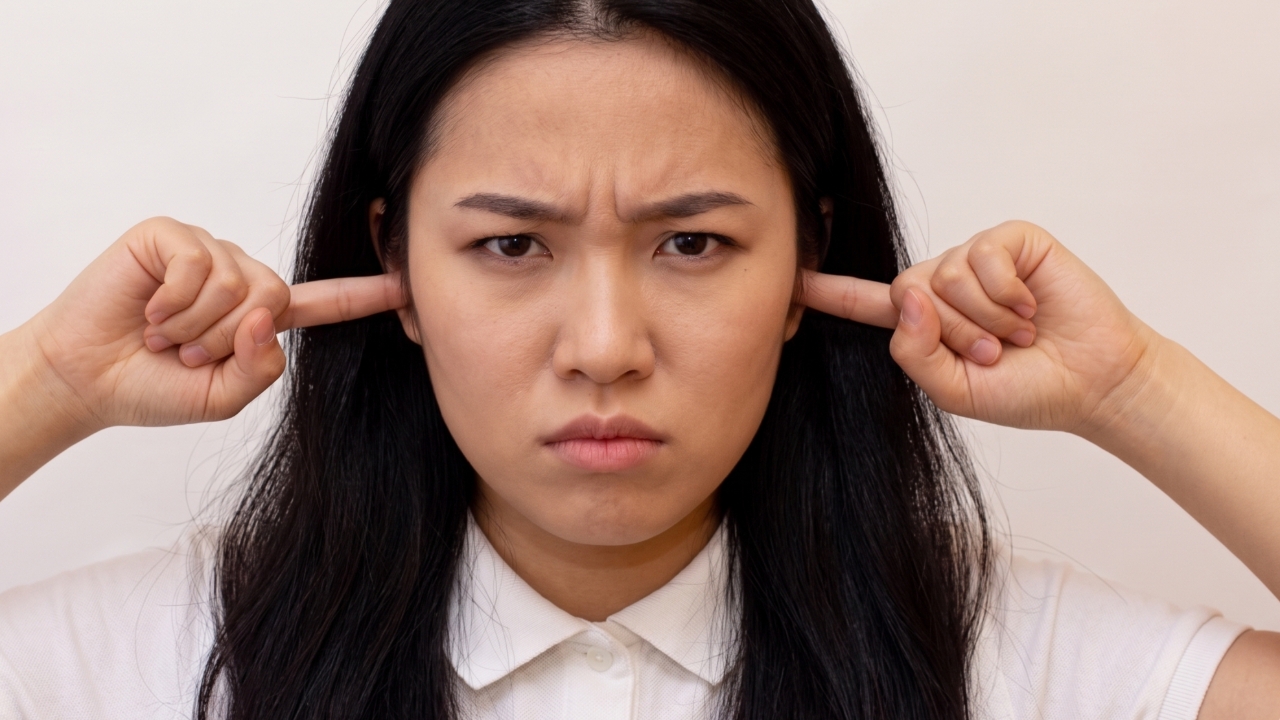
Understanding " Misophonia " Imagine sitting down to eat but suddenly feeling inexplicably irritated by the loud chewing of someone nearby, or at the office, the repetitive clicking of a coworker's pen distracts you so much you want to leave the room.
Many might think it's just being " irritable " or a temporary bad mood, but in reality, this intense irritation triggered by certain sounds may be linked to a condition called " Misophonia ", also known as " sound sensitivity disorder ".
Although these sounds are normal for most people, for those with Misophonia, small everyday noises can quickly trigger stress, anger, or discomfort, affecting work, study, and relationships.
Misophonia (English: Misophonia) is a condition where the brain reacts excessively to certain sounds, causing intense negative emotions even if the sound is not loud or bothersome to others.
The term Misophonia derives from Greek: "Miso" means "hatred" and "Phonia" means "sound," thus meaning "dislike or hatred of specific sounds." This condition is not about the volume but the "type of sound" each person is uniquely sensitive to. This condition involves an aversion or hatred of particular sounds. It relates to the type of sound rather than its loudness, and sensitivity varies between individuals.

Misophonia causes intense emotional reactions to certain sounds, even normal ones that don't bother most people. While the exact cause is unclear, it is believed to involve several factors:
1. Abnormal brain sound processing
The brains of those with Misophonia may respond more strongly to certain sounds, triggering immediate feelings of irritation, anger, anxiety, or stress.
2. Emotional associations with sounds
The brain might link certain sounds to negative past experiences or emotions, so hearing the sound again causes strong emotional reactions.
3. Genetic factors
Some families have multiple members with similar symptoms, suggesting genetic involvement, though no definitive conclusions exist.
4. Links with other mental health conditions
Misophonia may coexist with conditions like anxiety disorders, obsessive-compulsive disorder (OCD), or attention deficit hyperactivity disorder (ADHD), but not everyone with Misophonia has these conditions.
Some people become irritated or distracted within seconds of hearing certain sounds and may want to escape the situation immediately. Triggers differ individually but commonly include:

Misophonia likely involves interaction between the brain’s sound processing and emotional control areas. Trigger sounds may be perceived as disturbances or threats, causing physical reactions similar to a fight-or-flight response—like increased heart rate, stress, or anger. Accumulated stress, lack of rest, or mental fatigue can worsen symptoms.

If you regularly experience these when hearing certain sounds, you may have Misophonia:
If symptoms frequently disrupt daily life, consulting a specialist is advisable.

Though no specific cure exists, these strategies can help reduce the impact of Misophonia:
1. Use alternative sounds to mask triggers Play soft music, nature sounds, or use noise-cancelling headphones to reduce perception of triggering noises.
2. Maintain physical and mental health Getting enough sleep, exercising regularly, and managing stress can improve brain response to triggers.
3. Communicate with those close to you Explaining how certain sounds affect your emotions can reduce misunderstandings and help find solutions together.
4. Seek professional help If symptoms interfere with daily life, seeing a psychiatrist or psychologist can provide evaluation and tailored management strategies.
" Misophonia " is not just disliking certain sounds; it is a condition where the brain reacts emotionally more intensely to specific sounds, affecting quality of life. Sounds like chewing or pen clicking may seem trivial but can cause significant stress for some. Understanding this condition is a vital first step in caring for both physical and mental health.