

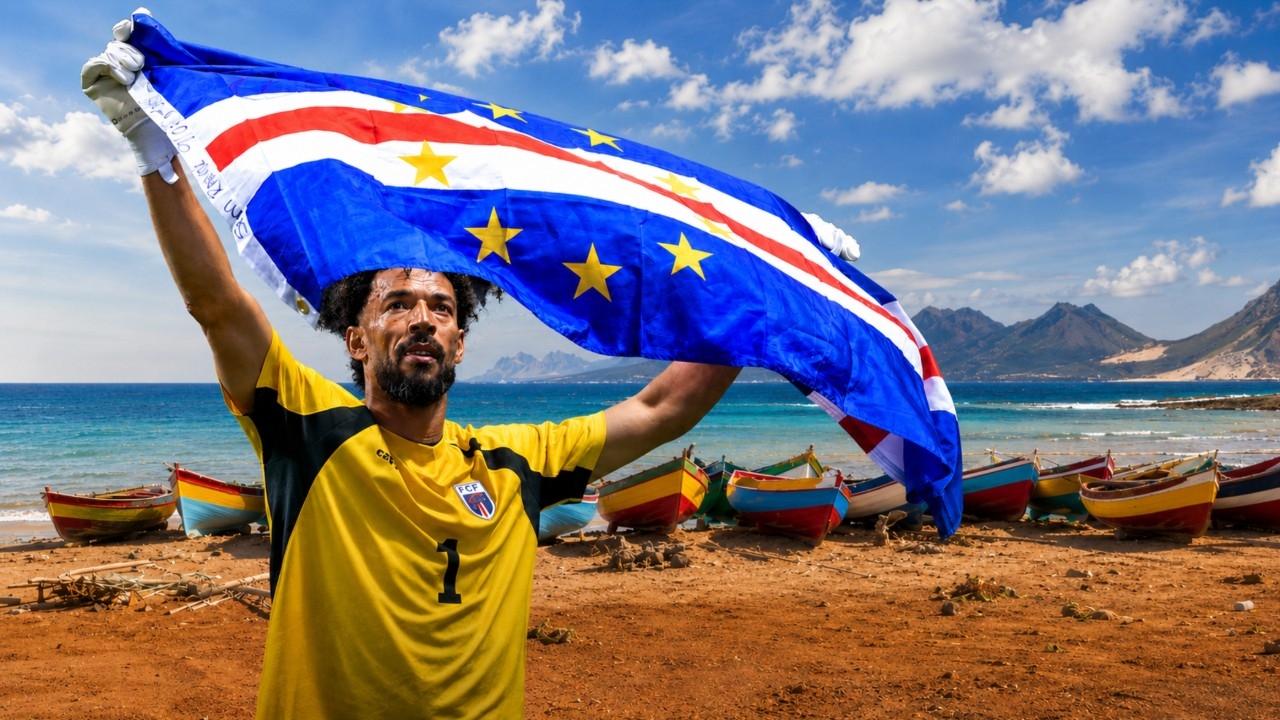
Cape Verde Cape Verde has become one of the most talked-about countries in the 2026 World Cup buzz, as no one expected this small team to emerge as a dark horse shaking the football world after securing a point against favorites Spain, while alsointroducing "Vozinha," the 40-year-old Cape Verde national team goalkeeper, who has inspired people worldwide.
What makes Cape Verde a topic of discussion is not just the draw with Spain, but the story of a small country playing in the World Cup for the first time, proving that underdog teams can create miracles on the biggest stage—a charm that keeps the World Cup popular.
Cape Verde is the name of a small island nation located in the Atlantic Ocean, west of the African continent, about 500 to 600 kilometers off the coast of Senegal.

This country consists of 10 main volcanic islands and several smaller ones. Although it is situated in the sea, geographically and culturally, Cape Verde is considered part of West Africa. Currently, the government officially uses the name "Cabo Verde," which is Portuguese.

Surprisingly, Cape Verde has only about 529,000 people (as of 2026), making it one of the least populous countries in the world, with a population size comparable to a medium-sized province in Thailand.
Many Cape Verdeans have emigrated abroad over centuries, especially to Portugal, the United States, France, and the Netherlands, resulting in large Cape Verdean communities overseas, with some estimates suggesting they outnumber those living in the country.

The country is known for its diverse natural beauty, from golden beaches and clear blue waters to Fogo volcano, one of its most prominent volcanic mountains.
Culturally, Cape Verde is a crossroads of African and European civilizations, particularly influenced by Portugal, which ruled the islands for centuries. This blend created a unique Creole culture, evident in its language, music, cuisine, and lifestyle.

Historically, the Cape Verde islands were uninhabited until Portuguese sailors discovered them in the 15th century. Due to their central location in the Atlantic, they became an important stopover on global trade routes and played a role during the transatlantic slave trade era.
After centuries under Portuguese rule, Cape Verde gained independence in 1975 and has since developed steadily, becoming one of the more stable countries with relatively high living standards compared to others in the region.

Seeing Cape Verde's name at the 2026 World Cup marks a historic milestone, as it is one of the new African nations to reach the tournament finals. This success did not come overnight but resulted from over a decade of continuous football development, including recruiting players of Cape Verdean descent raised in Europe to strengthen the national team.

The match that made Cape Verde widely known was their goalless draw against Spain, etching the name "Cape Verde" into the global football conversation. The Cape Verde national team held firm against the aggressive attack of one of the tournament favorites, maintaining disciplined and strong defense, especially through the veteran goalkeeper "Vozinha," aged 40, who became the team’s hero with several crucial saves.
Undoubtedly, the entire world now remembers the name "Cape Verde" as the underdog that created a legendary surprise at the 2026 World Cup.
Related news