

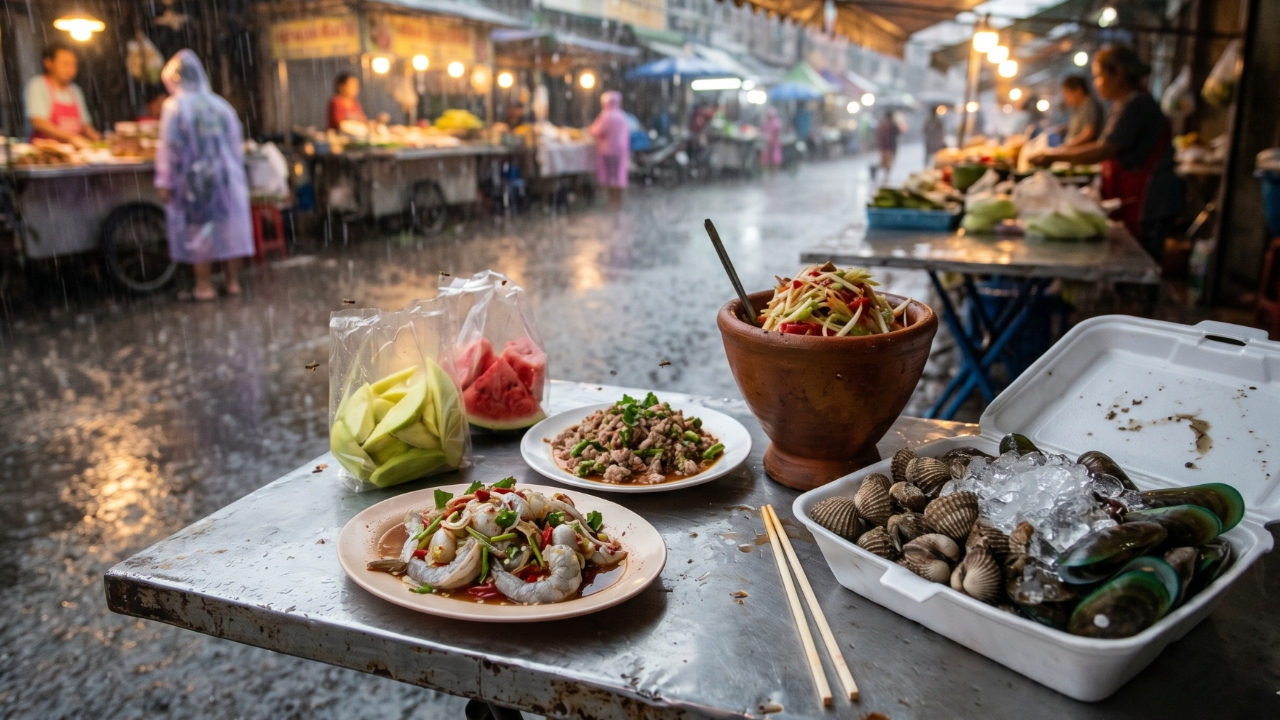
As the rainy season arrives, many people may worry about colds or respiratory illnesses. However, equally important to watch out for are "food poisoning" and "diarrhea," which are common in this period. The high humidity and frequent temperature changes create favorable conditions for the growth of various pathogens, including bacteria and viruses contaminating food and drinking water.
Spicy dishes like papaya salad with fermented fish, seafood salad, or various raw meat dishes might be favorites for many. But in the rainy season, these are risky foods because many ingredients are uncooked. If washing or storage is not hygienic, contamination by pathogens is easy.
If you want to eat these dishes, choose establishments with good cleanliness standards and opt for dishes cooked thoroughly at every step to reduce risk.
Fresh oysters, boiled clams, or shrimp marinated in fish sauce are dishes to be especially cautious of during the rainy season. Rainwater running into natural water sources can carry contaminants and bacteria into aquatic farming areas.
Eating seafood fully cooked with heat reduces the chance of ingesting pathogens that can cause diarrhea, nausea, or food poisoning.
Even cooked food can become a bacterial breeding ground if left at room temperature for hours, especially boxed meals, curry rice, or food displayed for long periods.
It is best to eat freshly cooked food. If you buy food but cannot eat immediately, store it in the refrigerator and reheat it thoroughly before eating.

Fresh vegetables used as side dishes and fruits peeled and cut into bags sold by street vendors may be contaminated due to improper washing or exposure to dust and rainwater during sale.
During the rainy season, choose vegetables that have been blanched or boiled, and if you want to eat fruit, buy whole fruits to wash and peel yourself for greater safety.
Many focus on food safety but overlook drinking water and ice, which are key causes of diarrhea in the rainy season. If production or transport lacks standards, contamination by pathogens may occur.
Choose to drink clean water from sealed containers and use ice produced by certified factories to reduce illness risk.
Besides avoiding risky foods, following basic hygiene principles is essential, including: Eating freshly cooked food, using personal spoons, and washing hands with soap before every meal. If food shows abnormal color, smell, or taste, avoid eating it and discard it immediately. It is not worth the risk of food poisoning or diarrhea later.