

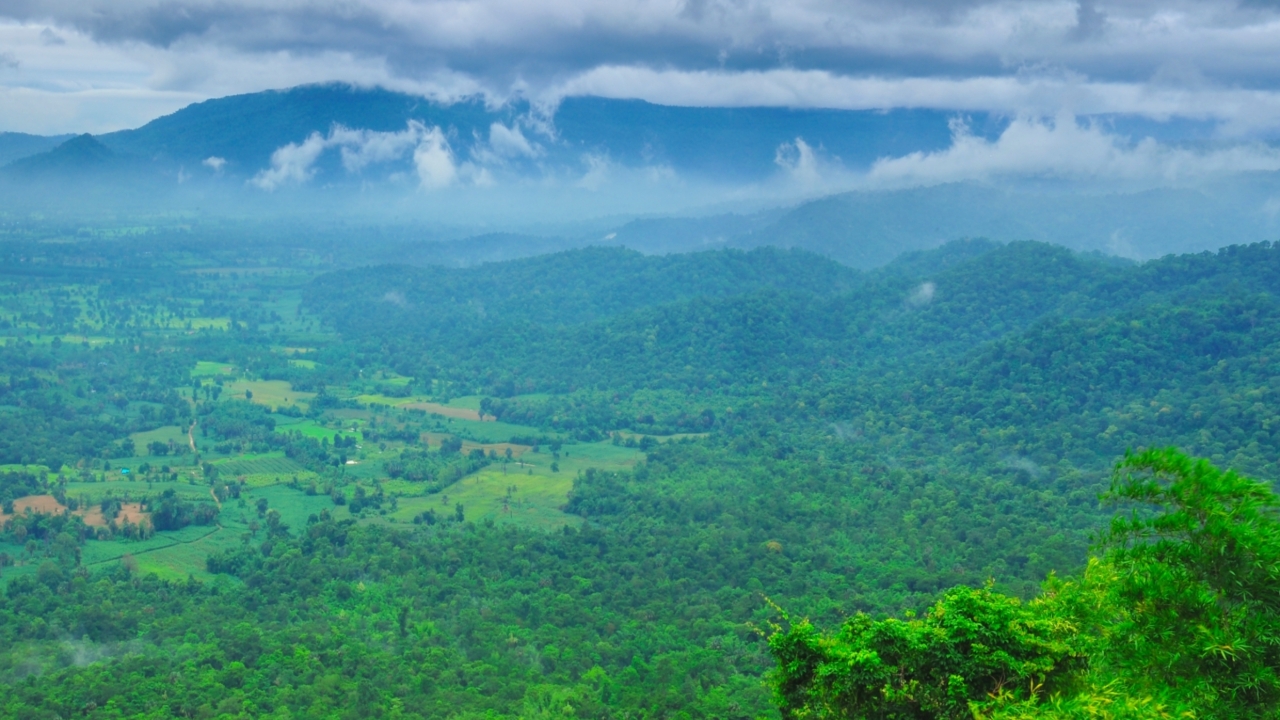
A tour of the beauty and tourist spots of Thap Lan National Park, Thailand's last Lan forest, along with an in-depth look at its ecological importance and why Thais must unite to promote the #saveThapLan movement.
The trending hashtag #saveThapLan has raised public awareness about forest conservation. While many may recognize this forest mainly in the context of agricultural land disputes, Thap Lan National Park is also one of Thailand's ecological tourism gems, rich in biodiversity and charm that attracts travelers.
Location of Thap Lan National Park, Thailand's second largest forest area.. (This part is a fragment; no translation applicable.)According to the Department of National Parks, Wildlife and Plant Conservation, Thap Lan National Park is Thailand's second largest national park, covering over 1.39 million rai. It spans from Nadee District in Prachinburi Province to Pak Thong Chai, Wang Nam Khiao, Khong Khon Buri, and Soeng Sang districts in Nakhon Ratchasima Province, featuring diverse forest types including dry dipterocarp, mixed deciduous, moist evergreen, and dry evergreen forests.
According to the Tourism Authority of Thailand (TAT) and other sources, Thap Lan National Park offers many outstanding features for nature-loving tourists, including:
Its most distinctive feature is the "Lan forest" (Corypha lecomtei), an ancient large palm species. Thap Lan National Park contains the largest remaining natural Lan forest in Thailand, preserved in its pristine state. Walking through this Lan forest is like stepping back into an ancient world.
Located in Wang Nam Khiao District, Nakhon Ratchasima Province, this landmark is popular for watching sunrise and sunset amid panoramic landscapes. A highlight activity is "slingshot tree planting," where visitors shoot seed pods into the forest, combining eco-tourism with forest restoration.

For camping enthusiasts, the park offers designated camping areas and accommodations. It also features abundant aquatic attractions such as Bo Thong Waterfall, Thap Lan Waterfall, and Heo Nok Kok Waterfall, with clear streams ideal for nature walks and relaxation.
UNESCO has designated the Dong Phayayen-Khao Yai forest complex, which includes Thap Lan National Park, as a natural World Heritage Site due to its rich biodiversity and endangered wildlife like tigers, wild elephants, and gaur. Protecting Thap Lan helps maintain the vital wildlife corridor, allowing safe migration and breeding.
Thap Lan National Park was established on 23 December 1981, serving as a key mechanism to prevent forest encroachment in northeastern and eastern Thailand for over four decades.
The park's ecological richness, beautiful attractions, and role as a habitat for protected wildlife connect directly to the #saveThapLan campaign. Citizens and conservation groups express concern over proposed park boundary adjustments that could result in forest loss.
Preserving Thap Lan protects an important ecological corridor for wildlife and safeguards "natural capital" so future generations can enjoy beautiful eco-tourism sites and a large green lung that supports the country's climate balance.
Thap Lan National Park is more than just a green spot on the map; it is a World Heritage natural treasure, a source of community value, and a vast home to wildlife. Understanding and visiting this area with respect for nature will help turn the #saveThapLan movement into genuine, sustainable conservation.
Image: Thap Lan National Park