

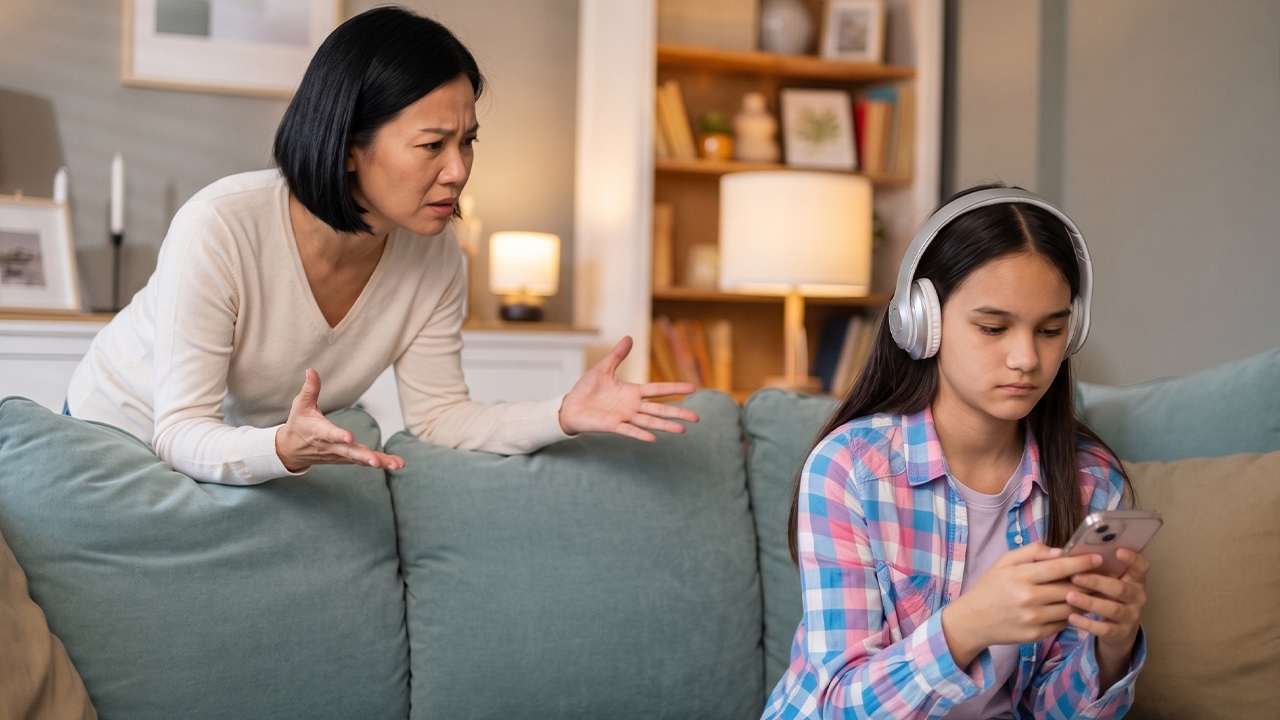
Children typically begin to want personal space between ages 9 and 12. Parents may feel hurt, but this is a normal developmental stage. Understanding adolescent psychology and knowing how to respond and which phrases to avoid can help reduce family gaps.
A common family challenge is when children start closing their bedroom doors and talking less. Child development psychology shows that the desire for personal space usually begins between ages 9 and 12 (preteen or early adolescence) and becomes clearer after age 13. At this stage, children begin to separate from family to bond more with friends and seek greater independence.
Many parents mistakenly think that when children want personal space, it means they love them less. However, from a child psychiatrist's perspective, this is a positive developmental sign indicating growth.
Parents should start stepping back and observe when these signs appear.
1. Spending more time in their bedroom. Prefers to close or lock the door during personal activities.
2. Keeping secrets from friends. Has things they don’t share with parents or avoids phone calls in front of them.
3. Irritated when questioned persistently. Shows resistance when privacy is invaded.
4. Wants to make decisions independently. From clothing choices, room arrangement, to hobbies.
Miscommunication can turn distance into conflict. Parents should avoid these statements.
Balancing "giving freedom" and "neglect" is delicate. Parents can adapt as follows.
Honor your child by knocking before entering their room, avoid snooping through phones or diaries, but set clear shared rules—for example, allowing private time in their room but requiring everyone to join for dinner.
When your child leaves their personal space, ask open-ended questions like "Anything you'd like to share today?" and listen attentively. If mistakes occur, discuss calmly with reasons rather than emotion.
If space is limited, designate a small corner as your child's personal area. Allow them to decorate, organize, and take responsibility for it. This signals respect and acceptance of their individuality.
A child's desire for personal space is not a rejection of family but a first step in growth. Parents need to shift from "controller" to "supporter," maintaining distance to prevent alienation and ensuring home remains a safe space for the child.