

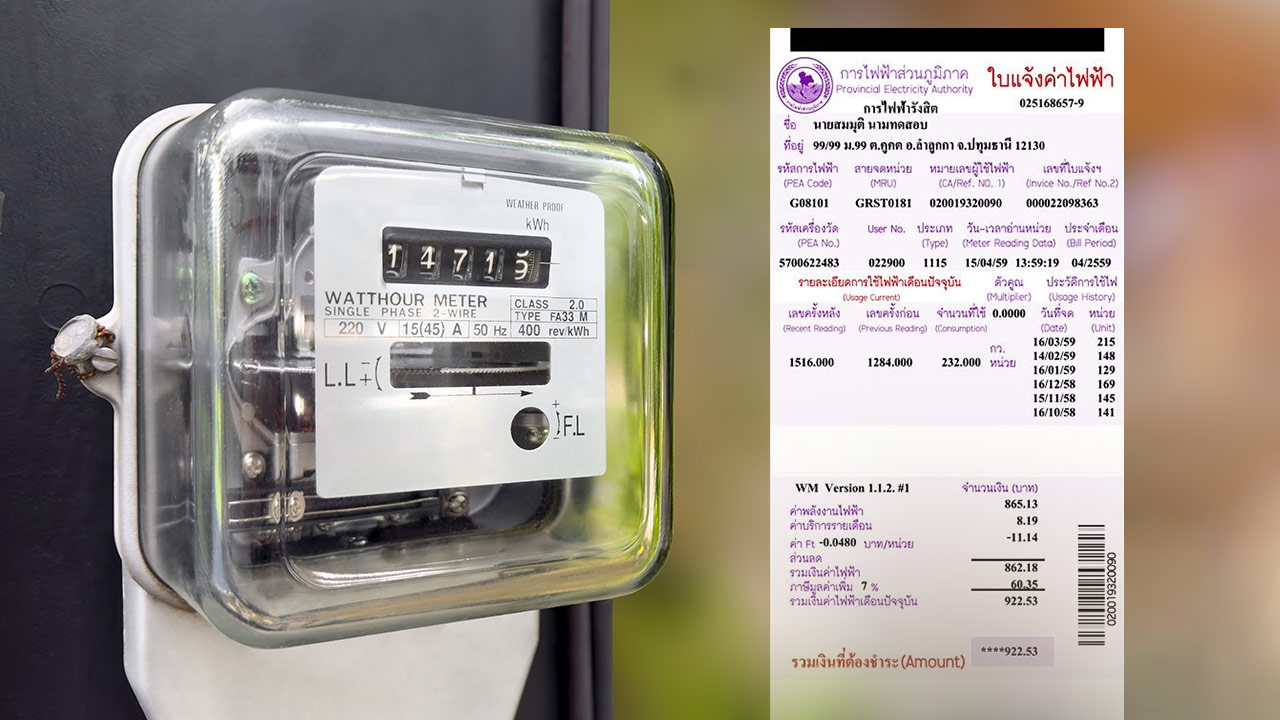
Every time the electricity bill arrives, many people break a sweat over the issue of "high electricity costs." Let's clear up the confusion. "Ft Charge" What exactly is it on the electricity bill, and why must consumers pay it? Here's a simple summary to help users understand and prepare properly.
Whenever the electricity bill arrives at home, many wonder why the bill is so high even though their usage hasn't changed. Some may have just noticed the "Ft charge" added to their bill. So, what exactly is it?
The Ft, short for Fuel Adjustment Charge (previously called Float time), is a "variable electricity fee" or the cost of electricity production beyond the control of the Electricity Generating Authority of Thailand (EGAT). It is updated every four months. According to the Energy Regulatory Commission (ERC), the main factors for calculating the Ft include fuel costs for electricity production (such as natural gas, imported oil, coal) and fluctuating foreign exchange rates.
Thailand's electricity pricing structure consists of two main parts: the "base electricity charge," reflecting the costs of building power plants and transmission systems (usually fixed for about 3-5 years), and the "variable electricity charge (Ft)."
The reason for separating the Ft charge and making consumers jointly responsible is to reflect actual cost fluctuations. When global fuel prices drop, the Ft can become negative (resulting in a discount). Conversely, if fuel prices surge, the Ft increases according to ERC's decision. This explains why electricity bills quietly become more expensive at times.
Many only realize and often mistakenly believe that high electricity bills are solely because of an old air conditioner, overlooking the Ft charge. In reality, a single electricity bill consists of
Therefore, if you use electricity-hungry appliances (like an old air conditioner with a heavily working compressor), your unit consumption spikes. When multiplied by a possibly higher Ft rate, your overall bill escalates exponentially. In summary,"The more electricity you use, the more the Ft multiplies your bill."That's the reality.
Salaried workers struggling with expenses can tackle high electricity bills at the root by reducing the number of "units" consumed. This lowers both the base electricity charge and the Ft-multiplied portion. For example,regular air conditioner cleaningevery six months, setting air conditioner temperature to 26-27°C while using a fan, and always unplugging unused electrical appliances.
With these steps, regardless of how the Ft rate changes next period, you can control your electricity bill and protect your wallet's liquidity.