

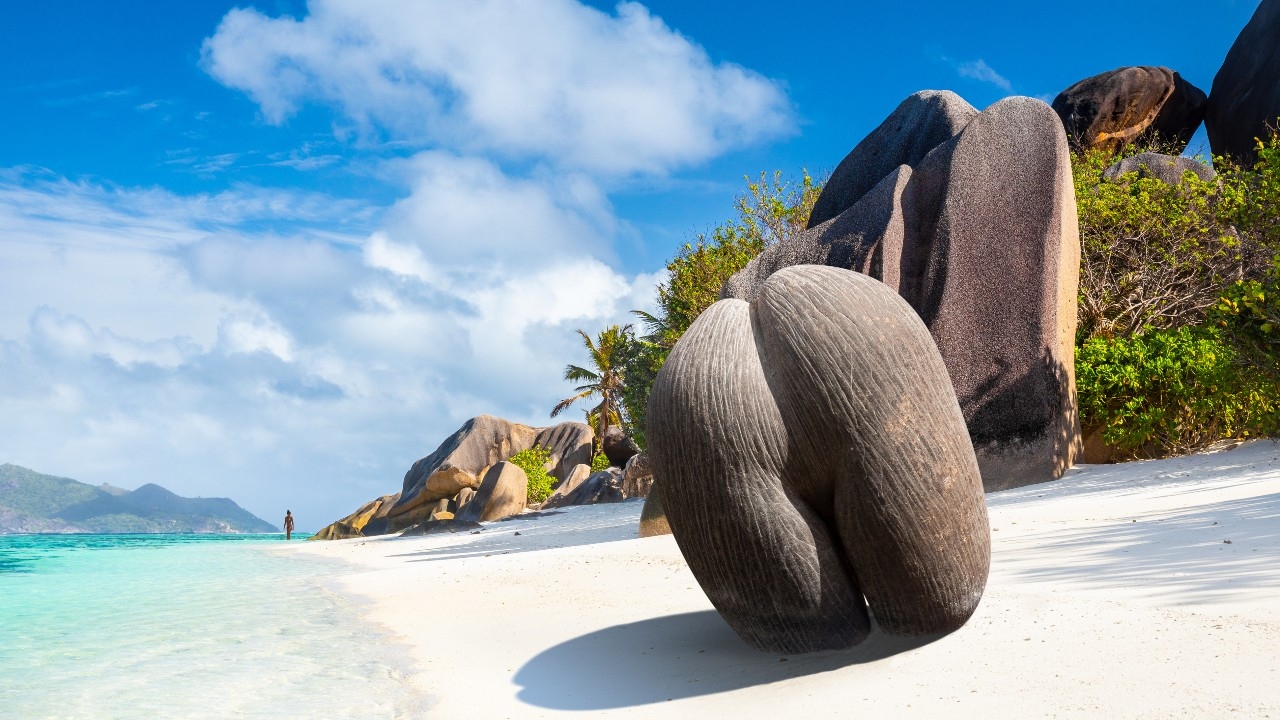
Nong Nooch Pattaya Garden stirred excitement by opening the shells of 12 sea coconuts, the world's largest seed plant, with a total value exceeding 1.2 million baht. The event introduced this extraordinary palm species that can live up to 400 years.
The event quickly became an online sensation after Nong Nooch Pattaya Garden, led by Chairman Kampol Tansajja, held an activity peeling and opening 12 sea coconut (Coco de Mer) fruits, a globally rare plant. Each fruit is valued at about 100,000 baht, bringing the total value of this botanical opportunity and loss to 1.2 million baht. The seeds will be used for propagation and educational purposes, prompting many to ask what this coconut is and why it commands such a high price.
The sea coconut, often called the twin coconut and scientifically named Lodoicea maldivica, is a unique palm species. It holds a Guinness World Record as the plant with the largest and heaviest seed worldwide, with fruits weighing between 10 to 20 kilograms each. Its distinctive shape resembles the hips or buttocks of a woman, earning it the Thai nickname "female buttock coconut."
This plant is known for its extremely slow growth, which is the main reason it is rare and costly. Its remarkable growth cycle includes the following stages:

Historically, the name Coco de Mer, or "sea coconut," originated because people found these fruits floating in the Indian Ocean currents without ever having seen the tree on land. This led sailors and ancient people to believe the fruit was sacred, growing under the deep sea or being a heavenly fruit with medicinal properties to cure many ailments.
Due to its mystery and rarity, anyone who found a sea coconut fruit in the past had to present it to kings or sultans as a royal tribute. Later, it was discovered that the true native habitat of the sea coconut is a small island in the Seychelles archipelago in the Indian Ocean.
According to Nong Nooch Pattaya Garden, they have successfully cared for and conserved this rare plant species, currently nurturing 90 sea coconut trees—35 mature and 55 seedlings. There are plans to plant more seedlings to develop the area into a key global center for conserving and propagating the sea coconut.

The success in opening and preparing the seeds for propagation not only highlights Thailand's botanical potential on the international stage but also offers opportunities for Thai people and tourists to experiencethe marvels of naturethat are increasingly rare to witness today.