

From the kits footballers wear on the pitch to the patterns reflecting each nation's unique identity competing in the World Cup, the designs behind these uniforms are carefully crafted.
At the 2026 World Cup hosted by the United States, Canada, and Mexico, one of the first topics discussed was the average temperature of 32°C. This meant that the design of the teams' football shirts had to consider heat, humidity, and the symbolic elements representing each country, all without compromising player performance.
:NikeThe top football brand considered three main factors: heat, humidity, and national pride. These were reflected in the kits for France, Brazil, and England, as well as the host nations, the United States and Canada.

Phil McCartney, Nike's Chief Innovation, Design, and Product Officer, revealed that the company collaborated with athletes, coaches, and football associations to understand how kits affect gameplay. Nike also engaged with fans to learn what it means to wear the Uruguay national team shirt, represent France, or play for Canada. They then combined these insights with science and innovation to create beautiful designs.
McCartney explained that Nike developed the kits in their headquarters' in-house lab, which includes a 200-meter indoor track, a small football field, and a basketball court, equipped with hundreds of motion capture cameras. They also have a temperature simulation room that replicates the effects of heat and humidity on clothing, testing both on real people and robotic mannequins.
He described how the team used motion capture systems to observe how players move while wearing the kits and how the kits respond to those movements. The temperature simulation room tested the kits' breathability, sweat absorption, and moisture management.
For this World Cup, Nike developed a new fabric made entirely from recycled materials with improved breathability. The knitting technique uses mesh panels in certain areas to enhance airflow, addressing players' ongoing demands for better temperature control.
However, despite rigorous testing, the kit launch faced some challenges, notably raised seams on the shoulder areas of several teams' jerseys, including France and Uruguay, which were fixed in time for the 2026 World Cup kickoff.
While the physical properties of the kits are crucial to athletes, appearance is equally important to fans who wear national jerseys and seek a connection with their teams. McCartney said the design team drew inspiration from various sources—history, art, music, and culture—to create strong ties to each country.


For example, France's away kit features a light green tone representing the verdigris patina on the Statue of Liberty, which France gifted to the United States in the late 19th century. Inside the jersey, the word "Liberté" is engraved within the silhouette of the statue's crown. The front displays a rooster, a symbol of both the national team and France itself, accompanied by two stars representing their two World Cup titles from 1998 and 2018.

France's home kit includes a collar, as does Uruguay's. Nike noted that the decision to include collars was driven by each football association's preference. France wanted to reflect its status as a global fashion capital.
Uruguay preferred to maintain a classic, traditional look, consistent with earlier jerseys that commonly featured collars.
National symbols were also considered in the designs for the United States and Canada. The U.S. home jersey has red and white horizontal stripes symbolizing the American flag, while Canada's kit prominently features a large maple leaf. McCartney concluded that, especially for a global event like the World Cup, the design team places great importance on expressing national pride through the kits.

Meanwhile, Adidas, another leading football brand and sponsor for Argentina—the 2022 World Cup champions—Spain, the reigning Euro 2024 champions, as well as Belgium and host nation Mexico, also unveiled cooling equipment for the tournament.
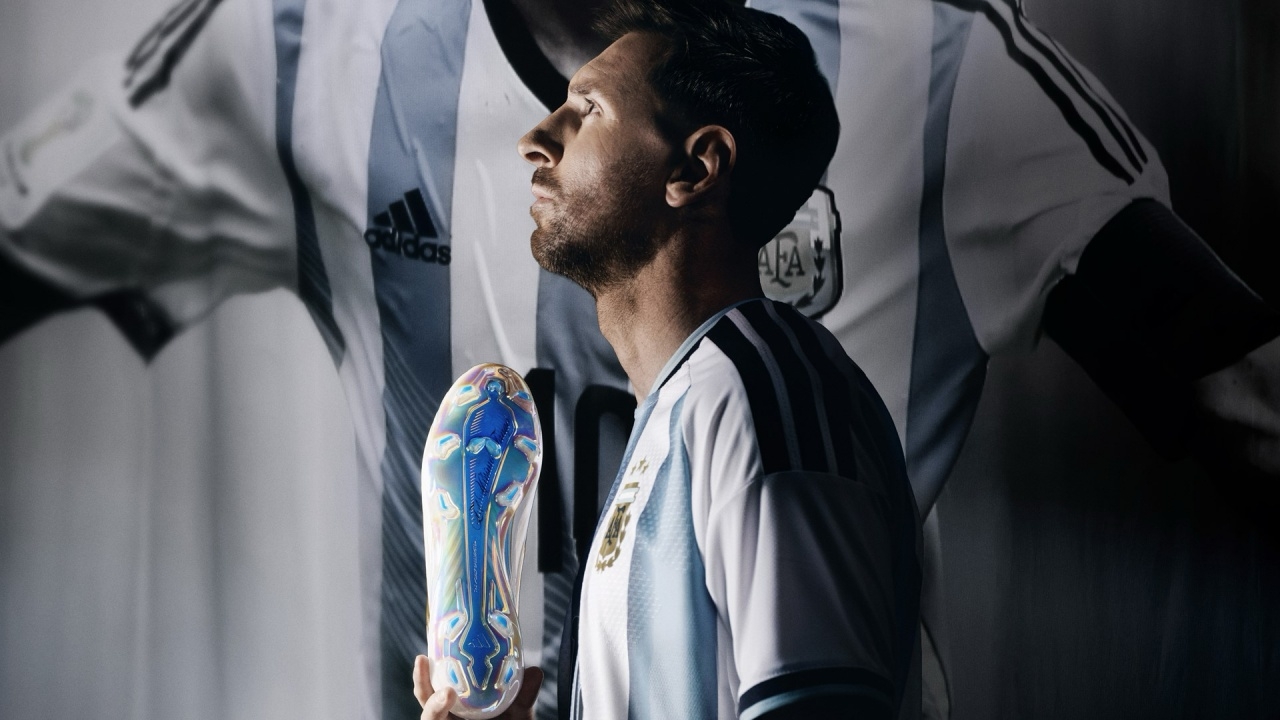
Argentina's home kit retains the traditional sky blue and white vertical stripes but adds a gradient of three blue shades inspired by the jerseys worn during their three World Cup victories in 1978, 1986, and 2022.
Spain's home kit features a pinstripe design with a red base and vertical yellow stripes drawn from the national flag and emblem, with "ESPAÑA" embroidered on the back neck area.

Belgium's home kit stays true to its deep red color, accented with black and yellow flames inspired by the team's nickname, the "Red Devils." Mexico, as one of the hosts, has "SOMOS MÉXICO" ("We Are Mexico") inscribed on the back neck, symbolizing unity and the passion for football that shapes the Mexican spirit.
Beyond design, Adidas introduced the "CLIMACOOL SYSTEM" cooling technology specifically for this tournament to combat the intense heat and humidity in many host cities. Developed in collaboration with the Mercedes-AMG Petronas Formula One team, this system adapts cutting-edge cooling tech for football use. It consists of three main components: a cooling vest filled with frozen gel, a cooling jacket from each association, and overshoes designed to lower foot temperature.
The system works in two main steps: players wear the vest over their match shirt, which contains special frozen gel. As the gel melts, it transfers cooling to the torso, abdomen, and back, systematically lowering body temperature. Then, players put on their association's jacket, which uses an airtight design to trap the cool air around the vest, nearly doubling cooling efficiency. Together, these reduce core body temperature by up to 0.5°C and skin temperature by as much as 13°C. The overshoes also use cooling gel to lower foot temperature by 2°C within seven minutes, without affecting touch or movement.
Source:FastCompany