

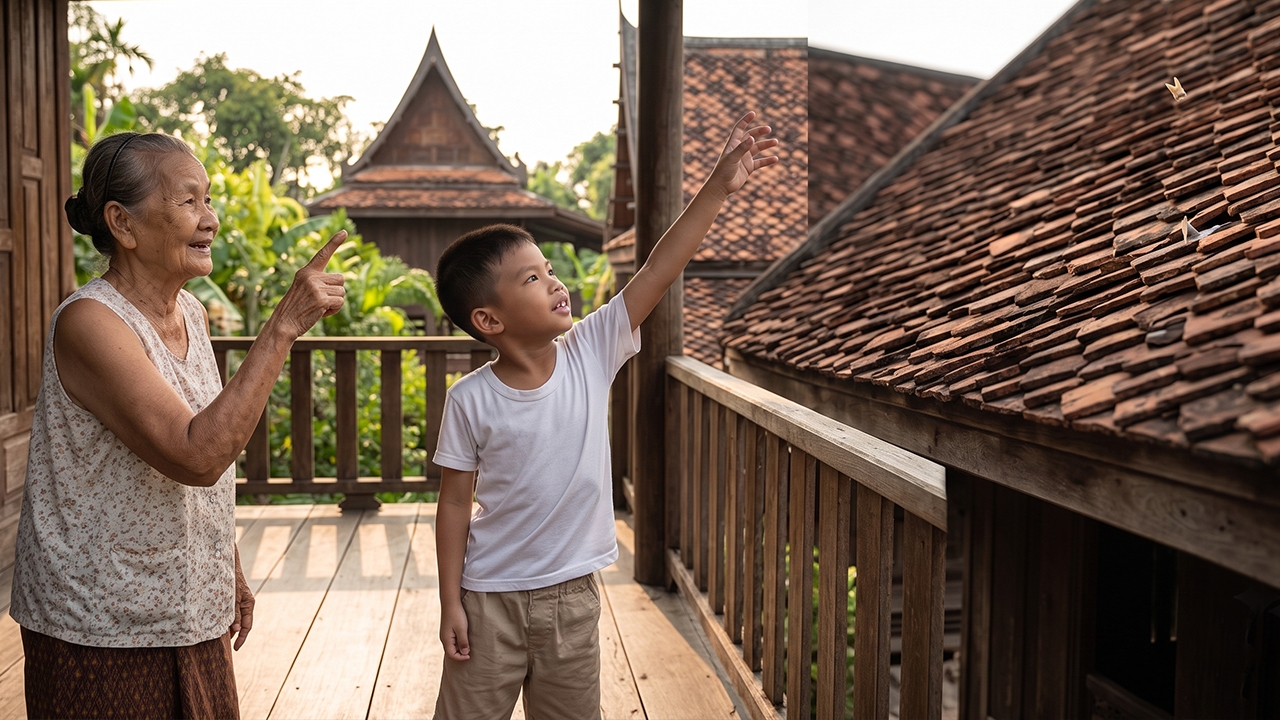
Do you remember when you were a child, adults often told you to “ throw lower teeth onto the roof and upper teeth onto the ground?” This belief is not just a fun story but contains interesting wisdom and psychological insight.
The belief about throwing lost baby teeth is a shared cultural practice found in many Asian countries such as Thailand, China, Japan, and Korea, with similar customs: if a lower tooth falls out, it is thrown onto the roof, but if an upper tooth falls out, it is thrown onto the ground or placed under the bed.
According to Asian folk beliefs, this practice is based on the idea of "the direction of permanent tooth growth." Ancient people believed that throwing the tooth in the desired direction would help guide the new permanent tooth to grow beautifully and strongly. Since lower teeth grow pointing upward, they must be thrown high; upper teeth grow pointing downward, so they are thrown to the ground.
Beyond the belief about tooth growth direction, from a psychological and social science perspective, throwing teeth onto the roof is a clever strategy used by adults in the past.
Looking globally, different cultures have various ways of handling children’s fear about losing teeth.
While Asian cultures emphasize the direction of throwing teeth to ensure beautiful growth, Western culture uses the story of the “Tooth Fairy.” Children place their lost baby teeth under their pillows before sleeping, and in the morning the tooth is gone, replaced by a coin or small gift. Historical evidence shows this belief became widespread in the 20th century to help reduce children’s anxiety similarly.
Although the tradition of throwing teeth onto the roof brings smiles, modern dental and medical perspectives recommend the following when a child’s baby tooth falls out.
The belief about “why lost teeth must be thrown onto the roof” is not merely an old superstition but a bridge connecting cultures, a nurturing strategy for children, and a symbol of family love passed down through generations. Even as medical technology advances to preserve stem cells from teeth, this story continues to create smiles for both adults and children alike.