

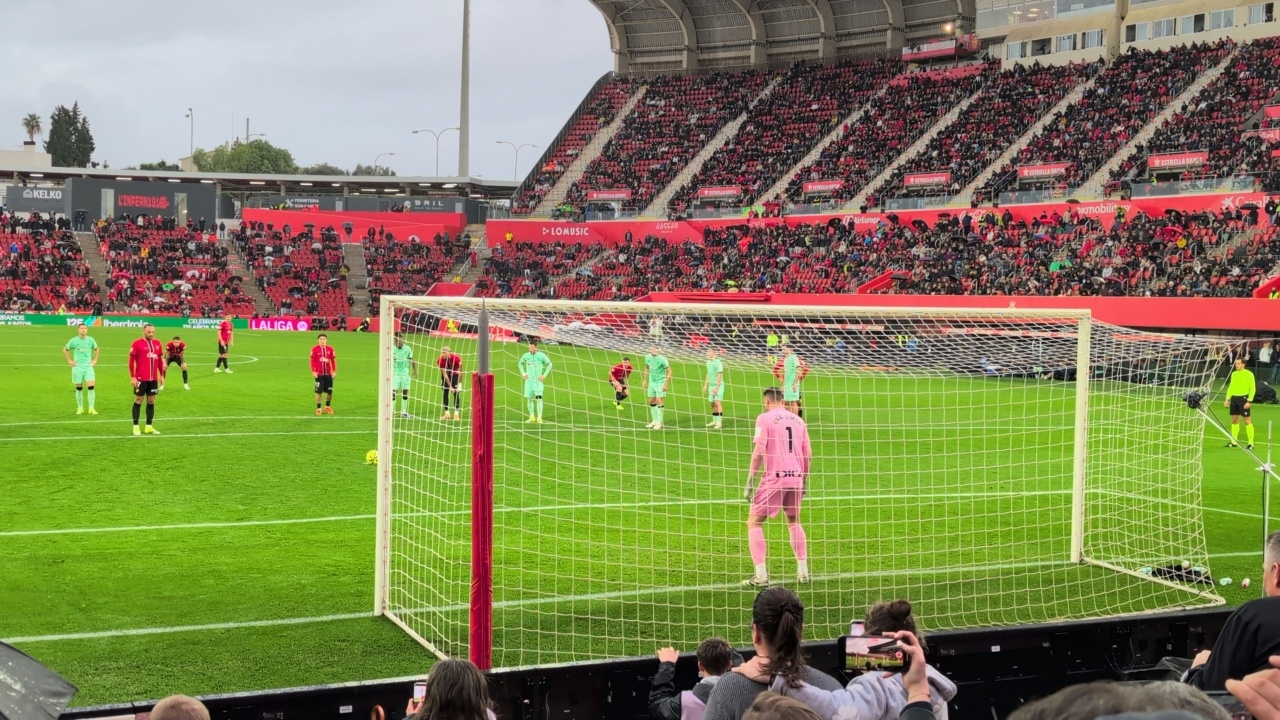
A study analyzing nearly 7,000 penalty kicks found that kicking first does not always confer an advantage. Another study suggests assigning the most composed players to shoot during critical deciding moments.
The longstanding belief in football that the team kicking first in a penalty shootout has a higher chance of winning is being challenged by new research published in the journal Football Studies. The study indicates that the true determinant of victory is not the order of kicks but the varying psychological pressure at different moments during the shootout. Notably, in the 2026 World Cup round of 32, two of the first four matches—Paraguay defeating Germany and Morocco beating the Netherlands—were decided by penalty shootouts.
Wired magazine featured an article aligned with the 2026 World Cup titled "Penalty Shootouts: Is the Team That Kicks First More Likely to Win?" referencing a 2010 study published in the American Economic Review. That study found teams kicking first won nearly 60 percent of shootouts, while teams kicking second won only 40 percent.
However, as databases have grown and more researchers have studied penalty shootouts, that advantage has gradually diminished.
Studies published in 2012, 2019, 2023, 2024, and 2025 have progressively reported smaller advantages. The most comprehensive analysis to date, covering nearly 7,000 shootouts and over 74,000 penalty kicks, found no evidence that teams kicking first win more often than those kicking second. If any advantage exists, it is less than 1.8 percent—much lower than the widely cited 60 to 40 percent figure.
The latest research in Football Studies offers a new perspective: the correct question is not whether kicking first provides an advantage, but rather where any such advantage originates.
The researchers hypothesize that pressure remains a decisive factor, but not all high-pressure situations are the same. The key is distinguishing between penalties where a miss immediately eliminates the team and those where scoring immediately secures victory.
The study notes that current football rules do not equally distribute the highest-pressure opportunities. Teams kicking second more often face scenarios where a miss means instant elimination, while opportunities to shoot for an immediate win are distributed differently throughout the shootout.
The findings show that penalty kicks which, if scored, immediately win the match have a high success rate of 89.1 percent, whereas those where a miss means immediate elimination have a lower success rate of 60.4 percent.
Importantly, when factoring in penalties that decide wins or eliminations, researchers found that the order of kicking does not significantly explain performance differences. In other words, the apparent advantage of kicking first comes not from the order itself but from the types of psychological pressure situations associated with that order.
Researchers suggest this difference may have strategic implications. If certain players handle extreme pressure better than others, reserving those players for the highest-risk moments may be more effective than simply having them kick early in the shootout.
As with other models, this research simplifies reality and does not yet incorporate factors such as goalkeeper strategies, interactions between goalkeepers and shooters, crowd influence, cumulative fatigue, or individual psychological characteristics of players. The researchers acknowledge these variables need further study in the future.
Source:Wired