

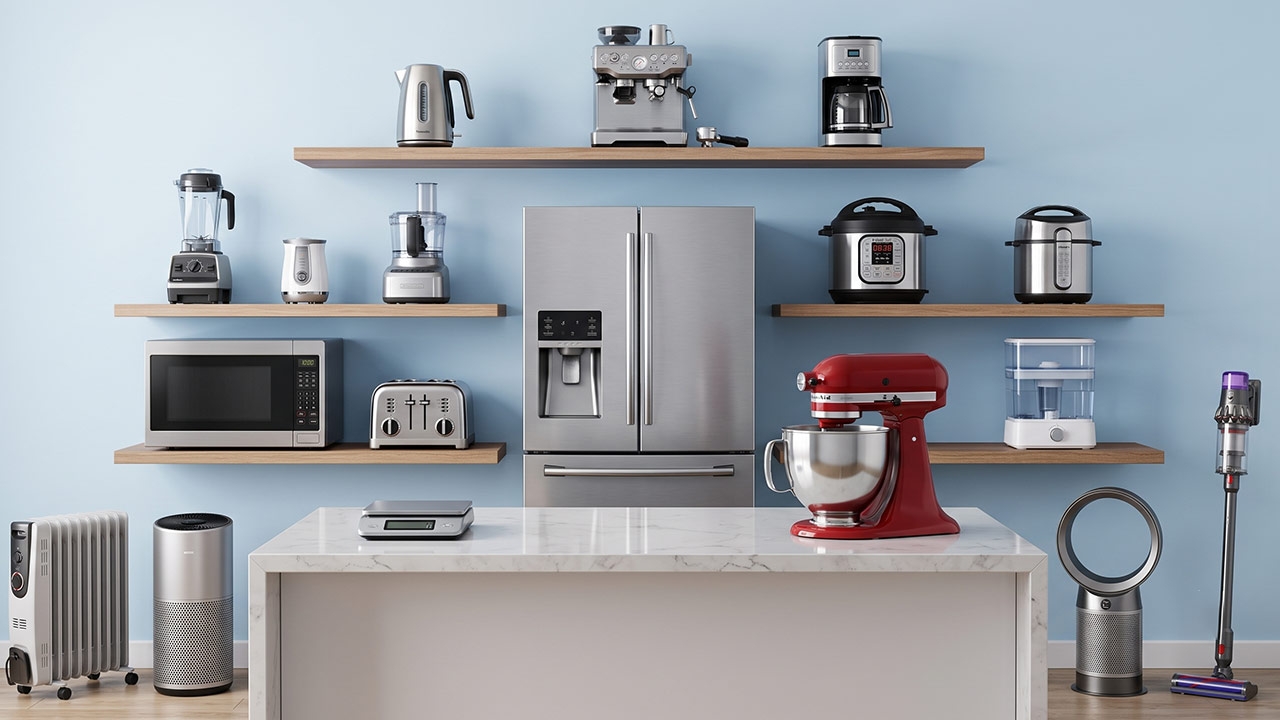
Here are the top 10 household appliances with the highest hourly electricity consumption, based on data from the Ministry of Energy. Check which devices are driving up your electricity bill so you can adjust your habits and save money during times of rising living costs.
As living expenses and household costs rise, understanding the energy consumption rates of different appliances is crucial for managing expenses. Recent data from the Department of Alternative Energy Development and Efficiency (DEDE), Ministry of Energy, compiles and ranks the 10 most power-consuming appliances, calculating their average hourly electricity costs to help the public plan usage efficiently.

Assessment shows that appliances related to heating and large motors consume the most energy, including:
1. Water heater. Consumes 2,500 - 12,000 watts, averaging 10 - 47 baht per hour.
2. Washing machine. Consumes about 3,000 watts, averaging 12 baht per hour (a 2.5-hour wash cycle costs approximately 30 baht).
3. Air conditioner. Consumes 1,200 - 3,300 watts, averaging 5 - 13 baht per hour.
Appliances with moderate to low electricity consumption.
Although consuming less power than the top three, prolonged or improper use can still affect monthly electricity bills.
1. Electric iron. Consumes 750 - 2,000 watts, averaging 3 - 8 baht per hour.
2. Rice cooker. Consumes 450 - 1,500 watts, averaging 2 - 6 baht per hour.
3. Electric stove. Consumes 200 - 1,500 watts, averaging 0.80 - 5 baht per hour.
4. Vacuum cleaner. Consumes 750 - 1,200 watts, averaging 3 - 5 baht per hour.
5. Toaster. Consumes 800 - 1,000 watts, averaging 3 - 4 baht per hour.
6. Hair dryer. Consumes 400 - 1,000 watts, averaging 2 - 4 baht per hour.
7. Microwave oven. Consumes 100 - 1,000 watts, averaging 0.40 - 4 baht per hour.

The indicated electricity costs are average estimates and may vary depending on brand, model, cooling/heating capacity, and household electricity rates. Nonetheless, energy experts provide basic recommendations for reducing consumption.
Reference:
Ministry of Energy