

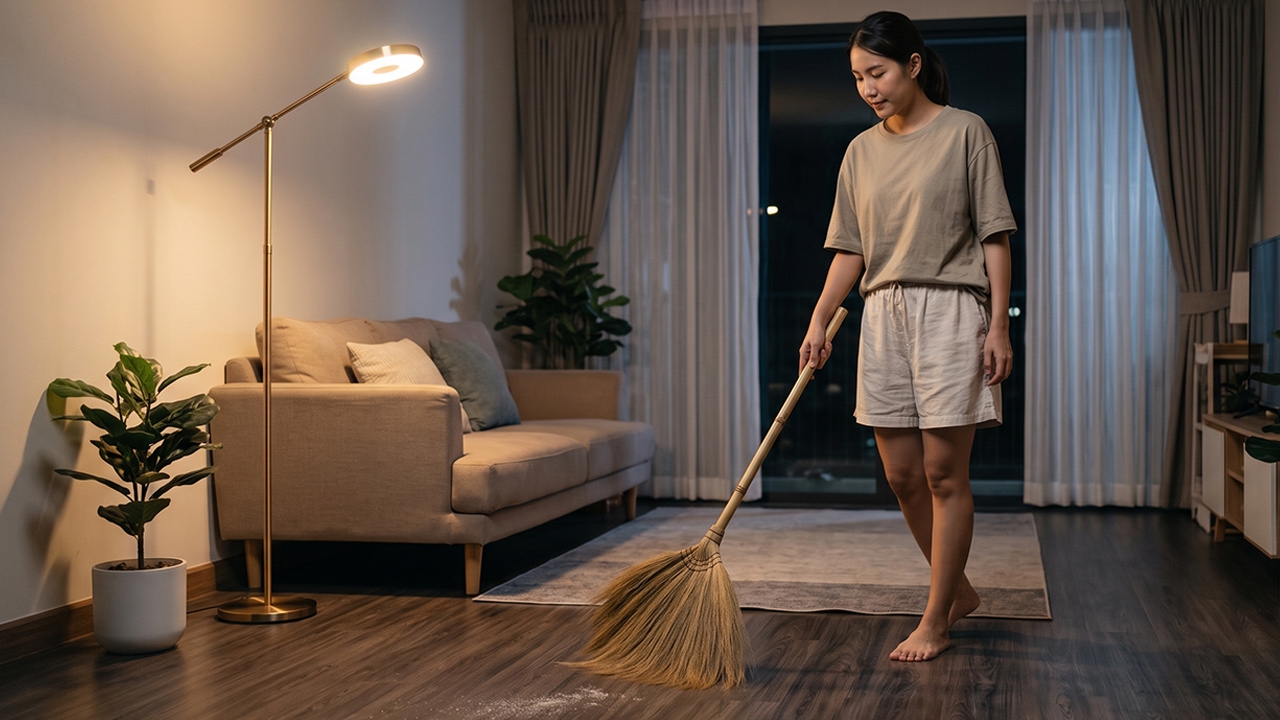
Revealing why ancient people prohibited sweeping the house at night Delving into beliefs, superstitions, Feng Shui, and hidden practical reasons supported by science for a proper understanding
Thai society has long been intertwined with the beliefs and teachings of elders. One familiar prohibition is “do not sweep the house at night.” Many elders warn younger generations that sweeping at night will sweep away fortune and wealth. However, looking deeper into historical context and traditional lifestyles reveals this prohibition is not only about the mysterious but also contains a "prudent strategy" aligned with scientific and health principles.
According to ancient belief, sweeping the house at night is considered inauspicious because night is when spirits or sacred protectors of the home rest. Sweeping then disturbs them and may drive away positive energy.
From the Feng Shui viewpoint, sweeping dust out of the front door at night symbolizes sweeping away wealth, money, and accumulated positive energy (chi), resulting in difficulty retaining money or financial loss.
Considering the past context before electricity, nighttime lighting relied solely on lamps or candles. Thus, the warning “do not sweep the house at night” has clear practical reasons and strategies as follows:
In the past, homes had limited lighting. Sweeping in the dark could cause accidentally discarding small valuables like rings, coins, or jewelry unnoticed, which aligns with the belief of “sweeping money and gold out of the house.”

Sweeping with a grass broom stirs dust into the air. Sweeping at night, close to bedtime, means household members breathe in the dust all night, harming respiratory health and potentially causing allergies. Scientifically, this is unhygienic.
Cleaning produces noise from moving items and sweeping floors, which can annoy family members or neighbors seeking rest.
The belief about not sweeping the house at night is thus not just superstition but an intelligent strategy from ancient people warning descendants to be cautious in daily life—to protect valuables and maintain family health. However, in today’s era with sufficient electric lighting and modern cleaning devices like vacuum cleaners or robotic vacuums, cleaning at night is acceptable if it does not disturb others.