

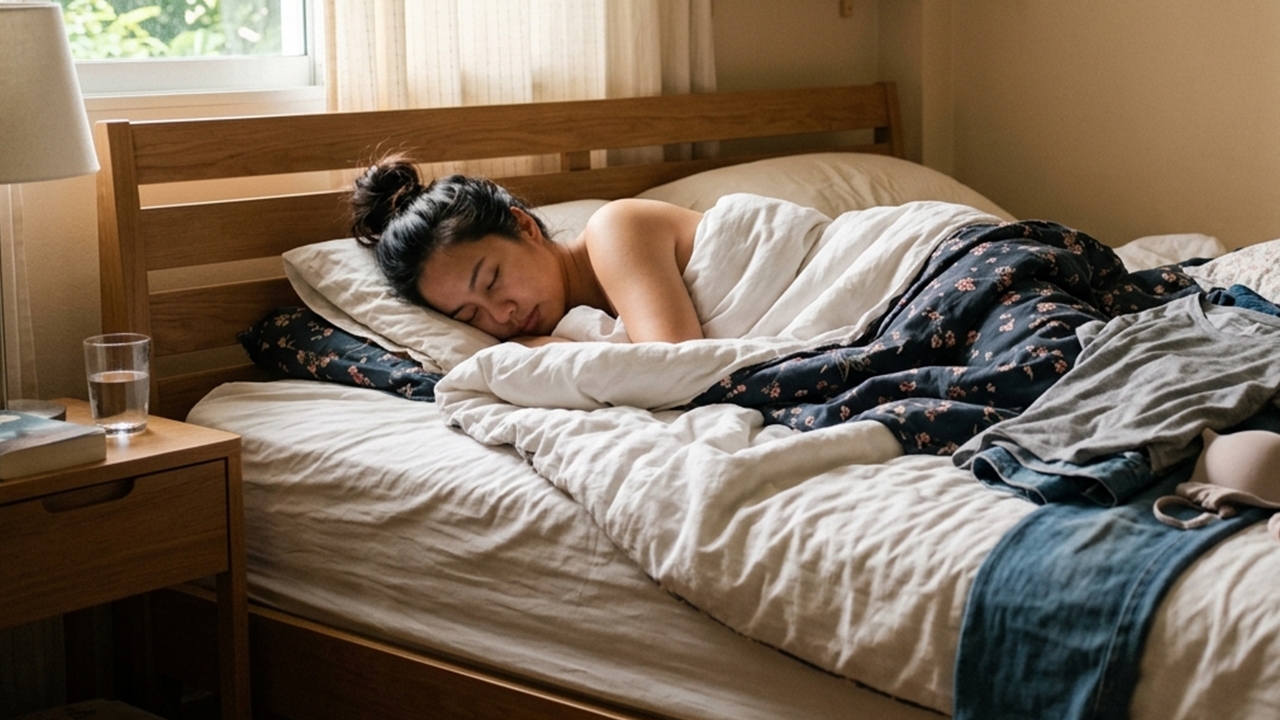
Revealing the facts Is sleeping naked truly good for health? Delving into the scientific perspective and warning of five hidden dangers if bedding is unclean, which may increase the risk of skin diseases. Check the pros and cons.
Many people believe that "sleeping naked" gives a feeling of freedom, openness, and helps the body rest fully. Scientific data also supports this belief. Experts in sleep science state that body temperature naturally drops when entering deep sleep. Not wearing clothes helps the body release heat more efficiently, improving sleep quality.
From a hygiene perspective, although sleeping naked has many benefits, "bedding cleanliness" is a crucial factor often overlooked. If bedding is unclean, sleeping naked may do more harm than good.
Without clothes, the skin directly contacts the bedsheet. Medical information explains that each night, the human body sheds dead skin cells and sweats. If bedsheets are not regularly washed, sweat and skin residues become excellent food for dust mites and bacteria.
Health data shows that neglecting bedding cleanliness turns it into a breeding ground for germs, causing five common skin problems.
1. Acne and rashes , Bacteria accumulated on bedsheets can clog pores, causing acne on the back, chest, or itchy rashes on the body.
2. Allergies and dermatitis (Dust Mite Allergy): Dust mite feces are potent allergens. Direct skin contact without clothing may trigger atopic dermatitis or chronic itching.
3. Fungal skin infections If bedding is soaked with sweat and retains moisture, prolonged contact with bare skin increases risks of ringworm and tinea in covered areas.
4. Risk from friction (Friction Dermatitis): Rough or unclean bedsheets can irritate and rub the skin during movement, especially in those with sensitive skin.
5. Bacterial infections People who let pets sleep in the bed or do not bathe before sleep risk bacteria and dirt entering through small skin cuts, causing infections.
Sleeping naked scientifically supports better sleep quality and bedding hygiene but must be accompanied by strict cleanliness. For those who enjoy nighttime freedom, change and wash bedding in hot water at least weekly, shower before bed, and consider natural fiber sheets to reduce irritation and prevent skin problems.