

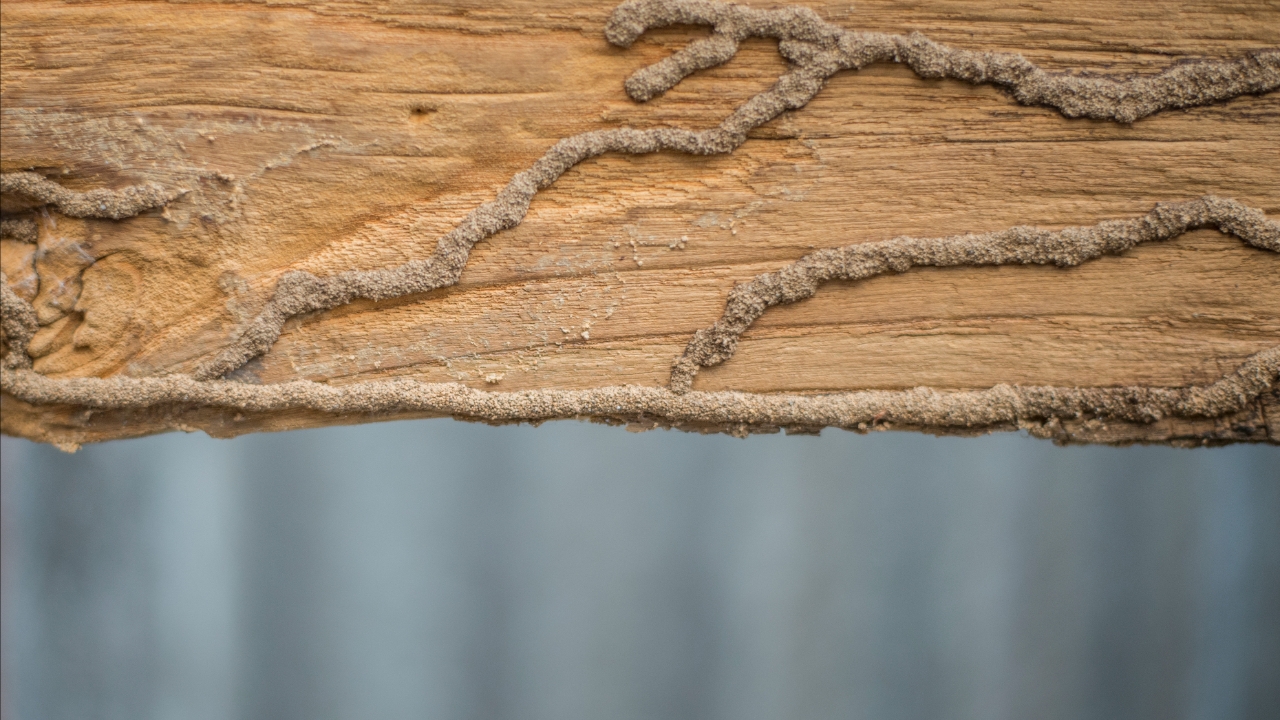
Many people may have noticed brown lines resembling soil running along walls, pillars, or house edges. From a distance, they look like cracks on walls or surfaces, but in fact, these are "termite trails" or "termite mud tubes" —an important sign indicating your home might be infested by termites.
Termite trails are tube-like structures built by termites using soil, wood debris, and secretions. They appear as long raised lines on surfaces such as walls, pillars, beams, or building joints.
The main function of termite trails is to provide a safe passage for worker termites, who must leave the nest to forage for food like wood, paper, or other cellulose materials, without direct exposure to the outside environment.
If termite trails are found inside a house, especially on walls, ceilings, or wooden structures, it may signal a nearby termite colony.

There are several reasons termites avoid walking on open surfaces and instead construct "tubes":
1. Protection from sunlight and dry air
Termites dislike light and lose moisture easily. Traveling exposed on open ground can cause dehydration and death. The mud tubes act like “private tunnels,” preserving moisture and shielding termites from external conditions.
2. Defense against natural predators
Termites are preyed upon by many creatures such as ants, spiders, and other insectivores. Enclosed tunnels reduce the risk of attack while traveling.
3. Guidance to food sources
Termites do not build tubes randomly; these pathways connect the nest to food. When suitable wood or materials are found, termites construct routes for colony members to access food efficiently.
4. Environmental control inside the tunnels
Within the tubes, termites regulate humidity, temperature, and environment to support colony activities and survival.

If termite trails are discovered, do not just scrape or break them off, as this might hide the real problem and termites may simply rebuild the paths. Recommended steps include:
. Termite trails are not just dirt marks on walls; they are intricate passageways termites create to protect themselves and maintain moisture while safely traveling to food sources. Spotting these small mud tubes on your home's walls is a warning sign that termites may be silently damaging your house’s structure.