

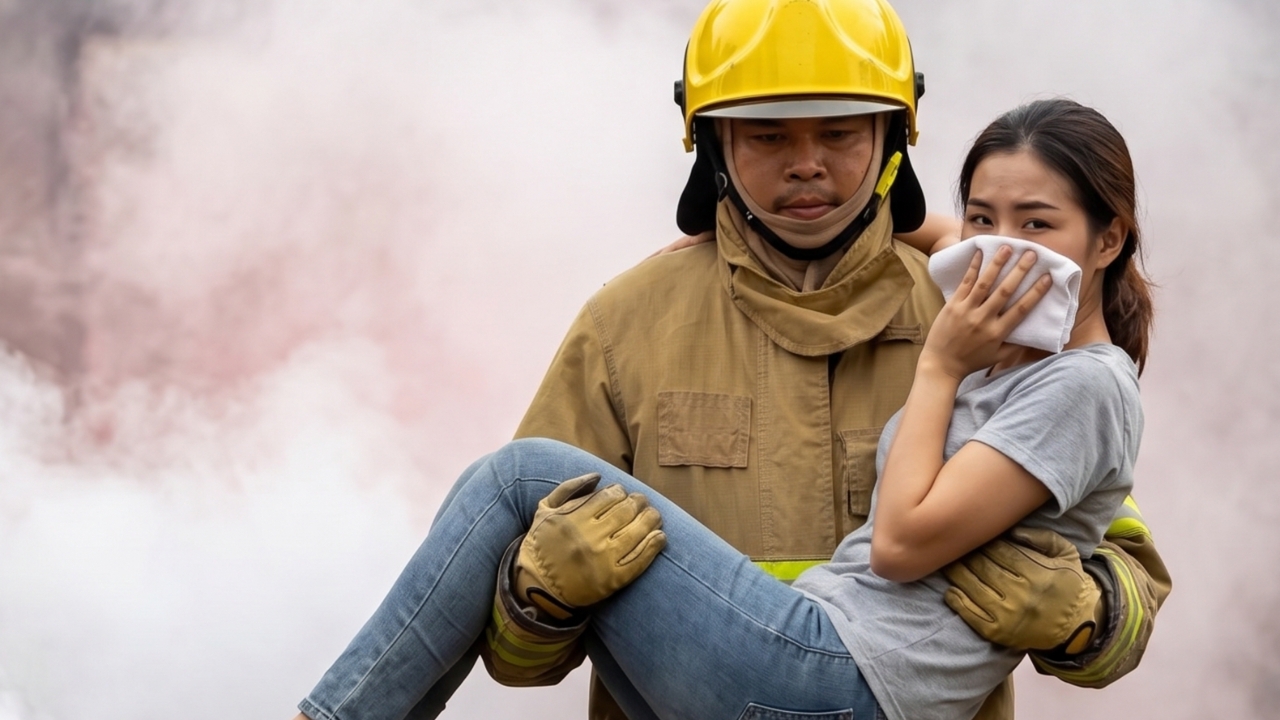
Following the incident of the recent Lat Phrao fire, it is clear that inhaling smoke or"smoke inhalation"is a serious danger that should not be underestimated. Even without burns, toxins in the smoke—such as carbon monoxide and other poisonous gases—along with heat from the flames can damage the airways and lungs, causing breathing difficulties or oxygen deprivation.
Many might assume that if someone can still talk or walk, they are not at risk. However, symptoms from smoke inhalation can sometimes appear hours later. Therefore, proper first aid and close monitoring are crucial.
Smoke from fires contains not only soot but also toxic gases, fine particles, and chemicals released from burning materials like plastic, foam, fabric, or furniture. These can cause the following effects on the body:
Symptoms vary depending on the amount of smoke inhaled, exposure duration, and type of toxins. Common symptoms include:

If someone inhales smoke, assist them as follows: 1. Immediately move the person away from the smoky area to a place with fresh air, ensuring the area is safe before helping. Do not enter buildings still on fire or filled with thick smoke.
If the patient shows abnormal signs such as difficulty breathing, unconsciousness, or suspected heavy smoke inhalation, call the emergency medical hotline 1669 immediately.
such as collars, ties, or belts to help the patient breathe more easily.
generally slightly reclined and avoid lying flat if conscious, as this helps breathing.
If unconscious but still breathing, place the patient in the recovery position to prevent choking. If breathing stops or there is no pulse and the helper is trained, begin CPR and await medical professionals.
Anyone who inhales smoke should be medically evaluated if they experience:

increased hoarseness,