

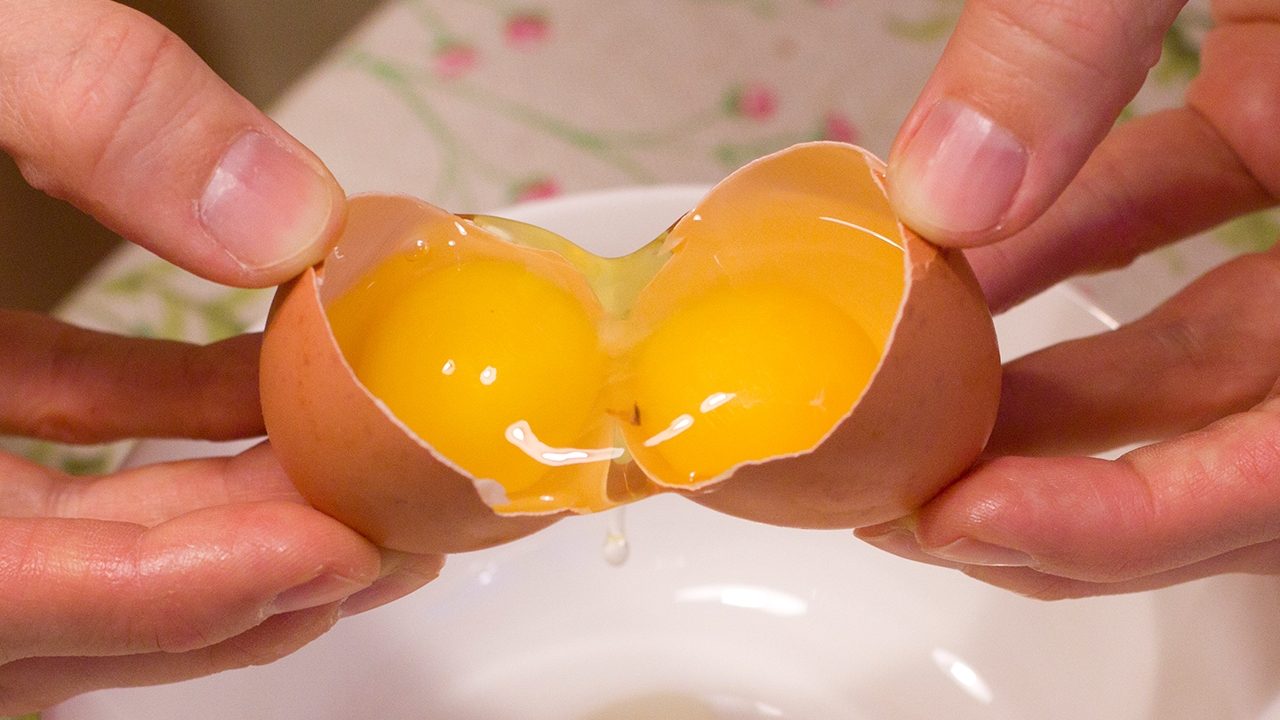
Cracking open an egg and finding "two yolks" or a twin egg may raise questions about the cause and whether it is abnormal. It is confirmed that this is a natural occurrence, safe, harmless, and suitable for regular consumption.
Chicken eggs are a kitchen staple in every household, but sometimes when cracking an egg into a bowl, one might find "two yolks" commonly referred to as "twin eggs." This can lead to curiosity about whether this is an abnormality in the hen, caused by chemicals, and most importantly, whether it is safe to eat.
From a scientific perspective, twin eggs are not a disease or caused by chemical injections. They are a natural biological process in the hen's reproductive system. Normally, a hen releases one yolk (the egg yolk) from the ovary into the oviduct about every 24 hours, allowing time for the body to produce egg white and a shell before laying.
However, occasionally the hen's ovary malfunctions, releasing two yolks simultaneously or within hours of each other. When these two yolks enter the oviduct together, the hen's body produces egg white, membrane, and shell to encase both yolks within one shell, creating a larger-than-normal twin egg.
In summary, the natural chance of finding a twin egg is about 1 in 1,000 eggs. They are most commonly found in two hen age groups:
They can be eaten normally and pose no health risks. The internal structure and components of twin eggs are the same as regular eggs, except they contain twice the amount of yolk in one shell, so there are no residues or risks to the body.

When consumed, twin eggs provide nearly double the nutritional content from the yolks, especially important nutrients such as protein, lutein, choline, vitamins A and D, and iron.
However, the natural fat and cholesterol content in the yolks also increases accordingly. People advised to control fat intake by doctors should adjust their consumption accordingly.
For general cooking like fried eggs, omelets, or boiled eggs, twin eggs are a treat for those who love yolks. But when used in baking or desserts requiring precise measurements, using twin eggs may cause inaccuracies in fat from yolks and moisture from whites, affecting texture and rise. It is recommended to separate yolks and whites to weigh according to the recipe.
In Thai society and many cultures worldwide, there are traditional beliefs linked to omens when encountering unusual things. Some view finding twin eggs as a "symbol of good luck," signifying abundance and doubling of fortune. Others say that if a pregnant woman eats twin eggs, she might have twins.
Scholars note these beliefs are cultural folklore and legends only. Scientifically, eating twin eggs does not affect genetics or increase the chance of human twin pregnancies but indicates nutritional abundance.
Because twin eggs contain two yolks, they are usually larger than size 0 or jumbo eggs, with a tighter and slightly thinner shell. Proper care when storing includes:
Finding twin eggs is therefore not a cause for concern or danger as many fear. It is one of nature's small wonders occurring in the egg-laying process of birds, providing high nutritional value, safety, and confidence to create delicious dishes.