

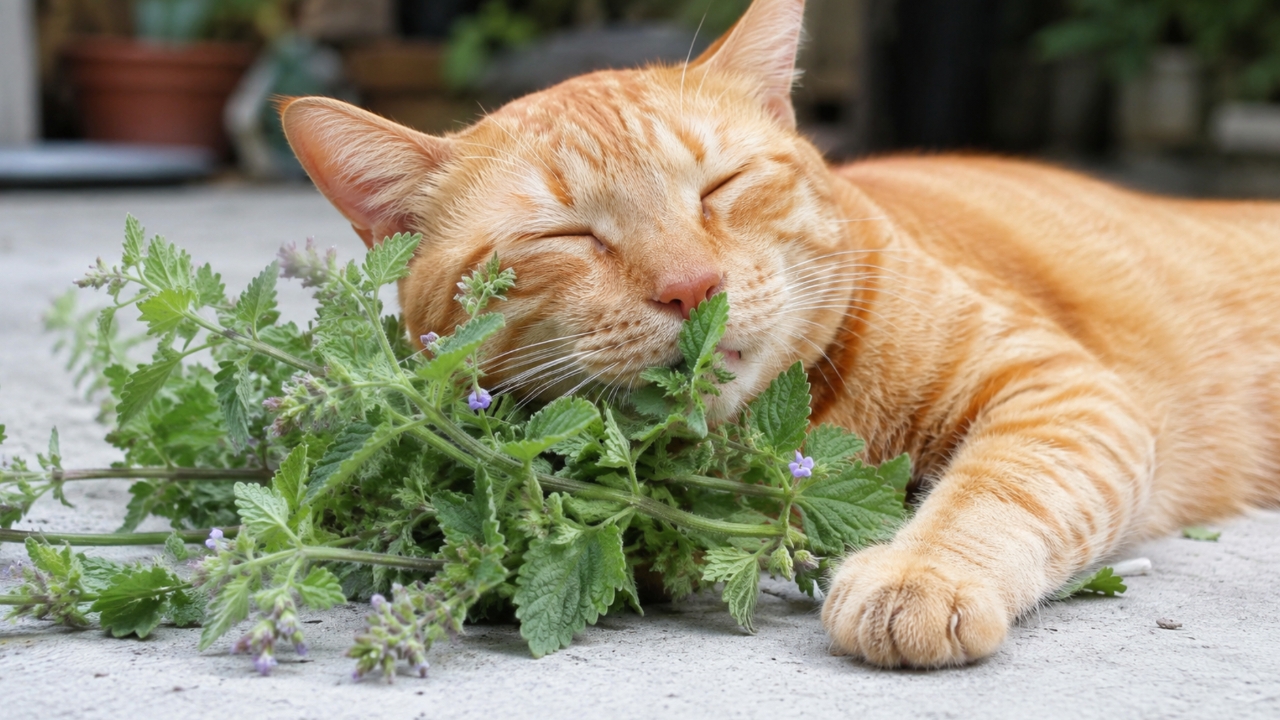
Anyone who has seen videos of cats rolling on plants, biting leaves, chewing branches, or acting blissfully happy may wonder what this plant is. Many call it " catnip " but this name can be misleading, as it is not the kind of nettle that causes itching as commonly known.
Catnip (English: Acalypha indica) is a herbaceous plant in the Euphorbiaceae family, native to tropical Asia and Africa. It is commonly found along roadsides, wastelands, gardens, and agricultural plots, considered a widespread weed in Thailand.
Although often seen as just a weed, for many cats this plant is a favorite that makes them stop and approach it immediately. It has special qualities that attract cats to sniff, rub against, and roll on it with enjoyment. Its distinctive features include:

Catnip, or Acalypha indica, contains certain volatile compounds that stimulate the olfactory system of cats, similar to the effects of catnip (Nepeta cataria) though the chemicals differ. When cats smell these compounds, they may display behaviors such as:
However, not all cats respond, as sensitivity to these scents depends on genetics, similar to catnip, with some cats showing no reaction at all.

Catnip is not harmful to cats; they can safely sniff or rub against it. The blissful behavior usually lasts about 5-15 minutes before normal behavior resumes. Still, certain precautions are advised:

Besides being favored by cats, catnip (Acalypha indica) is used in traditional medicine in several countries. Leaves, roots, or the whole plant are used in local wisdom as poultices, cough remedies, or expectorants. However, it should not be ingested or used medicinally without advice from medical professionals or experts.
In conclusion, " catnip " as commonly referred to is actually " Acalypha indica ", a herbaceous plant commonly found throughout Thailand. Though it may seem like an ordinary weed, it contains natural compounds that attract cats to sniff, rub, and roll happily, making it a plant of great interest among cat owners and animal lovers recently.