

Thairath Online
Thairath Online

Solving the Mystery: Why Is Planting Galangal at Home Forbidden? Revealing Ancient Beliefs and Tips for Growing Kitchen Herbs

Life05 Aug 2026 08:30 GMT+7

Share

Solving the Mystery: Why Is Planting Galangal at Home Forbidden? Revealing Ancient Beliefs and Tips for Growing Kitchen Herbs

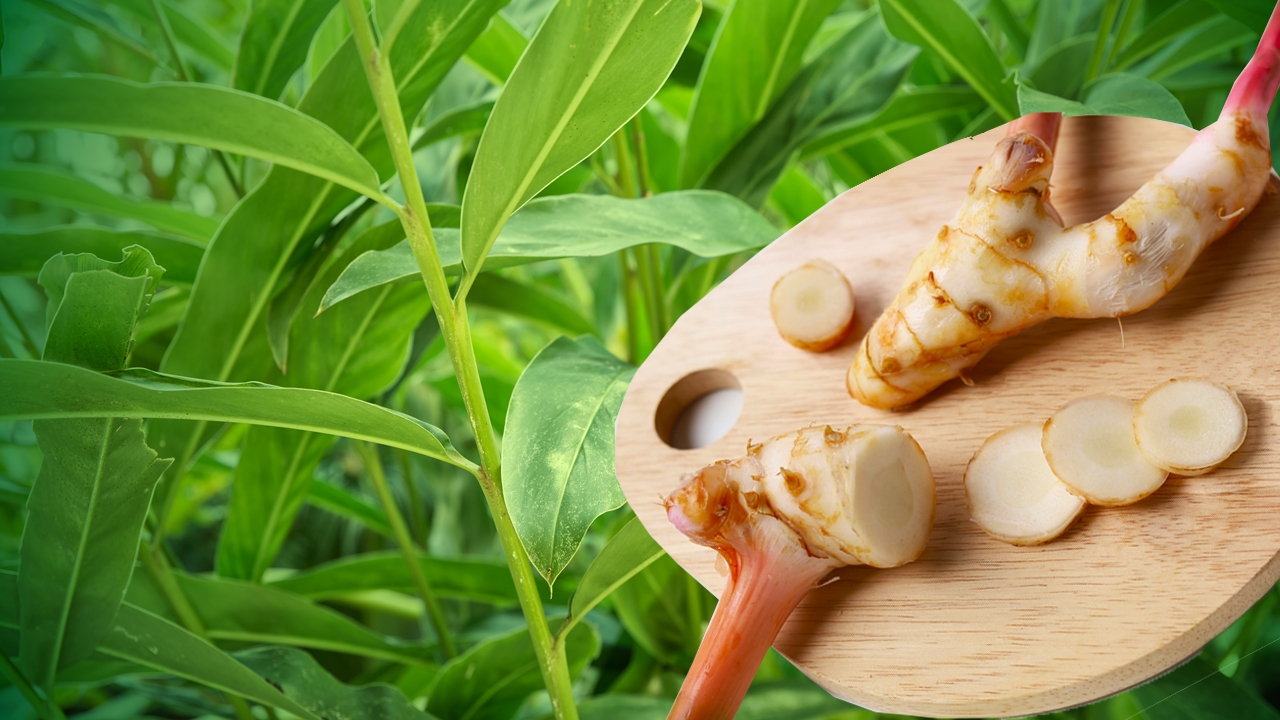
"Galangal" It is considered one of the key herbs and ingredients in Thai kitchens, but many may have heard elders or traditional beliefs cautioning that "planting galangal within the home area is forbidden." This has caused curiosity among younger generations or those arranging kitchen gardens about the origin of this prohibition, and whether galangal can indeed be grown inside the home fence.

Solving the mystery: Why did ancient people forbid planting galangal at home?

1. Reasons related to "homophones" and meanings in ancient beliefs

The main reason from ancient beliefs that made Thai people traditionally avoid planting galangal inside residential areas stems mainly from the "meaning of homophones."

  • It sounds like the word "kill." The word "galangal" is pronounced similarly to the word "kill." Ancient people therefore regarded it as an ominous sign. Planting it at home could symbolize killing, quarrels, or loss within the family.
  • It also suggests the phrase "kill the family." (kill the family lineage) The belief further explains that planting galangal facing an inappropriate direction or in the middle of the house might cause family discord, destruction, or estrangement.
  • Galangal clumps are homes to invisible entities. Galangal grows densely and thickly, and traditionally it was believed that such clumps might be inhabited by spirits or supernatural entities.

2. Natural and botanical reasons

Considering local wisdom and botanical characteristics of galangal, the prohibition carries an interesting hidden practical reason.

  • Its wide and dense clumps Galangal is a plant with underground rhizomes that spreads quickly. If planted close to or in front of the house, its dense clumps can grow thickly, spoiling the house's appearance.
  • A hiding place for venomous creatures Because galangal clumps are moist and dense, they make excellent hiding spots for venomous animals like centipedes, snakes, or various insects, which could be dangerous especially for homes with small children.
  • Leaves that irritate the skin Galangal leaves are thick, sharp, and covered with tiny hairs. If planted near walkways, they can cause cuts or itchy irritation to people passing by.

Today, the prohibition on planting galangal at home is not as strictly observed as in the past. From a practical standpoint, galangal is a valuable kitchen herb with culinary and medicinal properties.

If one wants to grow galangal at home for personal use, it can be done by allocating space "in a vegetable bed behind the house" or "in a separate kitchen garden." It should not be planted at the front of the house, near entrances, or too close to the building. Regular pruning to prevent dense overgrowth will allow safe, worry-free cultivation with maximum benefits.