

Thairath Online
Thairath Online

Why Are Hed Por Mushrooms So Expensive? Discovering Rare Wild Mushrooms from Nature and Their Irresistible Taste

Life05 Aug 2026 13:19 GMT+7

Share

Why Are Hed Por Mushrooms So Expensive? Discovering Rare Wild Mushrooms from Nature and Their Irresistible Taste

Every year when the rainy season arrives, one popular local ingredient is " Hed Por ", known in Northern Thailand as " Hed Thop ", a wild mushroom favored in both Northern and Northeastern (Isan) regions for its distinctive taste and texture, becoming a seasonal delicacy many look forward to.

Each year when Hed Por mushrooms hit the market, they often come with talk of rising prices, sometimes reaching several hundred baht per kilogram. Despite the high cost, consumer demand remains strong, making this wild mushroom a rare and sought-after ingredient every rainy season.

Why is Hed Por so expensive? Here are 4 reasons why this mushroom is rarer than you might think.

The higher price of Hed Por compared to other mushrooms on the market results from natural factors and its unique growth conditions, as follows.

  • Cannot be cultivated naturally. Hed Por is an ectomycorrhizal fungus that depends on a symbiotic relationship with the roots of large trees in dry dipterocarp or mixed deciduous forests, such as Dipterocarpus, Shorea, Yangna, and Payom trees. It exchanges nutrients with tree roots, so it cannot be grown commercially or in greenhouses like other mushrooms.
  • Dependent on seasonal and weather conditions. Hed Por mushrooms only fruit during the early rainy season (around May to June), after a dry spell followed by sufficient rainfall soaking the ground at suitable temperatures. If weather conditions are unfavorable, with too little or excessive rain, the natural yield drops significantly.
  • Difficulty in harvesting. The mushrooms grow buried under soil and leaf litter, so local villagers must skillfully use iron tools to scrape or dig carefully, requiring considerable time and labor.
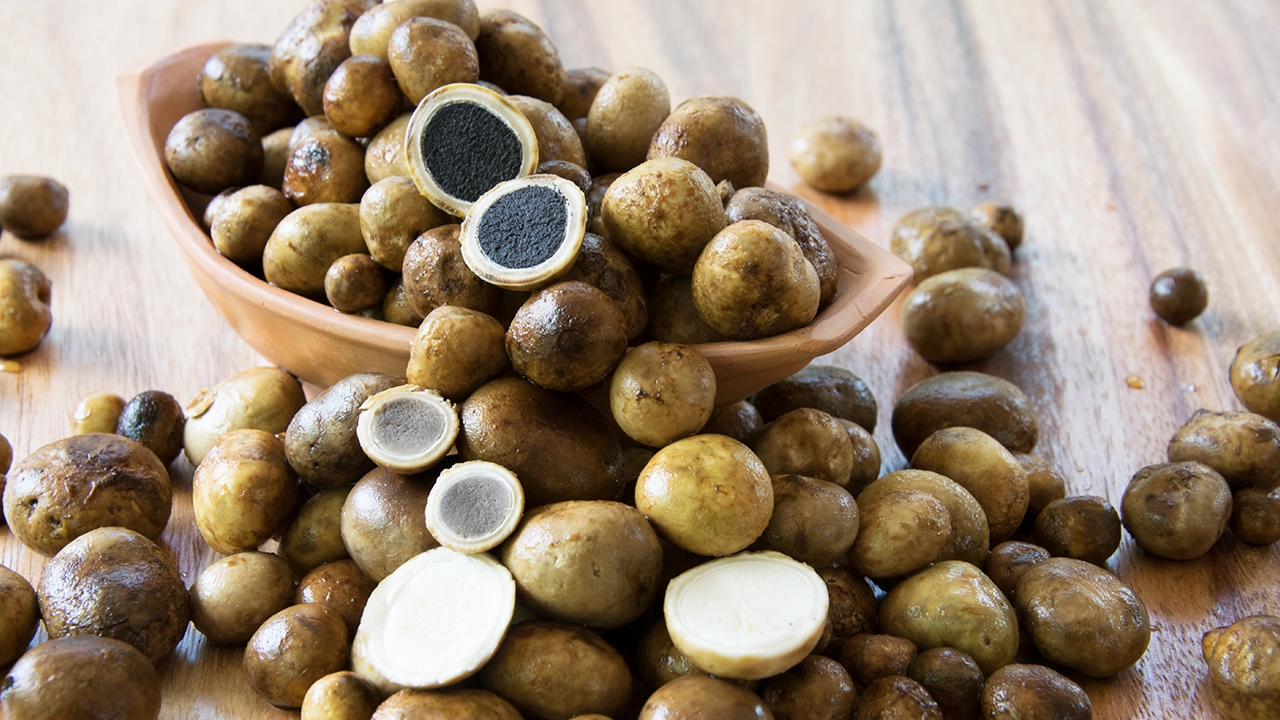
  • Limited period of peak quality. The most prized and expensive Hed Por is the "cotton Hed Por," or young mushrooms with white, crisp flesh. If left too long, they mature into "leather Hed Por" with thick skins and black interiors. The brief demand for tender mushrooms during this short window drives prices even higher.

Why do people love eating it? Exploring the unique appeal of Hed Por mushrooms.

The main reason consumers are willing to pay premium prices for Hed Por is its distinctive flavor and texture unlike any other ingredient.

  • The "crispy pop" sensation in the mouth. Biting into a young Hed Por mushroom produces a "pop" sound—hence the name. The exterior is firm and crisp, while the inside is soft, juicy, and carries a unique forest aroma.
  • Versatile and flavorful in cooking. Hed Por pairs well in traditional dishes such as curry with acacia and wild betel leaves, sour soup with Hed Por, curry with fresh bamboo shoots, or stir-fried with oyster sauce and various spicy curries.

Nutritional benefits and value of Hed Por mushrooms.

Beyond taste, Hed Por is a natural food with several health benefits.

  • High in protein and fiber. It is a natural protein source with high fiber content, aiding digestion and providing lasting satiety.
  • Low in calories and fat. Suitable for those managing weight and health-conscious diets.
  • Contains antioxidants. Helps boost immunity and may help reduce blood lipid levels.

Although Hed Por is priced higher than common vegetables and mushrooms, this reflects its rarity due to natural conditions—difficulty in cultivation, brief fruiting periods, and harvesting requiring local expertise.