

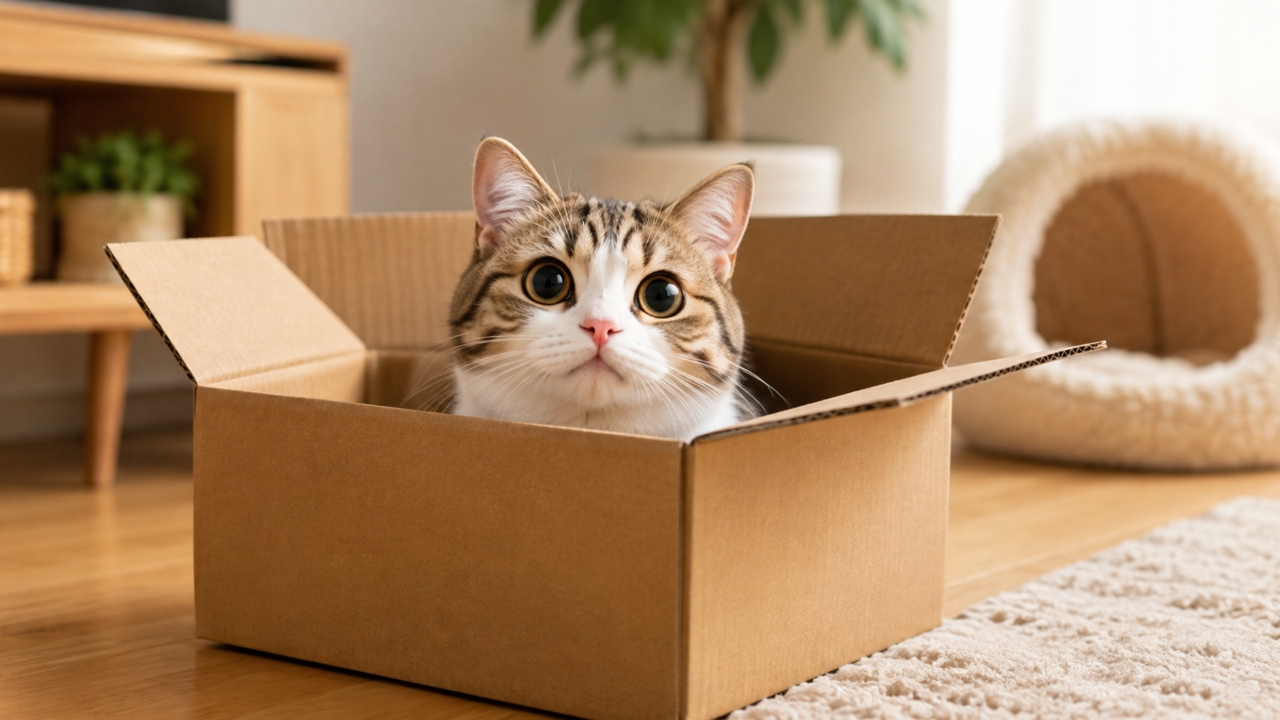
Anyone who keeps cats has probably seen this familiar scene: when ordering something online, the cat’s interest isn’t in the item itself but rather inกล่องกระดาษ"" data-corrected="“กล่องกระดาษ”" contenteditable="true" class="fr-spell-incorrect changed">" the cardboard box "which they immediately jump into to sleep, whether the box is small or large. As long as it fits their body, it becomes a favorite spot for the cat. Many might think it’s just playful behavior, but in fact, this habit is directly linked to cats’ natural instincts.
Cats are both predators and prey in nature. Being in an enclosed space allows them to hide from potential dangers while observing their surroundings without being easily seen. When inside a box, cats feel more in control of the situation, making them feel more relaxed and secure than when resting in open areas.
Cats with a hiding spot like a cardboard box can adjust faster to new environments and experience less stress. It’s no surprise that when guests visit, loud noises occur, or they move to a new home, cats often rush to hide inside boxes because it provides them with a sense of stability and calm.

Cats prefer warmer temperatures than humans, typically feeling comfortable at about 30-36 degrees Celsius. Cardboard boxes act as heat insulators, making the inside warmer than the surrounding area. This explains why cats like curling up inside boxes, especially in air-conditioned rooms or during cold weather.
Cats often choose spaces where they can press their bodies against walls or edges because it makes them feel secure and less wary. Although boxes may seem too small from a human perspective, if a cat can fit inside, it will often curl up there because the confined space feels safer than a wide-open area. Many times, cats even like curling up in boxes smaller than themselves.
Boxes are not just beds but also excellent ambush bases for cats. They often use boxes as hiding spots before pouncing on toys, people, or other cats. This behavior simulates natural hunting and helps them exercise and burn off energy.

Most cats enjoy boxes, but not all. Some prefer tunnels, dome beds, or high places instead. This depends on each cat’s personality, age, experience, and familiarity.
If you want to provide a box for your cat to play with, choose one that is clean, free of staples, plastic scraps, or adhesive tape that could be harmful, and replace it when it becomes damaged or damp.

The fact that cats like sleeping in boxes is not a coincidence but a behavior inherited from natural instincts—seeking shelter, reducing stress, maintaining warmth, and using the space for play or ambush.
Therefore, if you see a cat ignoring an expensive bed but choosing to sleep in a simple cardboard box, don’t be surprised. For the cat, that small box may be the place that feels most comfortable and safe.
Related articles