

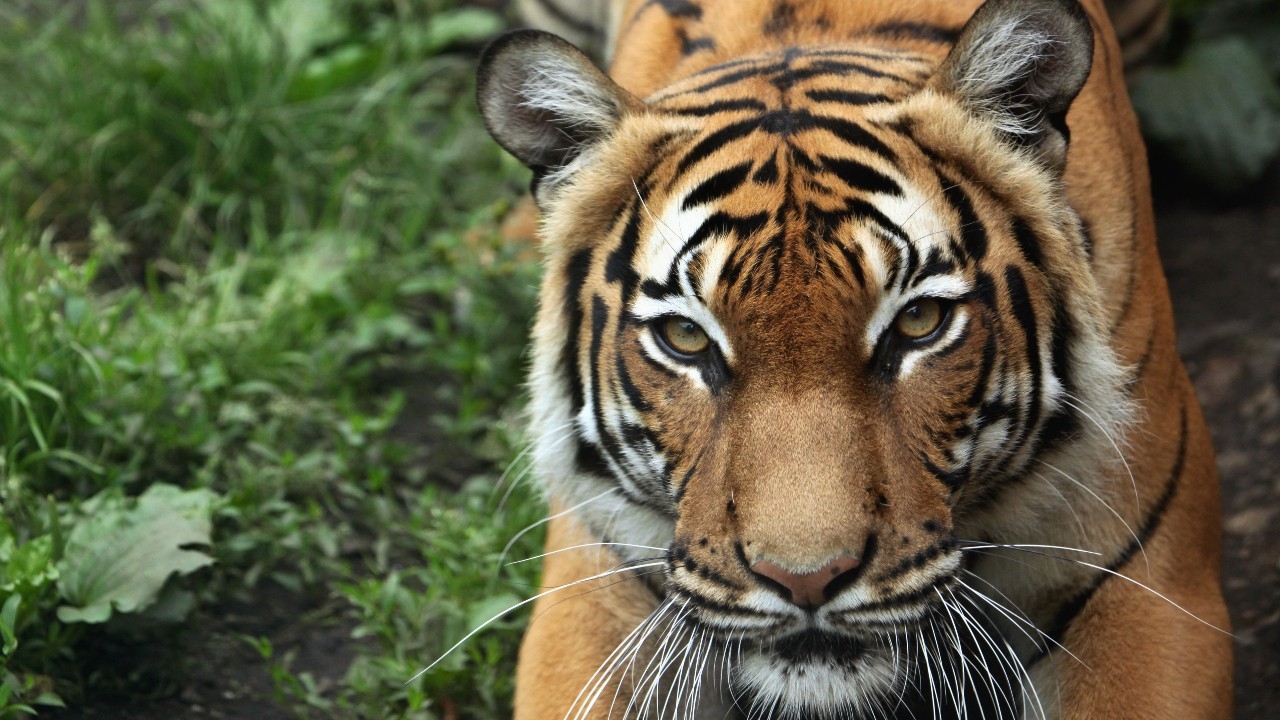
When the Huai Kha Khaeng forest wept for a great loss on 5 August 2026, the news deeply shook the community of forest protectors. Sakarin Wichajan, a dedicated officer who devoted himself to preserving the richness of the wild, suddenly lost his life. His body was found near the Thap Sela stream, with clear signs of having been dragged by a tiger. This tragic event brought profound sorrow and raised the question: why would the king of the forest, usually hidden in shadows, strike at a human?
If Africa has the lion as the king of the savanna, in the Eastern Hemisphere, the tiger truly reigns as the king of the forest. Naturally, tigers tend to hide in caves, tree hollows, or dense foliage, living solitary lives unlike lions that gather in large prides. The only exceptions are tigresses caring for their cubs or occasionally socializing to share prey.
They have very large territories. Research from Khao Nang Ram Wildlife Research Station in Huai Kha Khaeng Wildlife Sanctuary shows that a male tiger may occupy an area of 267 to 300 square kilometers, while females use around 60 to 70 square kilometers in prey-rich areas.
Tigers play a crucial ecological role as apex predators, controlling herbivore populations to prevent overgrazing. Their presence is a clear "indicator of forest health" because sustainable forests supporting tigers, leopards, black panthers, and dholes require abundant and diverse prey species.
Tigers are solitary nighttime hunters with excellent night vision, relying more on hearing than smell. They camouflage among trees and grass, then silently creep close from behind or the side. At the right moment, they leap and bite the prey's neck, a fatal strike.
A successful tiger can eat up to 40 kilograms of meat in one meal. After feeding, it often covers the leftover carcass with leaves or branches to hide it, returning to feed again after 2-3 days. Given their dietary needs, a tiger typically requires three muntjacs weekly or one deer to last a week. Therefore, the signs of prey dragged and hidden at the scene are normal tiger hunting behavior.
Many imagine tigers as fierce, bloodthirsty beasts that hunt humans as prey. In reality, tigers are not irrationally aggressive and have no instinct to target humans specifically.
Tigers avoid humans because "humans are not natural prey." Their main diet consists of hoofed animals like deer, muntjacs, and wild boar. Moreover, the human upright, two-legged form is unusual compared to typical prey and may cause tigers to see humans as "foreign objects" or "threats," not food.
As cautious hunters, tigers avoid injury since an injured tiger unable to hunt faces death. Usually, when detecting human presence by scent or sound, they choose to flee quietly into the deep forest, often unnoticed by nearby people.
As mentioned, the primary instinct of wild animals is "survival." Tigers attack humans due to specific circumstances such as: Severe food shortages in the forest. This forces tigers to prey on unusual animals or, if old or injured, to attack prey they cannot normally catch.
Including cases of Sudden encounters. If humans enter a tiger's territory or approach too closely without caution—especially a tigress with cubs—the tiger’s heightened instincts for defense and protection trigger immediate attack to remove the perceived threat.
The Huai Kha Khaeng incident was a tragic accident between a dedicated ranger performing his duty and the tiger’s natural survival instincts operating inevitably within the wild.
Source:Seub Nakhasathien Foundation