

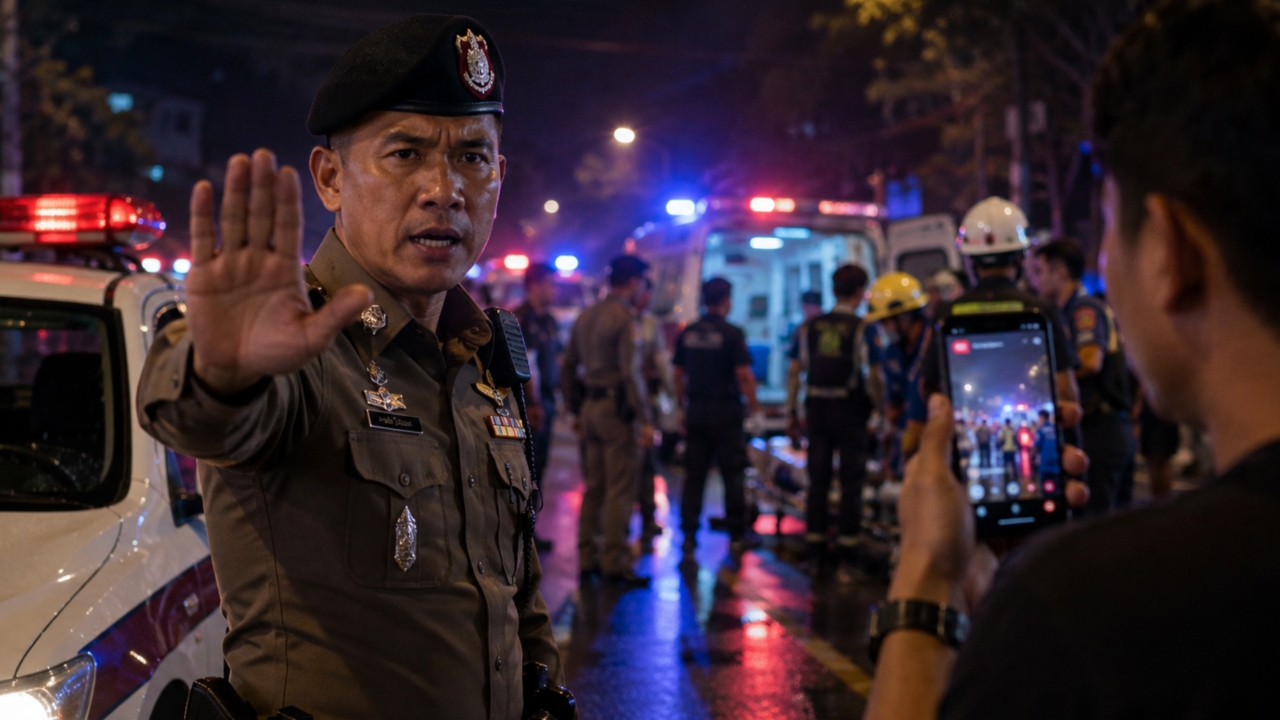
Following the shooting incident at Debsirin School in Nonthaburi Province, today (7 Aug), the first request police usually make for public cooperation is" to refrain from live streaming, sharing locations, and revealing police operational details. "Many wonder why simply going live or posting a few seconds of footage can be seen as potentially affecting police work, especially during shootings, hostage situations, or violent incidents in public places.
These recommendations are not unique to Thai police but are standard practices among security and law enforcement agencies worldwide, especially the United States Federal Bureau of Investigation (FBI), which also advises that sharing real-time information during violent incidents can impact victim rescue efforts and police operations.
Perpetrators do not have to be at the crime scene to follow developments via mobile phones or social media. Live streams from the area can reveal police locations, entry routes, and troop movements in real time, allowing offenders to change plans, escape, or escalate violence.
Many post locations hoping to warn others, but the same information can be used by perpetrators. If images or clips reveal where people are hiding, those innocent individuals could unknowingly become targets. Thus, not revealing locations during ongoing incidents is the safest way to reduce risks.

During incidents, information changes rapidly. Sharing rumors or unconfirmed details—such as the number of offenders, recent locations, or false reports that the situation is under control—can mislead the public into making dangerous choices, such as approaching the area, or cause unnecessary panic.
Some may feel police are slow to release information, but in reality, officers need to delay sharing certain details to avoid compromising the operation. If plans are exposed early, perpetrators could use that information to counteract, flee, or repeat attacks, making rescue efforts harder.
Even if the public is not on the front line, everyone can help reduce casualties by using social media cautiously. If present at an incident, stay calm, follow police instructions, avoid live streaming or sharing locations, refrain from spreading unverified information, and report important tips directly to police hotlines or official channels rather than posting online.

Nowadays, live streaming or sharing can be done in seconds, but during a crisis, a single image or location point can become information that perpetrators exploit or that hinders rescuing innocent people.
Therefore, refraining from live streaming, location sharing, and waiting for official information is not a restriction on freedom of communication but a small cooperation that can help police end situations faster, reduce harm, and increase chances of saving lives in the area.
Related articles