

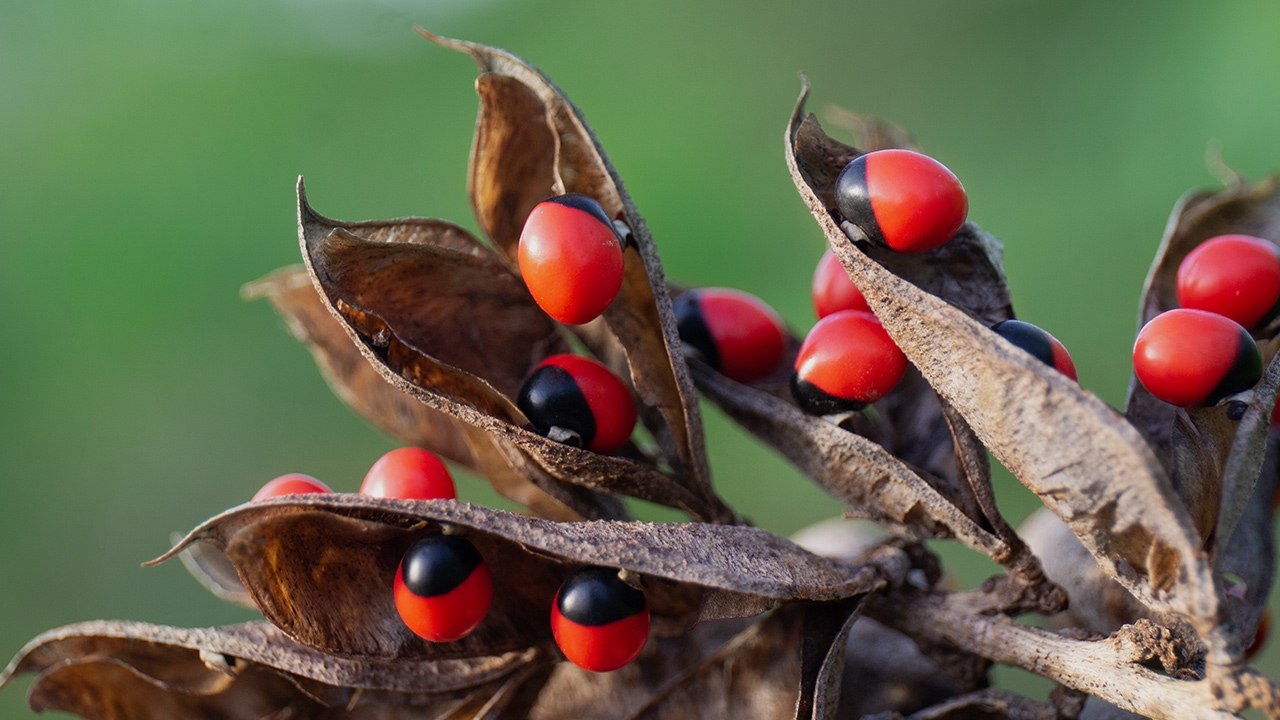
"Rosary Pea" A climbing vine with striking bright red seeds marked with black spots, familiar to many but hiding deadly poison if ingested. Let's get to know this plant species—its distinctive features, uses, and safety precautions.
"Rosary Pea" (Rosary Pea) This plant often attracts attention with its vividly colored seeds, but beneath its beauty lies a severe poison. Understanding this plant is important, especially for hikers or households with young children who might unknowingly put the seeds in their mouths.
Rosary Pea scientific name Abrus precatorius L. It is a climbing vine that twines around other plants. Its leaves are pinnate compound leaves. The flowers appear in clusters and are pink or light purple. The most distinctive feature is the fruit, which is a flat pod that splits open when mature to reveal seeds inside. The seeds are oval, glossy bright red with a black spot near the hilum, resembling an eye—hence the plant's name. "Rosary Pea"
According to Thai herbal databases, although the seeds are toxic, other parts of the Rosary Pea have been used in traditional medicine, such as

What must be especially cautious about is the "seeds" of Rosary Pea. Poison control centers explain that the seeds contain a toxin called "Abrin" which is a potent poison that inhibits protein synthesis in cells. Chewing and swallowing just 1-2 seeds can be fatal.
Symptoms of poisoningusually start with severe nausea, vomiting, abdominal pain, and diarrhea that may include blood. If untreated, it can lead to shock and liver or kidney failure.
If someone swallows Rosary Pea seeds, especially if the seeds were chewed and broken, immediately take the person to the nearest hospital and bring a sample of the plant or seeds for the doctor. Do not wait for symptoms to appear.
The best prevention is educating family members, especially children, that brightly colored wild plants or seeds should never be put in the mouth or eaten.
"Rosary Pea" is a clear example of the saying "Beautiful but poisonous." Studying and understanding our natural surroundings helps us coexist safely with such plants.