

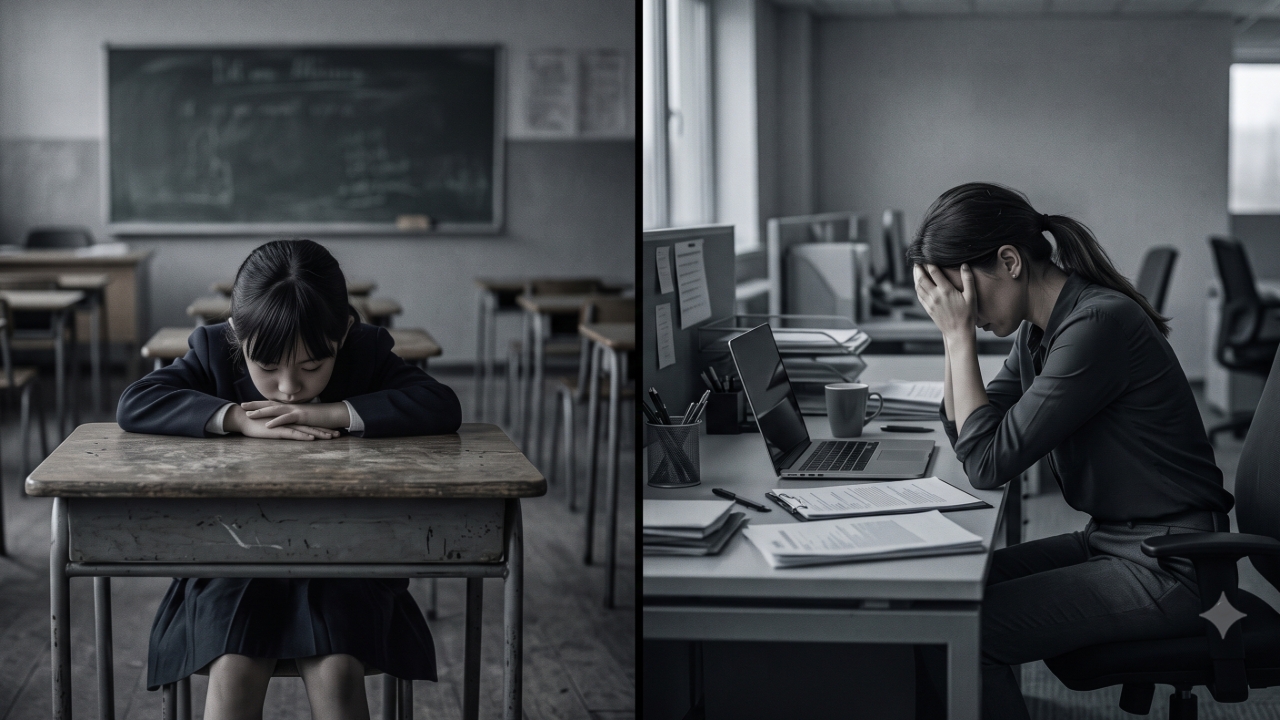
Bullying during school years is not just a childhood issue, as emotional scars can deeply affect confidence, work performance, and relationships in adulthood. Parents and adults need to understand and respond promptly.
Many may see teasing, social exclusion, or conflicts in school as merely"childhood play."They believe time will heal these wounds, but psychological research shows the opposite. Numerous studies indicate that being a victim of bullying in childhood can cause deep emotional wounds, with unforeseen effects persisting into adulthood and the workplace.

Medical and behavioral psychology findings reveal that a child's brain during school years is developing self-esteem and emotional stability. Repeated threats or devaluation cause the brain to record stress as a defense mechanism, which may later manifest as adult behaviors and thought patterns.
Children bullied for their appearance or abilities often grow up feeling"not good enough."Even successful adults with good jobs often suffer from Imposter Syndrome—constantly fearing others will discover they are incompetent.
Those rejected or betrayed by peers as children tend to struggle trusting colleagues or supervisors, often isolating themselves, avoiding teamwork, or building overly strong defenses to avoid repeating past rejections.

Many bullying victims learn early that blending in and compliance is a way to avoid harassment. In adulthood, this manifests as difficulty refusing tasks, taking on excessive burdens, and reluctance to express opinions due to fear of conflict or rejection.
Constant vigilance at work raises stress hormone levels, leading to anxiety disorders, depression, or burnout more easily than in those raised in safer environments.
Adults aware of their childhood impact can use psychological methods to shift mindset and move forward as follows:
Parents and guardians are the first line of defense against bullying to prevent long-term effects as children grow.