

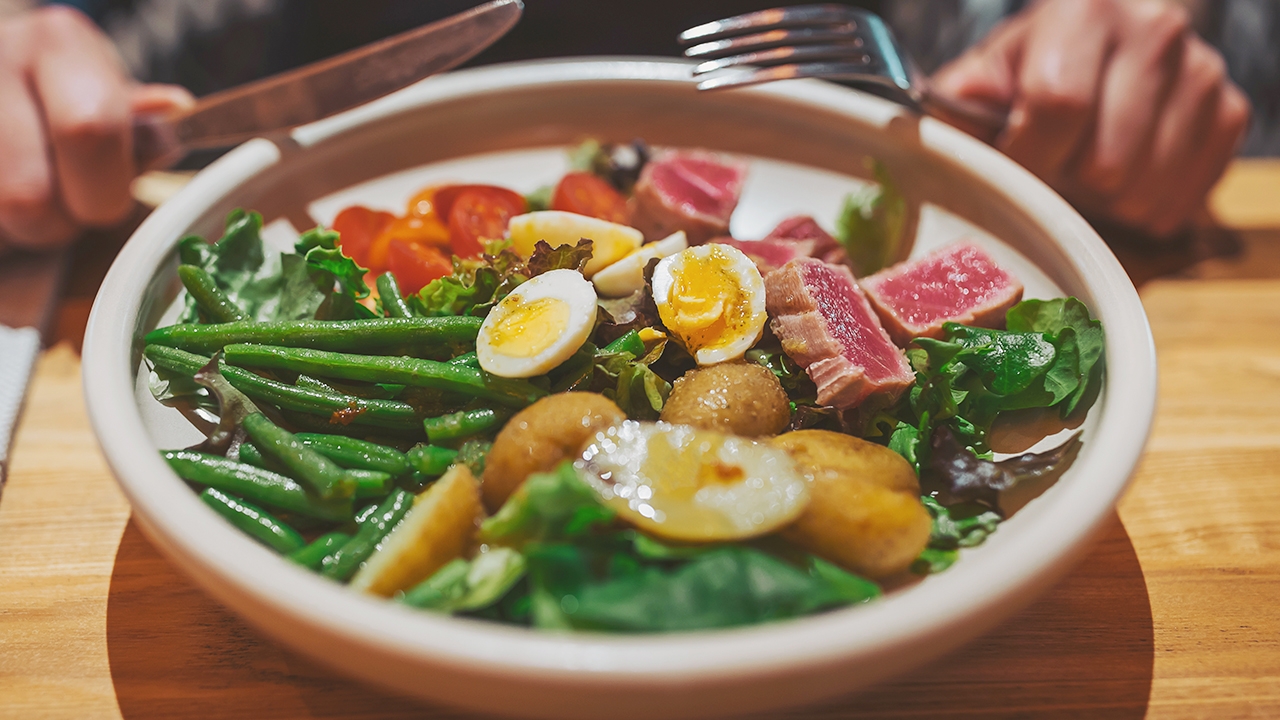
Many people may have heard the advice about " the order of eating food " which states that one should eat " vegetables " first before starting to eat " meat " and " rice " based on the belief that this method may benefit blood sugar control, increase satiety, and help manage food portions more easily at each meal. But how much health benefit does this eating order really have, and is it necessary to eat vegetables first every meal? Let's find out.
1. Slows absorption of sugar and fat
The fiber in vegetables slows digestion and absorption of glucose in the small intestine, causing blood sugar levels after meals to rise gradually and steadily instead of spiking quickly.
2. Increases fullness and controls food intake
Fiber and water in vegetables add bulk to the stomach and stimulate the release of satiety hormones, naturally reducing consumption of high-fat meats and carbohydrates on the plate.
3. Stimulates the digestive system
Chewing vegetables triggers digestive juices and enzymes, preparing the intestines to digest proteins from meat consumed afterward.
Information from the Nutrition Division of the Department of Health has recommended the nutritional principle " 2:1:1 " which allocates the plate to 2 parts vegetables (half the plate), 1 part protein, and 1 part carbohydrates. Eating vegetables first helps effectively manage daily nutrient proportions.

Start the meal with fresh or boiled vegetables or dishes with minimal sweetness and fat. Fiber increases fullness and may slow carbohydrate absorption when eaten together in a meal.
Follow with protein sources such as meat, fish, eggs, tofu, or beans, which increase satiety and provide essential nutrients the body needs.
Finish with rice, starches, or carbohydrate-based foods. This eating sequence may help prevent rapid post-meal blood sugar spikes compared to starting with carbohydrates.