

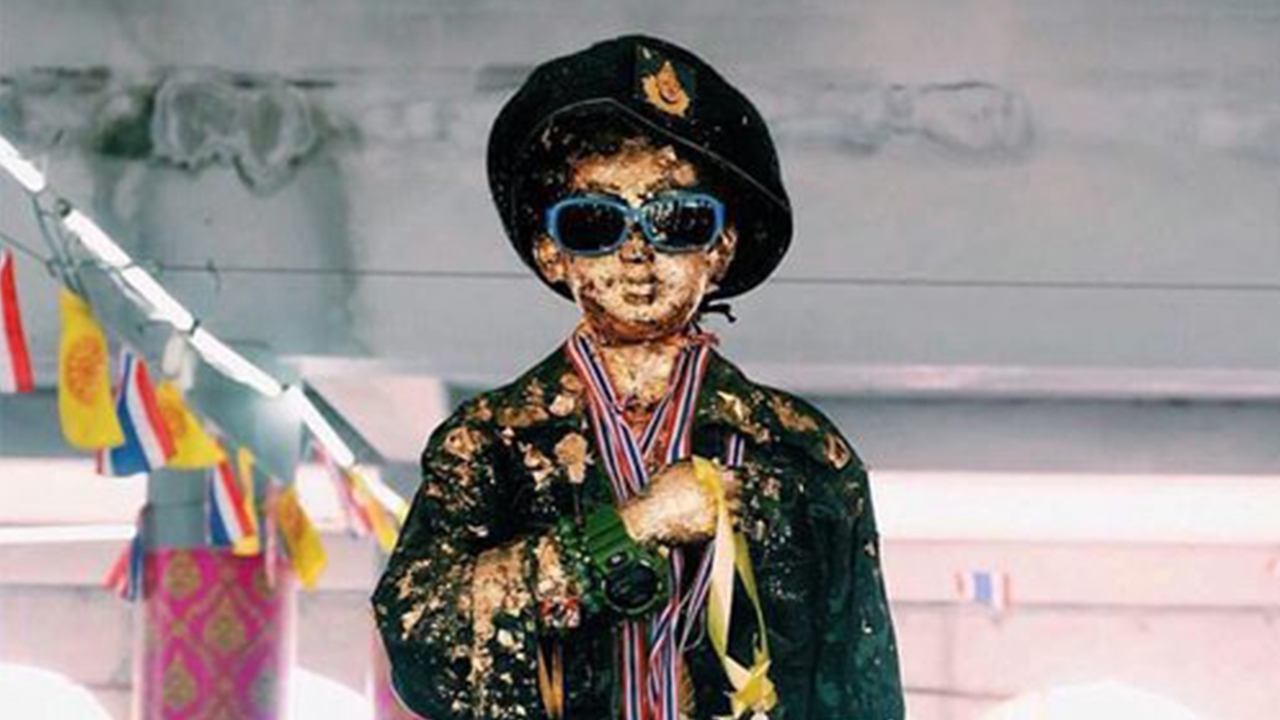
Tracing the legend "Ai Khai Wat Chedi" A temple boy who was a disciple of Luang Pu Thuat, from a devoted vigil over the sacred site to a faith phenomenon "Ask and Receive" that has helped revive and drive the community economy of Sichon district Nakhon Si Thammarat province
Among the local historical tales in Sichon district, Nakhon Si Thammarat province, the story of "Ai Khai" or "Ta Khai" of Wat Chedi is one of the legends deeply connected to the famous monk Luang Pu Thuat. According to local accounts, Ai Khai was a boy disciple who followed Luang Pu Thuat during the time he came to set up a meditation tent at Wat Chedi, which was then an abandoned temple.
The legend says that Luang Pu Thuat had a vision recognizing the importance of this place and assigned the boy to care for the sacred site and its historical treasures. The boy later died in an accident, but due to his steadfast devotion and loyalty as Luang Pu Thuat's disciple, Ai Khai's spirit has continued to watch over the temple and the land's treasures at Wat Chedi ever since.

A key factor that has made Ai Khai beloved nationwide is the belief in the "living promise" or keeping one's word, which gave rise to the popular phrase "Ask and Receive." According to locals and visitors who have paid respects, most come to ask for blessings related to work, luck, and business. After their wishes are fulfilled, they return to make offerings believed to be favored by the boy, such as toy soldier sets, plaster fighting cocks, toys, and continuous firecracker displays.

The faith in Ai Khai Wat Chedi is more than just spiritual solace; it has had a tangible positive impact on the grassroots economy by transforming Sichon from a pass-through town into a center for cultural tourism. According to tourism statistics from Nakhon Si Thammarat province, this faith movement has helped generate widespread income for the community, benefiting hotels, accommodations, restaurants, souvenir shops, and local transport services. This illustrates how faith can become a driving force for improving the quality of life for local people.


Although people continuously flock to ask for blessings, Wat Chedi and Buddhist teachings emphasize that worshiping sacred things is merely a spiritual anchor, not a guarantee of success. The most important factor remains one's own "karma" or actions. Those who seek blessings must be diligent, patient, live honestly, and use wisdom to solve problems.
Ultimately, the true miracle of faith may not be in luck or fortune but in empowering people to overcome obstacles, avoid vice, and commit to doing good — a lasting miracle when faith walks hand in hand with wisdom.