

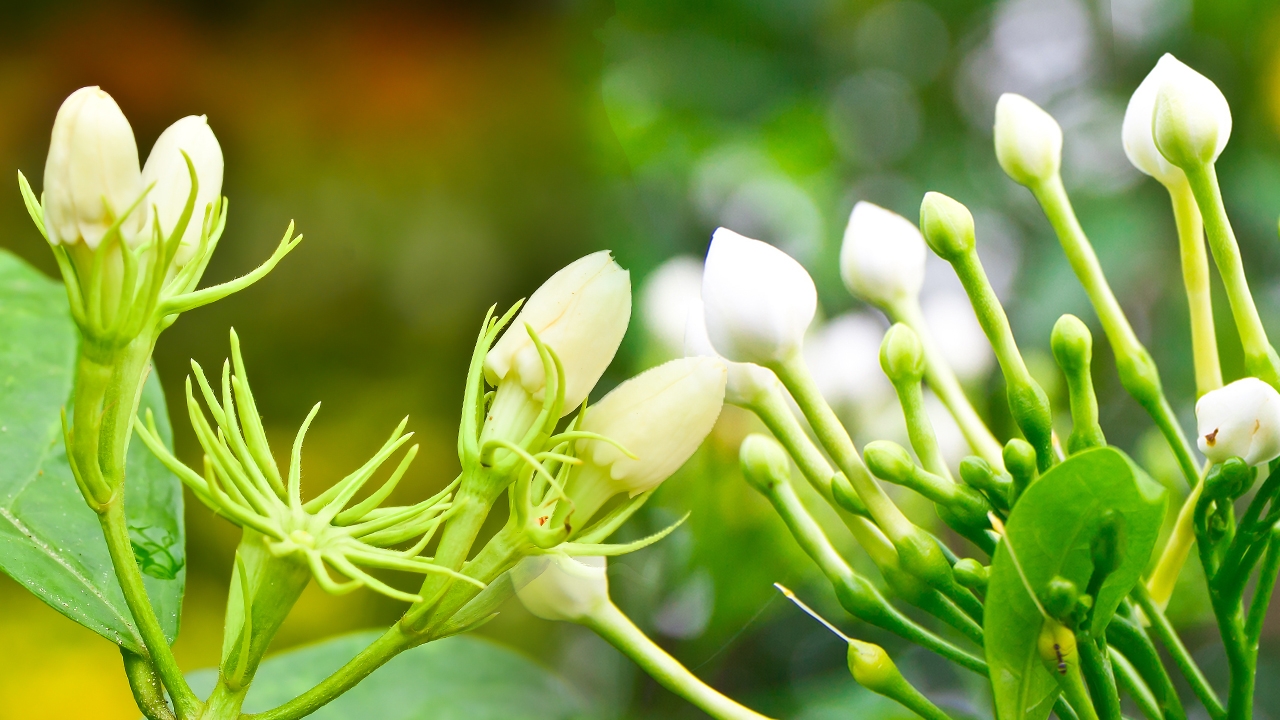
Clearing up the confusion Jasmine flower and Gardenia flower How are they different? Though both are popular white flowers used for garlands, they have clear distinctions. Here is a comparison table and simple identification tips to tell them apart at a glance.
As the important festival season approaches, "Mother's Day 2026" the most popular flower is undoubtedly "jasmine" which symbolizes pure love. However, statistics show that every year, the soaring demand causes jasmine flowers to become expensive and scarce. Vendors often use "gardenia," especially gardenia buds, as a substitute for garlands because their white appearance is similar when the flowers are still buds. This causes many people to be confused about which flower is actually in the garland they bought.
Actually, these two flowers belong to completely different botanical families. If you know the key points to observe, you can easily tell them apart. For quick decision-making, you can compare their differences in the table below.
| Key points to observe | Jasmine flower | Gardenia flower |
| Bud shape | Rounded, plump, no spiral marks | Pointed, slender, with twisted spiral tips |
| Flower color shade | Creamy white, soft to the eye | Bright opaque white |
| Fragrance | Sweet, cool, and refreshing scent | No fragrance |
| Petal texture | Thin, soft, bruises easily and turns brown | Thick, firm, heat-resistant, and durable |
| Latex characteristic | No latex | Has milky white latex resembling milk |
| Flower base (calyx) | Thin, small green segments | Thick, green tubular and smoother |
| Leaf characteristics | Thin, bright green with visible veins | Thick, glossy, dark green |
For those wanting more details or to test themselves, the observation methods can be categorized mainly into two types:

If the flowers are strung into garlands or in sealed bags making them hard to handle, focus on the "shape and color." Jasmine buds have relatively rounded tips with a natural creamy white color.
In contrast, gardenia buds are bright white and opaque. At the bud tips, gardenia shows pointed, slender ends with clear twisted petals resembling a spindle shape. Also, single jasmine flowers have thin, small calyx segments, unlike gardenia’s thick tubular base.

The clearest distinguishing factors are "scent" and "latex." If there is no fragrance, it is likely gardenia. When breaking the flower or leaf stem, gardenia releases milky white latex, a unique trait of this plant family, unlike jasmine which has no latex. Additionally, jasmine petals are delicate and bruise easily, while gardenia petals are thicker and much more durable.
Whether it is jasmine, which has a sweet fragrance and traditional value, or gardenia, which is beautiful, durable, and more affordable, both flowers have their advantages for different uses. Knowing how to tell them apart helps buyers select the flowers that best meet their needs.