

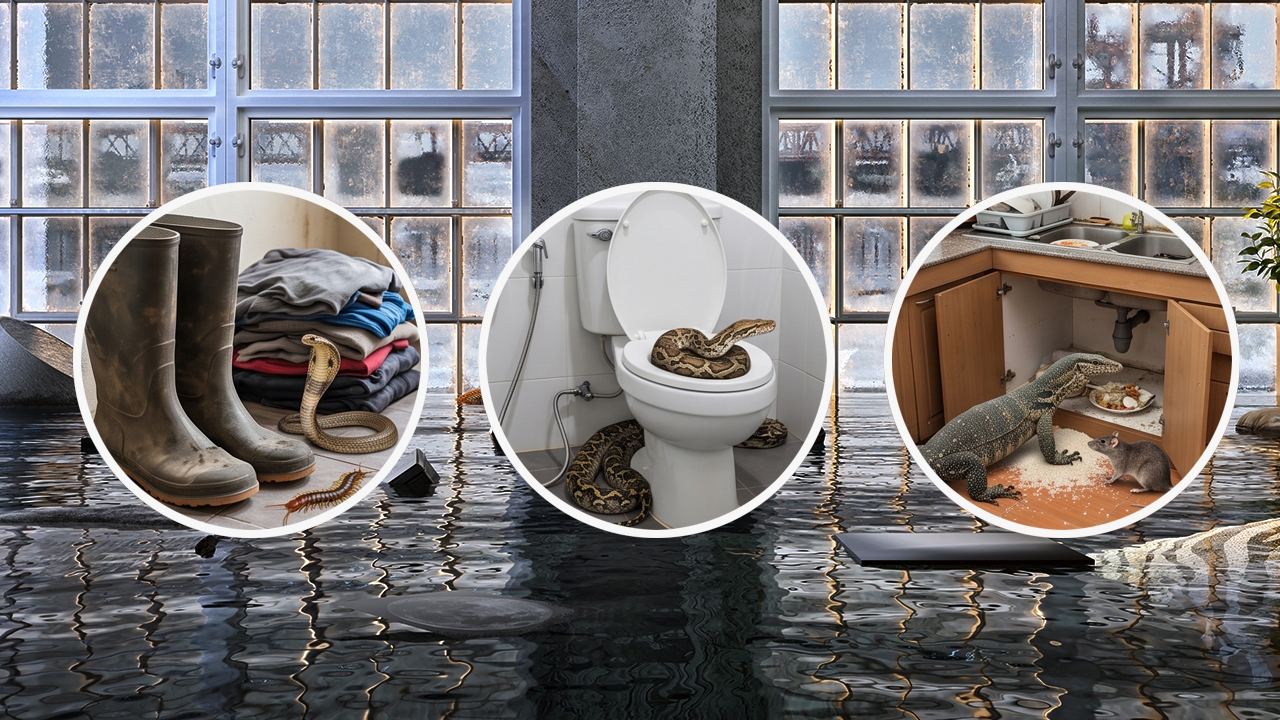
Monitoring the flood situation in Nan province. 2026 After continuous rainfall caused flash floods that submerged homes and farmland, the impact went beyond just disrupting daily life and damaging buildings. It also brought hidden dangers such as reptiles—especially snakes, monitor lizards, and various venomous creatures—into people's homes. When their nests or habitats are flooded, these animals must migrate to higher, dry, dark, and quiet places to hide.
1. Shoes, socks, and piles of clothes on the floor. Closed-toe shoes, boots, or piles of discarded clothes left on the floor are favorite cramped spots where small snakes, centipedes, or scorpions like to coil up.
2. Toilets, drains, and bathrooms. Reptiles such as snakes often swim through drainage pipes, appearing inside toilet bowls, in the trap, or hiding under toilet seats because these are connected pathways from outside the house.
3. Cabinets, under beds, and shadowy corners of shelves. Under beds, inside wardrobes, or under desks that are rarely moved provide quiet corners where reptiles seek shelter to avoid humans.
4. Kitchens and areas near food scraps. Besides snakes, reptiles like monitor lizards or rodents often flee floodwaters to hide under kitchen sinks or inside cupboards, searching for food scraps or prey.
5. Storage rooms and piles of flood-relocated materials. Moving belongings to high places without organizing them properly creates gaps and dark corners ideal for reptiles to nest.
If reptiles are found or to prevent them from entering during floods, follow these safety guidelines.
If venomous or reptile animals enter your home and you cannot handle them yourself, contact the emergency hotlines available 24 hours.