

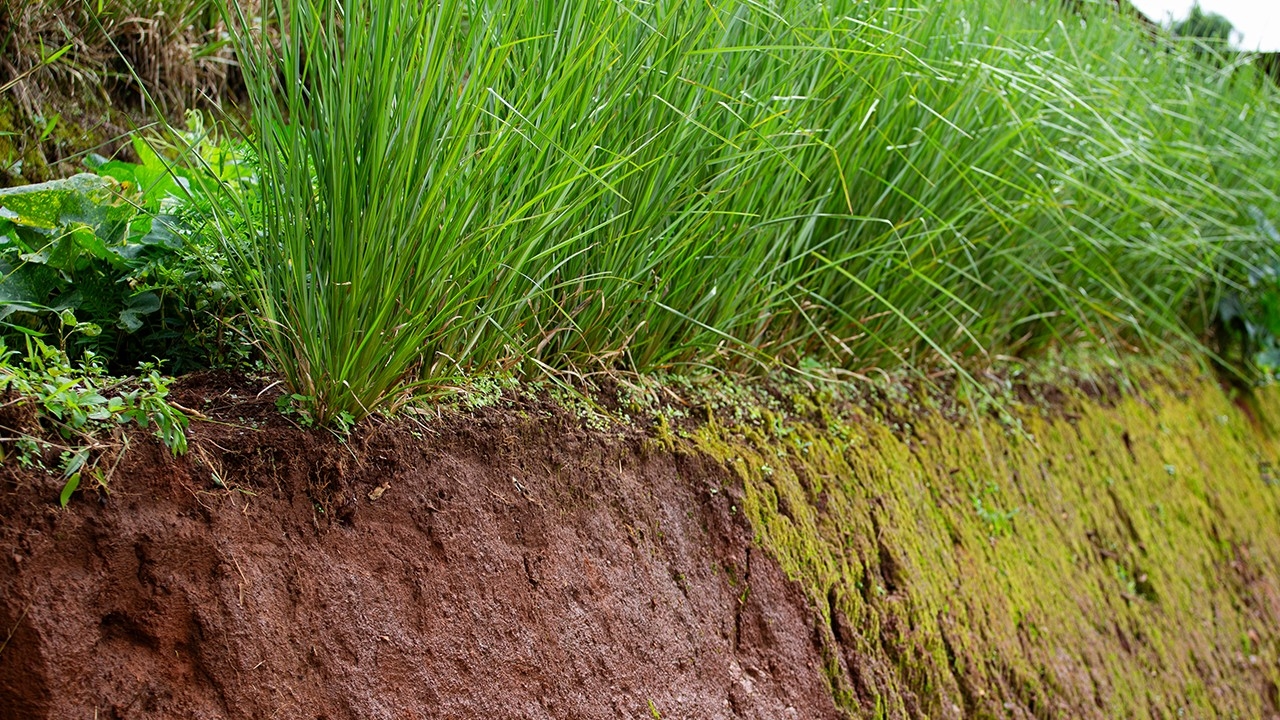
" Vetiver Grass " is not just an ordinary plant but an excellent natural wall that helps conserve soil and water and prevent soil erosion. Let's explore its benefits and eco-friendly planting methods anyone can do.
When it comes to soil and water conservation, many might think of complex technology, but in reality, nature offers a simple and effective solution: vetiver grass, a grass species that grows well in Thailand.
Vetiver grass has a root system that penetrates deeply and interlocks tightly like a net, effectively retaining water and anchoring soil. This aligns with the late King Rama IX's initiative encouraging Thai farmers to use vetiver grass to prevent soil erosion for many years.

How is vetiver grass beneficial? Planting vetiver grass in agricultural areas or home gardens today is an eco-friendly lifestyle choice that offers multiple benefits:

For those interested in using vetiver grass, plant it across slopes or around fruit trees to retain moisture, spacing plants about 5-10 centimeters apart so the clumps grow together into a continuous wall.
Using vetiver grass as a tool for soil and water conservation blends scientific knowledge with natural wisdom perfectly. It not only protects soil and water resources to keep them fertile but also fosters a sustainable, environmentally friendly way of life.