

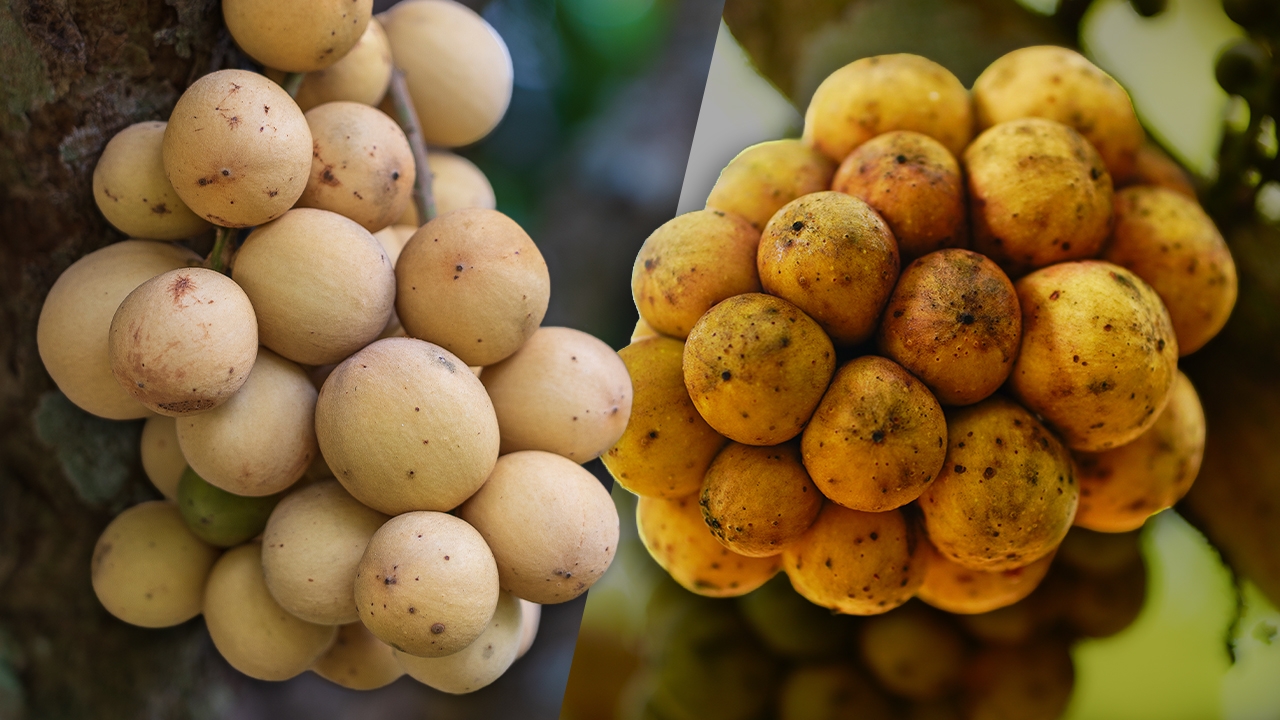
Every rainy season, many people get confused! "Longkong" and "Langsat" Look so similar it's hard to tell them apart. Here's an easy way to spot the difference—from the skin and sap to the taste—so you can pick the fruit you want without being fooled.
As the rainy season approaches through early winter, markets fill with clusters of pale yellow fruits that many enjoy. But a common dilemma for fruit lovers is distinguishing "Longkong" and "Langsat." Because these two fruits belong to the same family and share very similar botanical characteristics, it's easy to pick the wrong one or be tricked by vendors mixing them up if you're not careful.

Did you know? Actually, "Longkong" is a cultivar developed from Langsat, mainly cultivated in Tanyongmas Village, Ra-ngae District, Narathiwat Province. It has become an economically important fruit that is more popular than Langsat due to its sweeter taste and easier edibility.
To help fruit lovers choose according to their preference, here are 4 simple points of comparison:
Observation Points | Longkong | Langsat |
| 1. Skin and Fruit Appearance | The skin is slightly thicker and rougher, with a dull yellow color. The surface feels less smooth, and the fruit is generally round. | The skin is very thin, smoother, with a bright yellow or yellow-green hue. The fruit tends to be oval-shaped. |
| 2. Amount of Sap on the Skin | When picked or peeled, there is little to no sap. Peeling is easy and does not leave sticky hands. | When detached from the stem or peeled, it exudes quite a lot of milky white sap, which often sticks to the hands, making peeling harder. |
| 3. Taste and Texture | Flesh is clear and shiny with a fragrant aroma. The taste is sweet and refreshing. The skin easily separates from the flesh without sticking. | The flavor is sweet and sour, sometimes with a slight astringency. The flesh is cloudier, and the skin often clings to the flesh, making neat peeling difficult. |
| 4. Seeds | Usually seedless or has small, shriveled seeds that can be chewed and swallowed with little bitterness. | Often contains large, hard seeds that are very bitter if accidentally bitten. |
Despite differences in taste and appearance, both fruits are abundant in vitamins and minerals beneficial to health.

Choosing between Longkong and Langsat depends on personal preference. If you like very sweet fruit that peels easily without sticky hands, "Longkong" is the right choice. But if you prefer a more tangy, sweet-and-sour taste that refreshes, "Langsat" is an equally appealing option. Now that you know, you can shop confidently at the market next time.