

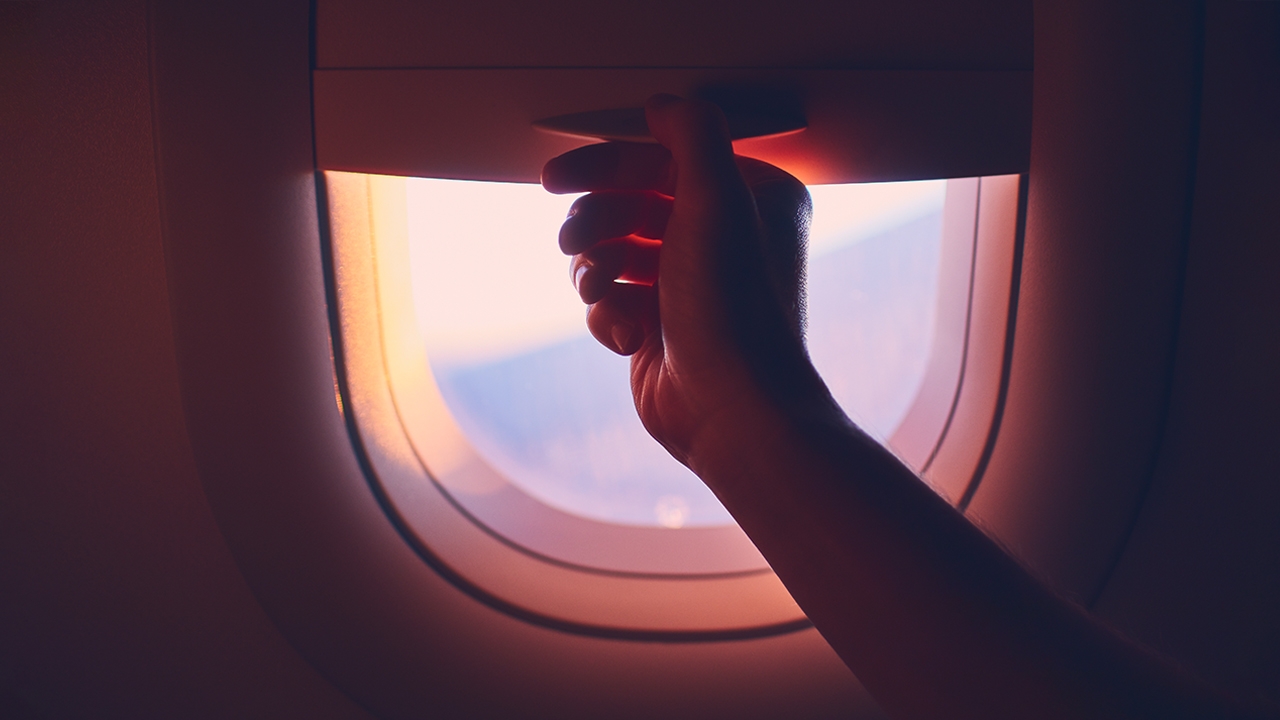
Many frequent flyers have experienced relaxing comfortably only to be asked by flight attendants to “ open the airplane window shades ” before the plane takes off or during descent for landing.
Why do flight attendants insist on opening airplane window shades during takeoff and landing? Though it seems like a minor procedure, it is crucial for safety. Captain Rock Saddy of Cirrus Aviation Services and Captain Adam Cohen of SkyWest Airlines have revealed the real reasons behind this practice, which Thairath Online summarizes here.
In an emergency requiring evacuation, passengers’ eyes being already accustomed to outside lighting conditions—whether bright daylight or nighttime darkness—allows them to immediately see escape routes without needing time to refocus. This reduces the risk of tripping or crowding in chaotic situations.
Passengers seated by windows serve as excellent monitors. There have been real incidents where a passenger noticed abnormalities like smoke from an engine and alerted the cabin crew quickly, enabling the captain to respond promptly and save everyone onboard.

On night flights, cabin lights are often dimmed. Keeping window shades open lets moonlight, starlight, or city lights illuminate the cabin. In case of electrical failure, this outside light helps reduce panic and allows passengers to see evacuation directions.
In ground emergencies, rescue teams need to look inside through windows to evaluate conditions such as fire or smoke. Meanwhile, crew inside must observe outside conditions to determine the safest direction for evacuation slides.
If the aircraft must make an emergency water landing, open window shades allow passengers to see the horizon and land, helping them maintain awareness and decide the best direction to swim or move toward shore.
Opening window shades during takeoff and landing is not just a procedural hassle but a carefully calculated preventive measure. So, on your next flight, when you hear the crew’s announcement, please cooperate with understanding. Small actions like this can be key to saving your life and that of your fellow travelers in emergencies.
Source:travelandleisure