

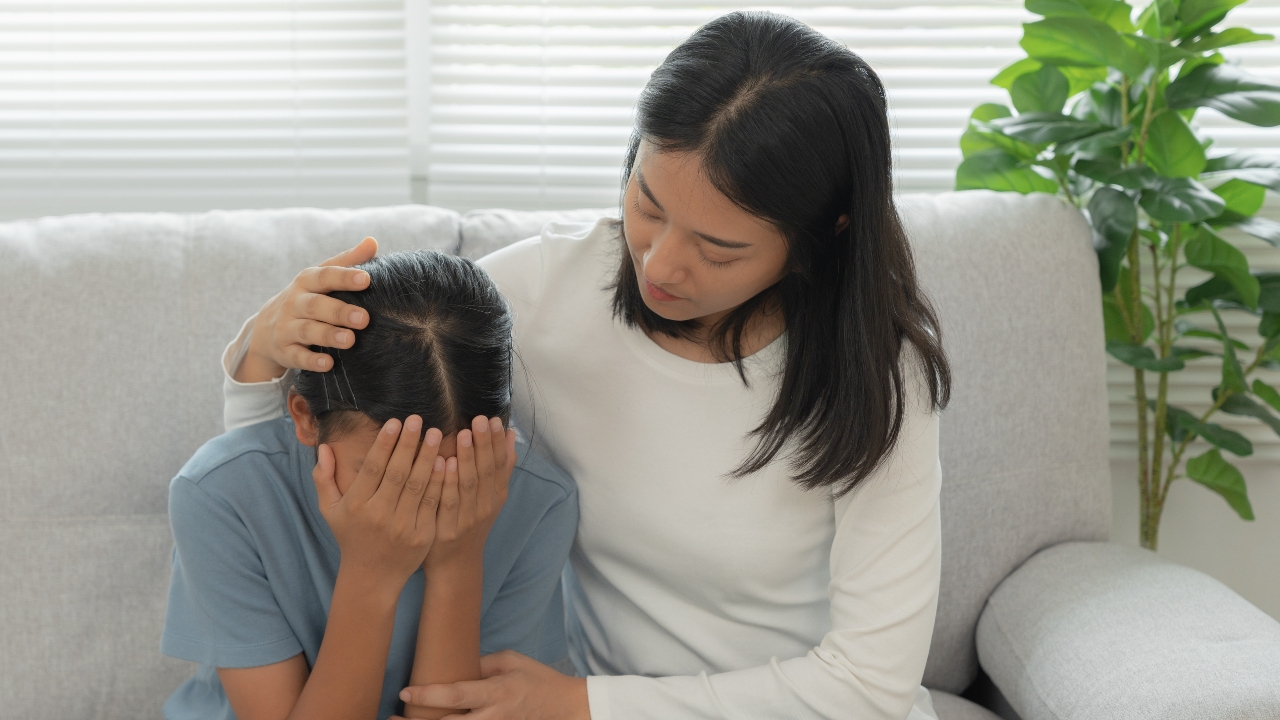
Following an incident where a 14-year-old student committed violence at their school, all sectors have rushed to find measures to enhance school safety, including restricting access to weapons, preventing bullying, planning emergency responses, and screening mental health. While these measures are important, the key question remains: are they enough to make schools truly "safe"?
Online communities often link the perpetrator’s actions to possible past bullying at school. However, this issue is still under investigation with no definitive conclusions. We must recognize that children who are bullied or suffering emotionally do not necessarily become violent.
Because each child copes with distress and stress differently. Some improve quickly just by having someone listen; others withdraw quietly and become depressed; some may harm themselves or others. Concluding that bullying directly causes violenceis premature.Such a conclusion is dangerously hasty.

We should not simply associate mental health problems with violence because there are often complex personal factors involved. Therefore, government mental health screening measures for children must be implemented cautiously, serving as tools to help children in distress get timely support rather than labeling them as "problem children" or "potentially dangerous."
We may not be able to reach clear conclusions about the causes of this case.But the more important questionis how we can prevent children’s distress and stress from accumulating excessively and address it before itbuilds up toa dangerous level that threatens themselves or society around them.
We can approach this in two ways: first, adults need to recognize signs that children are suffering and intervene before children bear everything alone. Second, we must create sufficiently safe spaces where children feel empowered to seek help themselves.

In reality, both approaches face obstacles. Children often don’t tell adults because they think adults won’t understand. Adults themselves lack time and face their own problems, sometimes dismissing children’s issues as minor, even though for children at that moment, their problems may be the heaviest stress they have ever faced.
Currently, many children lack safe channels to talk or relieve stress, both at home and school—especially schools where children spend most of their day. Thus, we must create schools as “emotionally safe spaces” alongside physical safety measures.
Schools should be places where children can say “I’m being bullied” or “I can’t take it anymore” without fear of blame, punishment, orbeing seen as the problem.They must be places where adults are ready to listen and help find solutions. Teachers should be able to detect warning signs that a child may be facing problems.
Parents should know where to seek expert help, and children should understand that asking for help is not a sign of weakness nor does it mean they are the problem.

Making schools emotionally safe requires building correct understanding among teachers, school administrators, parents, and children themselves, including training all parties to handle situations appropriately. This demands commitment, time, and continuous, genuine effort.
For over 20 years, the Child Helpline Foundation 1387 has worked to create emotionally safe spaces for children through its hotline service. Children nationwide can contact the helpline at 1387 or viaonline chaton various platforms free of charge, 24 hours a day, 365 days a year.
Conversations are confidential. The team, trained in counseling and child protection, listens without judgment. Often,when children have someone who listens,stands by them, and does not let them feel they face challenges alone, stress decreases.
However, if assessment finds that a child is in danger—for example, at risk of self-harm or being threatened—the staff coordinate with relevant local agenciesto ensure the child receives timely help and protection..
So far, the Child Helpline Foundation 1387 has served children and youth through phone and online channels over 1,000,000 times, with rapidly increasing demand.
In 2025, the helpline receives an average of one call every 7 minutes, with numbers expected to rise as both children and adults spend more time online. Exploiters can more easily access, manipulate, deceive, or harm children via online channels, causing damage and shame.

The Child Helpline Foundation 1387 faces limitations in expanding capacity to meet rising demand continuously.Therefore,it is essential that all of us help create safe spaces in the places where children live daily, especially schools.
This is achievable if schools prioritize and act seriously. Many international and private Thai schools have invited Child Helpline Foundation 1387 staff to train teachers, parents, and students to build knowledge and skills for handling school problems. Combined with dedicated care from school administrators, bullying has clearly decreased. This is part of the answer to how we can truly make schools safe.
In addition to the 1387 helpline, the Child Helpline Foundation 1387 operates temporary shelters and advocates for laws and policies on child welfare and rights.
Article by Dr. Tarisa Wattanasak, Chairperson of the Child Helpline Foundation 1387 and former Governor of the Bank of Thailand.