

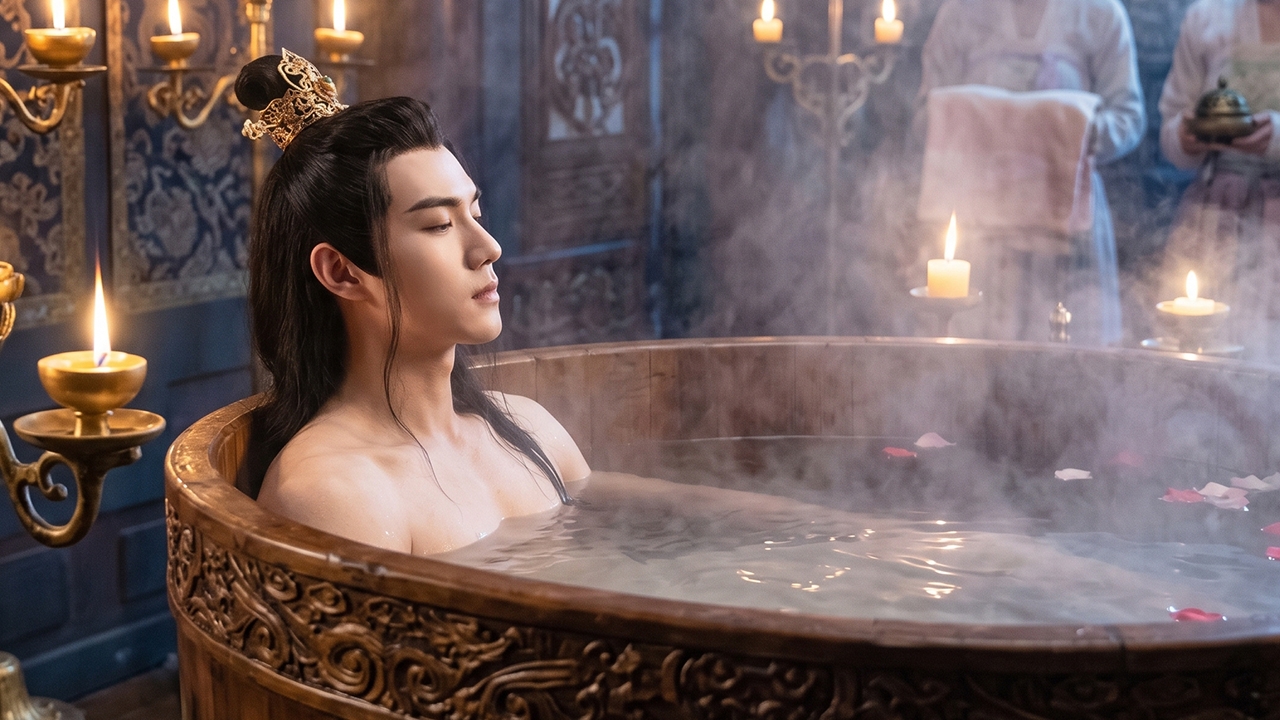
The image from historical Chinese dramas that we often see— the Son of Heaven or the emperor descending to soak in a large tub or pool amid steam with courtiers attending—may lead many to believe that such bathing was a nightly routine.
However, looking back at court life in China, especially during the Ming and Qing dynasties centered in the Forbidden City, this depiction may not fully align with reality, as there is insufficient evidence to confirm that every emperor bathed fully every day or that there was a fixed rule on bathing frequency.
Thairath Online invites you to revisit the bathing practices of Chinese emperors and find out how they bathed in the past, and to what extent the scenes in historical dramas resemble actual history.
If asked whether ancient Chinese emperors bathed every day like people today, the answer is that it cannot be definitively concluded as a uniform rule for all emperors across all eras. This is due to each emperor’s lifestyle varying depending on the time period, climate, personal preference, and royal duties.
Particularly in Beijing, where seasonal temperature differences are extreme, bathing in the past was not as convenient as today due to the absence of hot water systems or heaters. Each bath required staff to prepare, heat the water, and arrange tubs and accessories.
Moreover, for Chinese emperors, bathing was not only about cleanliness or comfort but also tied to the concept of purifying body and mind before important rituals. Prior to royal ceremonies honoring Heaven, the emperor would observe fasting and self-discipline with specific rules on conduct, diet, and preparation.

The emperor’s bathing practices likely varied with the climate, especially in Beijing’s harsh winters, where preparing hot water was more challenging than today.
Seasons and climate favored bathing more in summer, while in winter, full baths required careful preparation to keep the palace warm.
Full immersion was not necessary every time. Maintaining cleanliness could involve washing just parts, such as the face and hands, or wiping the body with warm water.
Ancient Chinese medical philosophy emphasized adapting lifestyle to seasons, especially preserving warmth and “yang” energy during winter.
The question of whether emperors bathed every day has no fixed answer regarding daily bathing or intervals between baths.
What historical evidence confirms is that the Chinese court had bathing and cleansing customs, with bathtubs and accessories, staff assigned to manage these tasks, and rituals involving bathing before important ceremonies.
Therefore, the scenes of emperors bathing in dramas are not entirely fictional, but elements like large pools, attendants surrounding the emperor, or nightly full baths are likely embellishments designed to enhance viewer enjoyment rather than strict historical fact.