

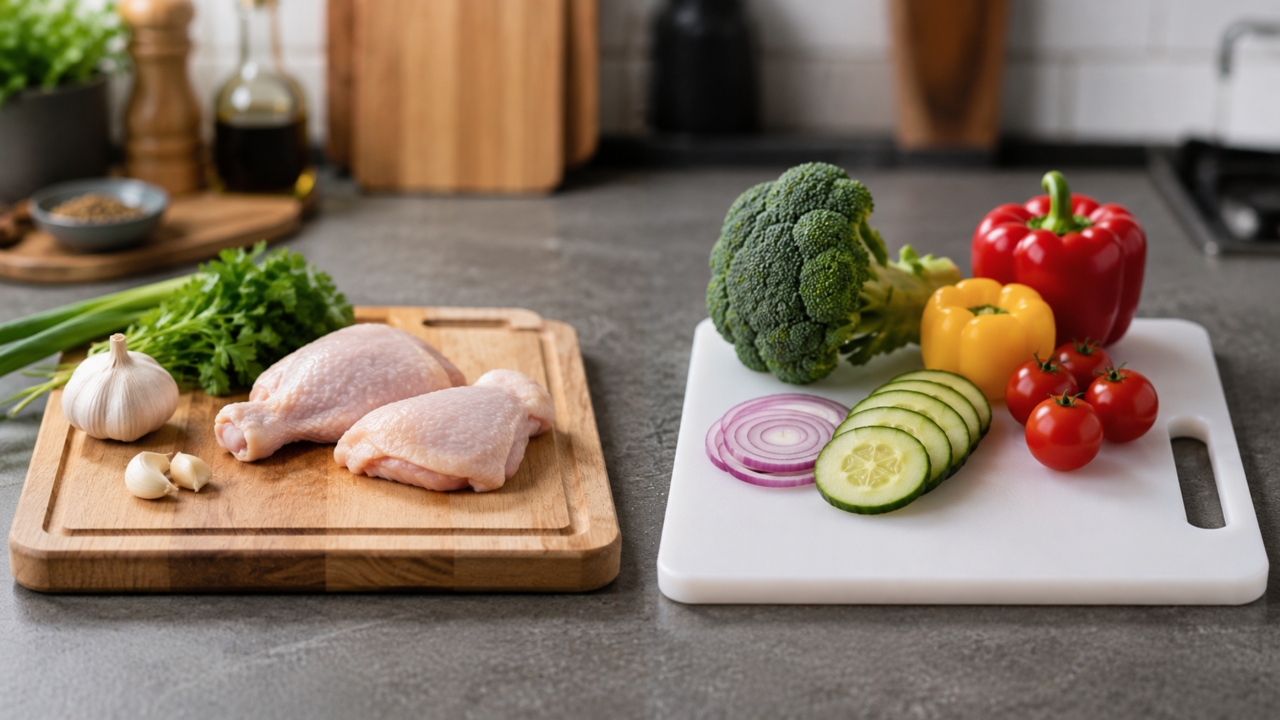
" Cutting board " is a kitchen essential that comes into direct contact with food, so choosing the right one is important. Especially between wooden and plastic boards, which are popular in every household but differ in properties, benefits, and limitations. Which one suits your needs better? Let’s explore their differences before choosing the right one for your kitchen.
Wooden and plastic cutting boards each have unique strengths and drawbacks regarding durability, maintenance, and effects on knife sharpness. Choosing depends on the type of food and usage habits. Let’s examine the pros and cons of each and see which suits your kitchen better.
Wooden cutting board is made from natural materials, offering strength and durability while preserving knife sharpness well. It is ideal for general slicing and chopping. However, it should be washed and thoroughly dried after use to prevent moisture, unpleasant odors, and mold buildup.

Advantages of wooden cutting boards
Disadvantages of wooden cutting boards
Plastic cutting board is lightweight, convenient to use, and easy to clean. It’s suitable for cutting various types of ingredients. Over time, knife marks may appear on the surface, which can harbor food debris and microorganisms, so it should be replaced when deep grooves or damage occur.

Plastic boards are easy to wash but deep knife grooves can trap dirt. Wooden boards require attention to moisture and should be dried after washing. If a board has cracks, deep grooves, or deteriorates making cleaning difficult, it should be replaced.
Therefore, it is not possible to definitively say which type is always cleaner; it depends on usage and cleaning methods.
However, more important than the choice between wooden or plastic is proper use and hygiene: separate boards for raw and cooked food to reduce cross-contamination risk.
After use, clean thoroughly and dry completely; do not leave boards wet for long. Regularly inspect for deep grooves, cracks, or wear that make cleaning difficult, and replace boards as needed to maintain hygiene.