

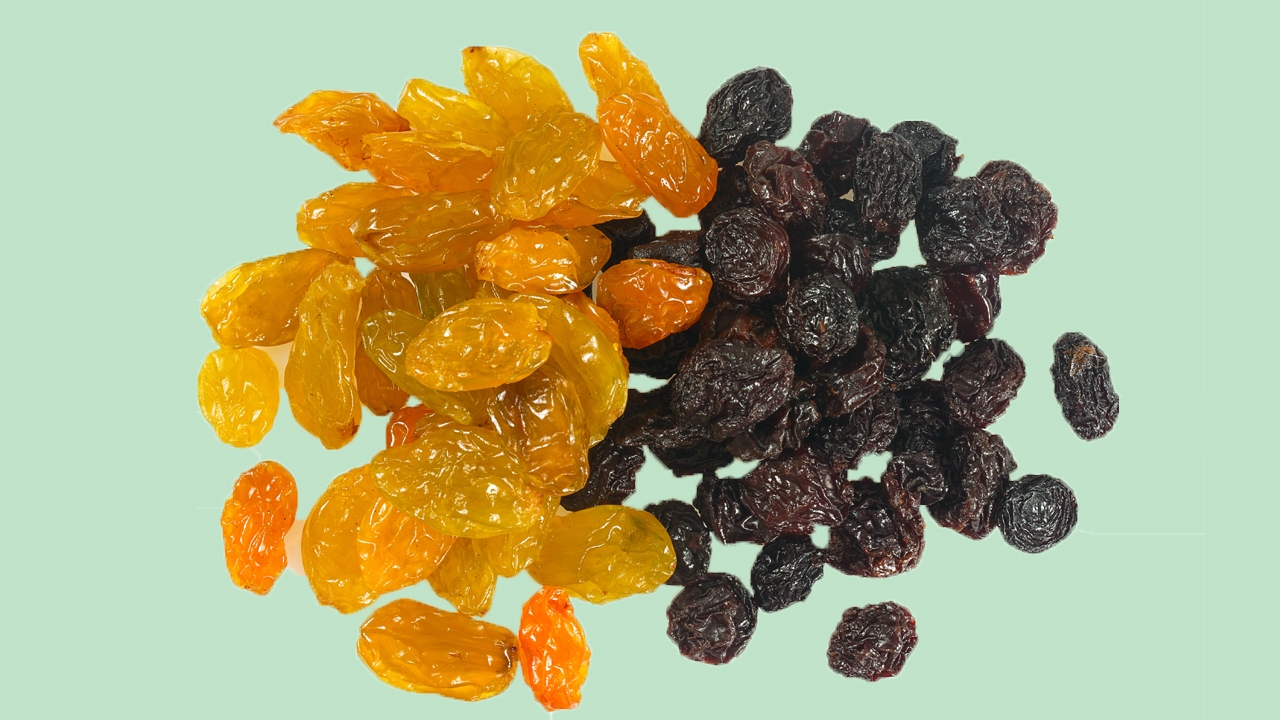
Raisins are a popular dried fruit familiar to many, enjoyed both as a snack and as an ingredient in baked goods. But have you ever wondered which grape varieties raisins come from, and why they come in black and golden colors as well as different sizes? These differences are not only due to the grape variety but also relate to the drying process and production methods.
Raisins are dried grapes, made from various grape varieties—both seeded and seedless. However, the industry today mainly uses seedless grapes, especially those in the Thompson Seedless or Sultanina group, along with other varieties suited for drying. Popular grape varieties used to produce raisins include:
This is a greenish-yellow seedless grape vital to the raisin industry, especially in California, USA. Also known as Sultanina, this variety can be used to produce both dark brown raisins from sun drying and golden raisins from machine drying with sulfur dioxide to preserve color.

A small, dark purple to black seedless grape. When dried, it yields small, dark, sweet-tart dried fruits called Zante Currants, commonly used in baked goods such as scones and biscotti.

A red seedless grape developed in the USA, originally for fresh consumption, but also processed into raisins in countries like Chile and Argentina. When dried, it produces relatively large, dark-colored raisins depending on the drying method.
Additionally, other grape varieties used for raisin production include Fiesta, Selma Pete, DOVine, Muscat, Monukka, and Sultana, with preferences varying by country and production region.

Dark brown raisins, often called black raisins and golden raisins can be produced from the same grape groups, particularly light-colored varieties like Thompson Seedless and Natural Seedless. The color differences arise from the drying and processing methods used.
Therefore, the color of raisins does not solely indicate grape variety but also depends on the grape variety, the fresh grape color, and the drying or processing method.
Raisins have a long history as a consumed product because drying grapes removes water, extending shelf life and enabling diverse culinary uses.
Today, raisin production is spread across many global regions, especially those with climates suitable for grape cultivation and drying, such as Turkey, the United States, Mediterranean grape-producing countries, and others worldwide. Each region may choose different grape varieties and production processes.