

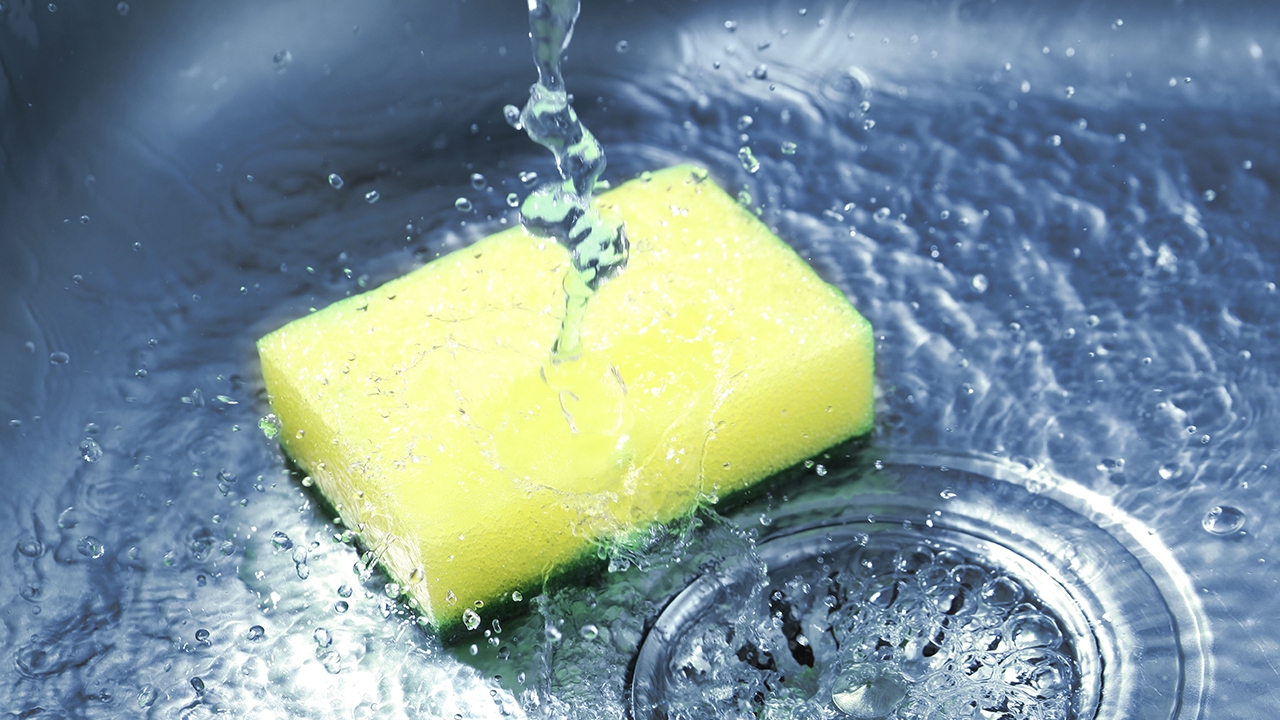
Dishwashing sponge It is an essential kitchen tool used daily in every household to clean food residues and grease. Many households commonly rinse sponges with hot water after use, believing the heat kills germs and bacteria thoroughly. However, in reality, this method may not be as clean or safe as many think.
Pouring or rinsing dishwashing sponges with hot water can reduce some bacteria. But it cannot eliminate all germs. Effective heat disinfection requires sufficiently high temperatures and continuous contact for an appropriate duration.
Moreover, briefly pouring hot water over the sponge may not cover all areas, especially sponges with porous surfaces, leaving some microorganisms behind. If the sponge remains wet and stored in a closed space, it further encourages germ growth. Therefore, hot water rinsing alone is not a complete sponge disinfection method.

Generally, sponges are recommended to be replaced regularly. However, if you notice any of these four signs, discard and replace the sponge immediately (Dr. Jes revealed "dishwashing sponges" are germ reservoirs and recommended monthly replacement.)
1. Musty or sour odor
If the smell persists after washing, it may signal accumulated food debris, moisture, and microorganisms inside the sponge.
2. Sponge is crumbly, torn, or deteriorated
When the sponge material degrades, cracks and crevices can trap food particles, grease, and dirt more easily, making cleaning harder.
3. Black spots or mold-like stains
If you find abnormal black, gray, or brown spots or stains, do not reuse the sponge as this may indicate mold or contamination buildup.
4. Sponge feels sticky or unusually slimy
A sticky or slimy surface after washing may result from grease, food residues, or microbial biofilm. If cleaning does not resolve this, replace the sponge.
How to maintain dishwashing sponge cleanliness Do not wait until all four warning signs appear. Regularly replace sponges or immediately when any abnormality is noticed. After use, wash, squeeze out water, and store in a ventilated area to reduce moisture and microorganism buildup.