

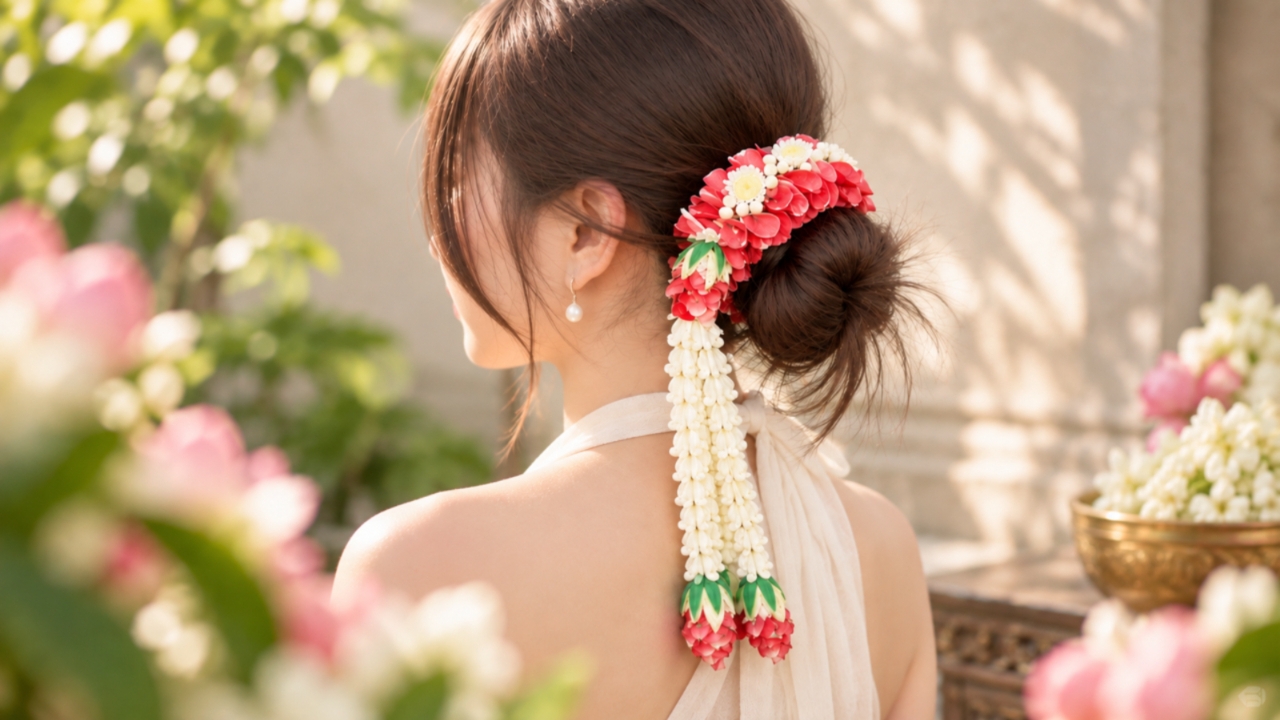
From the familiar flower garlands seen at religious and ceremonial events, today "Malai Rad Klao" is becoming a fashion item for the Gen Z generation. Traditional Thai flower garlands are turning into trendy accessories among young people, who adorn their hair buns with fresh flower garlands, letting long strands cascade down to highlight their hairstyles. This has become a notable trend on social media.
Previously, there was also a trend of "holding lotus flowers in photos" that revived the lively atmosphere of Bangkok's Pak Khlong Talat flower market. It is clear that the charm of Thai flowers and hair garlands lies not only in their colors and fragrance but also in the distinct meanings each flower carries. Thairath Online invites you to get acquainted with the popular flowers used in garlands and uncover their hidden symbolism.//
Hair garlands also known as " Malai Rad Klao ", are an adaptation of traditional garland-making into hair accessories. Typically, the hair is styled into a bun, wrapped with a garland, and long strands are allowed to hang down the back.
Nowadays, styles range from simple white garlands to multi-colored arrangements combining pink, red, yellow, or blue flowers, allowing wearers to match them with their outfits and personal styles.
Among the popular flowers used are familiar ones from traditional Thai garlands such as jasmine, Rangoon creeper, gardenia, and rose petals, sometimes dyed to add vibrant colors.

Many types of flowers are used in Thai garlands, but the main ones commonly found include jasmine, Rangoon creeper, rose, and gardenia, each with interesting symbolic meanings as follows.
This fragrant white flower, inseparable from the image of Thai garlands, is often strung together or used to decorate the hanging strands. Its clean white color conveys pure love, goodwill, and gratitude, perfect for those seeking a simple and gentle garland look.
The very name "Rangoon creeper" carries a positive meaning. This flower is also popular in garland making, with a shape suited for stringing into chains. It is traditionally associated with love, strong bonds, and enduring relationships, making it both beautiful and auspicious.
Roses are not just for bouquets; their petals can be folded and woven into garlands. Pink and red roses especially add vivid color, symbolizing love, admiration, and good feelings between people. The exact meaning can vary depending on the flower's color.
Another white flower used in garlands is the gardenia, small and white, often paired with brighter flowers. It symbolizes purity, virtue, and auspiciousness, adding softness to the garland without overshadowing the other flowers.

The appeal of the hair garland trend is not just about decorating hairstyles with traditional garlands but about reinterpreting a familiar Thai element. Traditionally seen in ceremonies, offerings, or special occasions, garlands are now styled with hair buns and paired effortlessly with t-shirts, tank tops, or contemporary fashion.
Another reason this trend fits well with Gen Z fashion culture is its uniqueness—no two fresh flowers are exactly alike. Wearers can select colors, stringing patterns, and strand lengths to suit themselves. At the same time, the garland stands out beautifully in photos or videos shared on social media.

This trend reflects another expression of "Thai identity" — not confined to traditional contexts but blended with modern fashion and individual expression. Combined with the meanings of jasmine, Rangoon creeper, rose, and gardenia, these hair garlands embody beauty, meaning, and personal storytelling.