

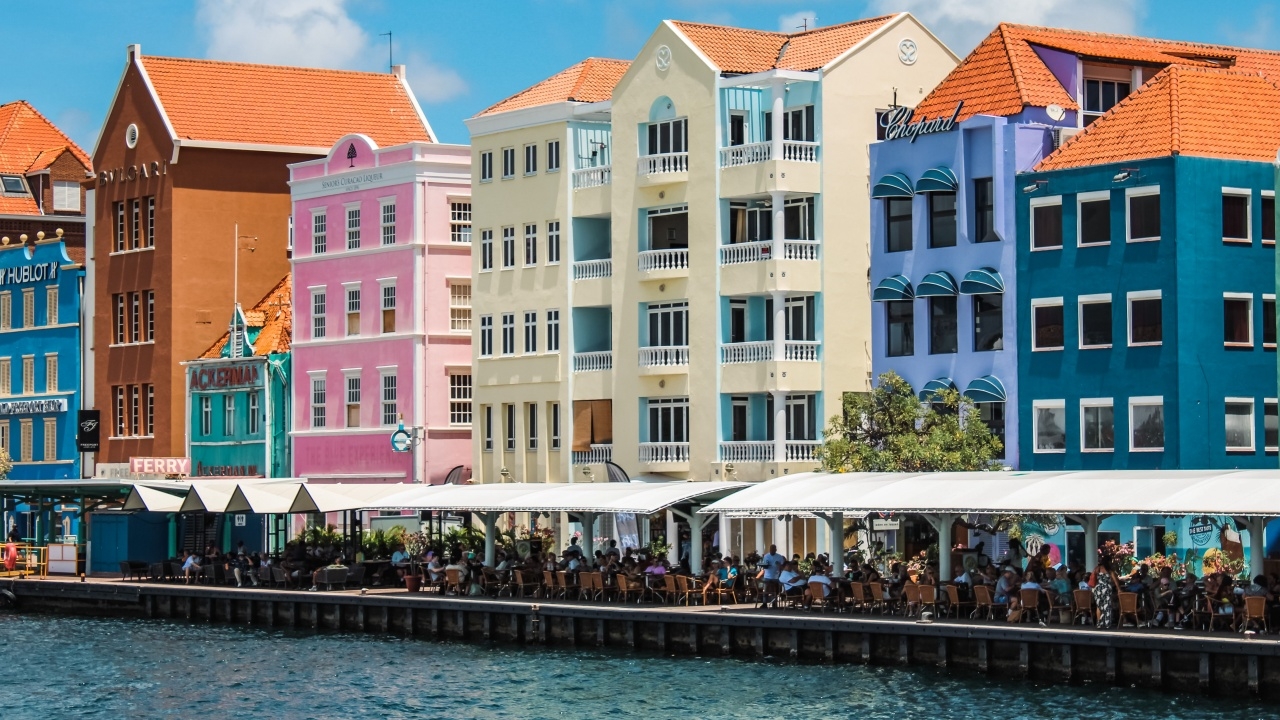
Many people may have seen the term Blue Curaçao on bottles of liquor or blue syrup in bars and cafes, but few realize that Curaçao is actually the name of a country — a small island in the Caribbean Sea, spelled กือราเซา in Thai. Earlier this year, the country made its debut at the World Cup.
The island's name became known on bottles because of an orange. Around 500 years ago, the Spanish brought orange trees to plant on the island. However, due to the hot and dry climate, the oranges became bitter and inedible. The islanders called this fruit the “laraha.” Over time, people discovered that the dried peel smelled wonderful, so they soaked it in alcohol to make a liqueur named after the island. The blue color was added later.

Curaçao is located south of theCaribbean Sea.It lies about 65 kilometers off the coast of Venezuela, covering an area of 444 square kilometers — even smaller than Phuket Island. According to Curaçao's Central Statistics Office, as of January 2025, the population is approximately 156,115. The capital city, Willemstad, is famous for its brightly painted Dutch-style buildings lining the harbor. The historic district of Willemstad was designated a UNESCO World Heritage site in 1997.
The island was originally inhabited by the Arawak indigenous people before Spanish explorers arrived in 1499. However, the Dutch were the longest occupants, having taken over the island in 1634. Within a few decades, the port became a center of the Dutch slave trade in the Caribbean. Many Africans were brought here before being sold on to Spanish colonies.
On August 17, 1795, a slave named Tula led a major uprising. He was captured and executed in October of the same year, but slavery continued for nearly 70 more years until its abolition in 1863. Today, Curaçaoans commemorate their freedom on August 17 — the day Tula fought back — rather than July 1, which is the date the Netherlands marks the end of slavery.
After being part of the Netherlands Antilles for many years, Curaçao became a self-governing country within the Kingdom of the Netherlands on October 10, 2010. The Dutch monarch remains the head of state, while the Dutch government handles defense and foreign affairs. Curaçao has three official languages: Papiamentu, Dutch, and English, along with French and Arawak languages. Notably, Papiamentu developed about 300 years ago as a blend of Portuguese, Spanish, Dutch, and African languages.

In football, Curaçao drew 0-0 with Jamaica in November 2025 and qualified for the World Cup for the first time. Guinness World Records recognized it as the country with the smallest population ever to compete in the World Cup, breaking Iceland’s previous record. The team is coached by 78-year-old Dutch head coach Dick Advocaat. Of the 26 players, all were born in the Netherlands except for Tahith Chong, a former Manchester United prospect born on the island.
If this were fiction, Curaçao might have triumphed at the 2026 World Cup. However, in reality, they lost their opening match 1-7 to Germany, drew 0-0 with Ecuador thanks to 15 saves by Eloy Room to earn their first-ever point in history, and then lost 0-2 to Ivory Coast, finishing last in their group with 1 point.