

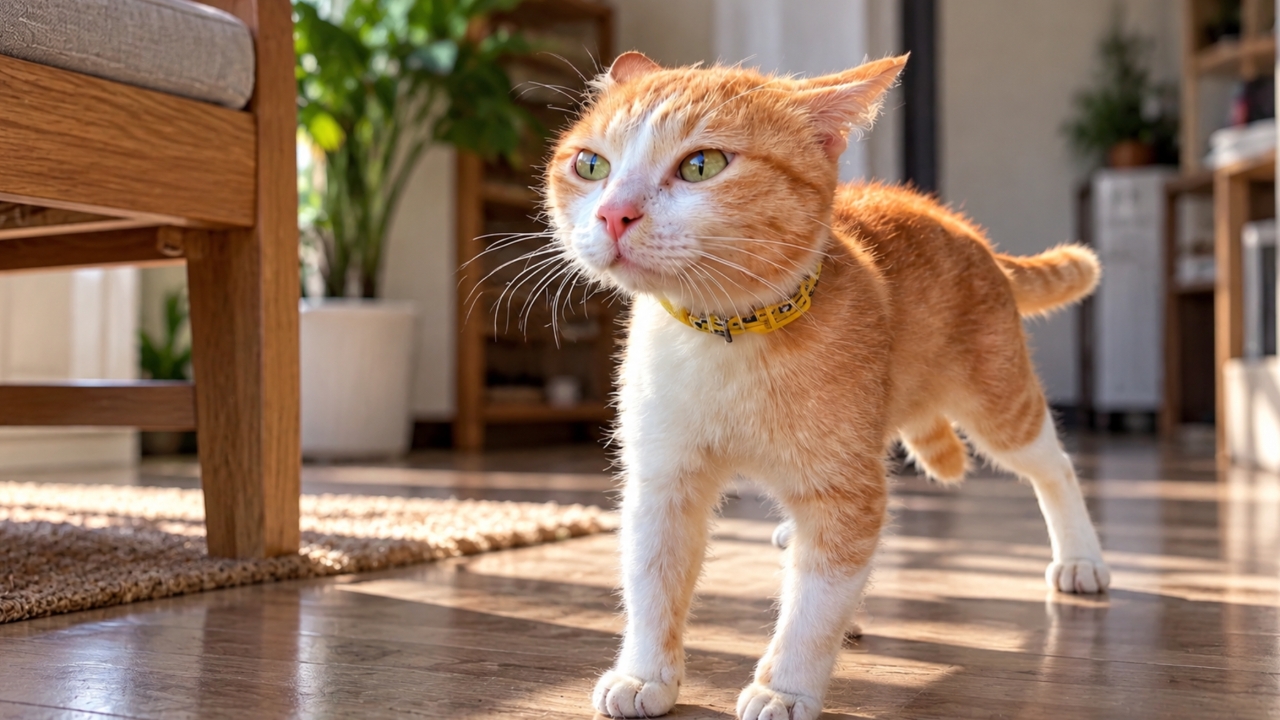
"Airplane ears" in cats is one of the adorable behaviors of cats that many have seen on social media, especially when a cat spreads its ears sideways resembling airplane wings. Although this image looks endearing, this posture may be a sign that the cat is trying to communicate certain feelings to its owner.
Thairath Online invites you to understand what "airplane ears" in cats means, why cats like to spread their ears sideways, and to decode feline body language that cat owners should know to better grasp their beloved pet's emotions and behavior.

"Airplane ears" in cats is a term used by cat lovers to describe the ear position when a cat spreads its ears out sideways or tilts them downward from their normal position, making both ears look like airplane wings rather than standing upright or facing forward as when the cat is focused on its surroundings.
Generally, cats can move their ears freely using multiple muscles to listen to sounds from different directions and also use ear positions as part of communicating their emotions and feelings.
When a cat starts spreading its ears sideways, it may signal discomfort, anxiety, irritation, or alertness to certain stimuli. However, it does not always mean the cat is angry; other body language cues should be observed together.

The airplane ear posture can occur in various situations, with common causes including:
The cat is startled or scared. When hearing a loud noise, encountering strangers, or facing unfamiliar situations, cats may spread their ears sideways or press them down, showing cautious behavior.
The cat is angry or irritated. If touched in an unwanted spot, held too long, or disturbed while resting, cats may display airplane ears to signal they do not want to be approached.
The cat feels wary. In unfamiliar environments or when encountering other animals that make them feel unsafe, cats may change ear position to express caution.
The cat is alert to its surroundings. Sometimes cats turn their ears sideways to listen to sounds from multiple directions, which does not necessarily mean they are angry or scared.

If a cat spreads its ears sideways and shows signs of discomfort, owners should avoid forcing the cat to be held, hugged, or played with immediately, as this might increase the cat's sense of threat.
The appropriate approach is to stop any activity that may disturb the cat, give it space, and allow the cat to have privacy. Especially if the cat hisses, flicks its tail aggressively, or tries to escape, wait until it calms down before interacting again.
Additionally, if a cat consistently holds its ears abnormally low along with symptoms like scratching ears, shaking its head, pain when ears are touched, or discharge from the ears, it is advisable to take the cat to a veterinarian, as it may be a health issue rather than just emotional expression.